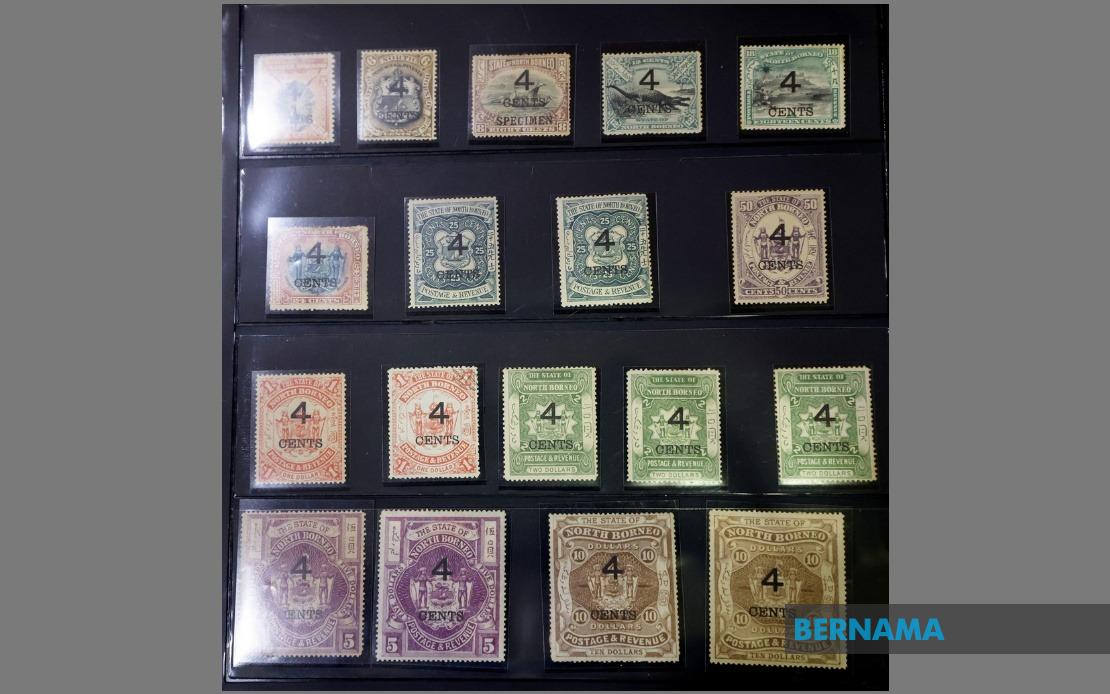
In Kota Kinabalu, a quiet battle is unfolding to safeguard one of Sabah's most precious yet overlooked historical archives: stamps issued between 1883 and 1963. As these century-old philatelic items become increasingly scarce in the market and fetch ever-higher prices, conservationists warn that an entire dimension of Sabah's documented past risks disappearing unless active preservation efforts take root among the younger generation.
Dr Shari Jeffri, president of the Borneo History Association, characterises these stamps as far more than postal artefacts. To him and fellow enthusiasts, they represent a "living archive" that captures the essence of Sabah's transformation during the colonial era and early independence period. Yet the challenge facing Jeffri and others is formidable: the digital age has fundamentally altered how people communicate, and with it, the cultural relevance of stamp collecting has dramatically diminished. Where once stamp collecting commanded the attention of schoolchildren and officers alike, today only a dedicated minority maintains the passion, and their numbers continue to shrink with each passing year.
A survey of antique dealers around Kota Kinabalu reveals the harsh reality of this decline. North Borneo stamps have become exceptionally difficult to locate, and when they do surface, dealers command substantial premiums that reflect scarcity and historical significance. The market prices fluctuate based on multiple criteria: the era of issue, the physical condition of the stamp, and its rarity value among collectors. One notable discovery during the survey included an album featuring a six-cent stamp depicting Queen Elizabeth II alongside a Dusun woman, alongside a ten-cent design illustrating logging activities, both from the 1954-1961 period. These pieces represent snapshots of Sabah during a pivotal moment in its history.
Jeffri's own engagement with philately began in childhood, though his serious involvement emerged during secondary school. His foundation, however, stretches deeper: much of his collection derives from his grandfather, who worked at the Recreation Club Jesselton during the 1920s. His grandfather gravitated toward stamp collecting after observing British officers pursuing the hobby, setting in motion a family tradition that would span generations. This personal narrative mirrors the broader pattern by which philately took root in Sabah during the colonial administration, embedded within the social practices of the British official class.
Among Jeffri's most prized possessions are two two-cent North Borneo stamps from the 1883 inaugural issue, distinguished by brown sailing boat motifs and bearing original postmarks. For serious collectors, the 1883 series represents an essential foundation; a collection lacking these foundational pieces is considered incomplete. This historical imperative underscores a fundamental truth that Jeffri emphasises repeatedly: each stamp functions as a historical document, encoding within its design and cancellation marks the events and character of a specific moment in Sabah's past.
The stamps themselves underwent significant design evolution over their 52-year circulation period beginning in 1883 under the British North Borneo Chartered Company. Early designs featured symbolic imagery including lions, boats, and tigers, but the approach shifted markedly in 1894. From that point forward, designers drew inspiration from Borneo's distinctive natural environment, incorporating native flora, fauna, and wildlife into their compositions. By 1935, the designs evolved further to more explicitly reflect Sabah's regional identity, while stamp denominations ranged across an extensive spectrum from two sen to one dollar. These design choices were not aesthetic whimsy; they represented deliberate policy decisions about how the territory projected itself to the world through its postal identity.
Authenticity and preservation present twin technical challenges that demand specialist knowledge. Jeffri has invested decades developing expertise in identifying genuine philatelic materials, seeking mentorship from recognised experts including Voon Kyam Foh and Tan Chun Lim in Singapore, and consulting authoritative catalogues such as Commonwealth & British Empire Stamps. The composition of stamp paper, including the glue layer used for adhesion, constitutes a critical authentication marker. Equally important, stamps bearing complete postal cancellations—including readable mailing dates, post office names, times, and locations—command premium valuations because they provide comprehensive documentation of the postal journey. These cancelled stamps function as historical cross-references, allowing researchers to verify usage patterns and geographical distribution.
The preservation environment itself demands rigorous attention. Jeffri notes that proper storage in acid-free albums represents an essential requirement for preventing fading and deterioration over decades. This technical requirement stands in sharp contrast to casual collection practices, many of which inadvertently damage valuable materials through improper storage or handling. The stakes are high: deterioration is often irreversible, meaning that each stamp lost to poor conditions represents an irrecoverable loss of historical documentation.
The philatelic record of North Borneo extends beyond decorative interest to serve as a material chronicle of Sabah's evolution. Through changing designs, denominations, and postal practice, stamps reveal how the territory's identity shifted across decades of colonial rule and the transition toward modern statehood. They document economic activities including logging operations, reflect demographic composition through portrait selections, and capture the aspirations embedded in symbolic imagery. When scholars study Sabah's history, these stamps offer primary source evidence that complements written records and photographic documentation.
Yet this invaluable archive faces existential threat from demographic change. The decline in stamp collecting interest among Malaysian youth reflects broader shifts in leisure practices and communication methods. Email, messaging applications, and digital postal services have rendered physical stamps functionally obsolete for most correspondence. Unlike coins or antique furniture, stamps lack the quotidian visibility that might spark spontaneous curiosity among young people. The hobby requires intentional engagement and developed expertise to appreciate fully. Without deliberate intervention—through museums, educational programmes, or cultural initiatives—the knowledge and passion required to maintain these collections risks extinction within a generation.
The implications for Southeast Asian historical preservation are significant. If Sabah's North Borneo stamps disappear from active curation, a distinctive archive documenting the region's colonial experience and early modern development vanishes with them. Malaysian institutions and regional collectors bear responsibility for ensuring that these materials survive for future scholarship. Jeffri's decades of commitment represent one individual's response to this challenge, but systemic solutions require broader institutional support, including museum acquisition programmes, school educational initiatives, and public awareness campaigns that position stamp collecting as a legitimate form of historical engagement rather than a antiquarian curiosity. The preservation of these stamps ultimately reflects Malaysia's commitment to honouring and documenting its own complex historical journey.

