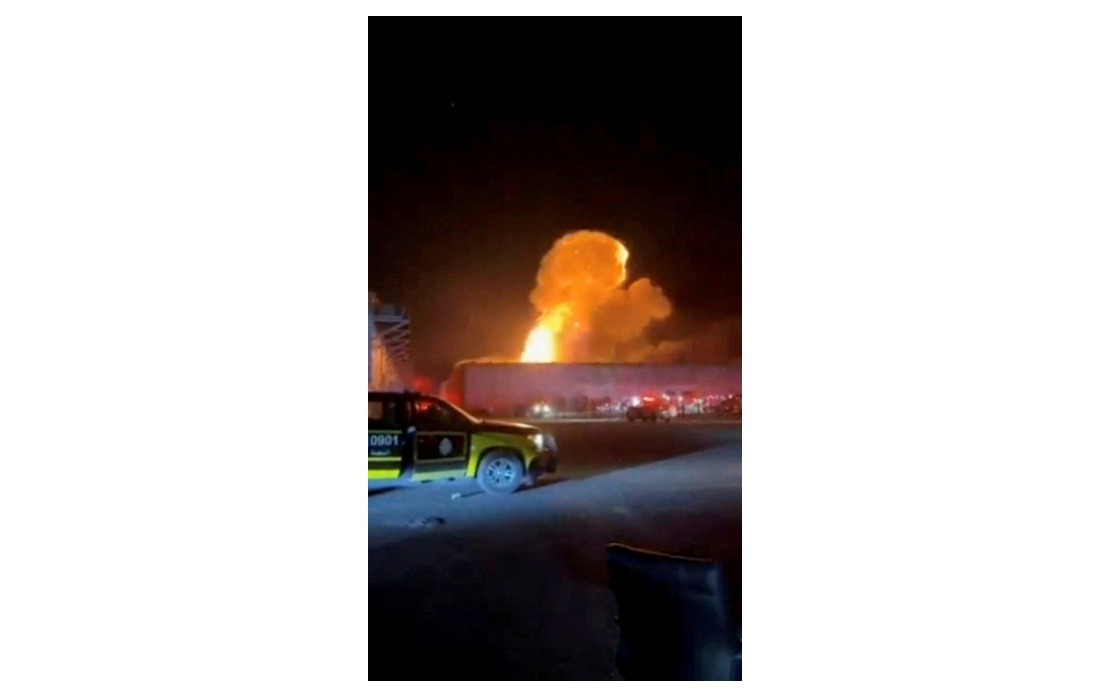
The Arabian Gulf descended into crisis mode on Friday as three major regional states simultaneously activated their most serious civil defense mechanisms in response to Iranian military operations, marking a dangerous acceleration in hostilities that has upended the strategic balance in one of the world's most economically vital regions. Bahrain, Qatar, and Kuwait each deployed air raid sirens and issued urgent public advisories within hours of one another, signaling that the threat level had reached a critical threshold that demanded immediate civilian protective action across the Gulf's major population centers.
The cascade of alerts began when Bahrain's Interior Ministry activated warning sirens across the island kingdom and instructed residents to move to designated safe locations with minimal delay. Simultaneously, Qatar's Interior Ministry released a statement advising the public to remain indoors in secure facilities, explicitly warning that security threat levels had risen to dangerous heights. Kuwait, meanwhile, implemented similar emergency procedures, with authorities activating civil defense sirens nationwide and directing citizens to seek immediate shelter while adhering strictly to official instructions broadcast through state media channels.
The military response came from Kuwait, where the country's armed forces announced that their air defense systems were actively engaging incoming hostile aircraft and munitions. The Kuwaiti army provided no technical details about the scale of the assault, the types of weapons involved, or whether any installations had sustained damage, maintaining operational security protocols while confirming that a genuine attack was underway. This restraint in disclosure contrasted sharply with the public-facing emergency measures, suggesting that while civilian populations faced a credible threat, military officials were attempting to limit intelligence leaks that might compromise ongoing defensive operations.
Iranian military officials subsequently claimed responsibility for the strikes, announcing that their armed forces had executed drone operations targeting a United States military facility located in Bahrain, which hosts the Pentagon's crucial Fifth Fleet headquarters. The Iranian declaration framed the attacks as a defensive response to what Tehran characterized as aggression from Washington and its regional ally Israel, establishing a narrative that positioned Iran as a retaliating rather than initiating power despite launching the offensive operations that triggered Friday's emergency responses across three sovereign nations.
This latest eruption of violence represents merely the most recent chapter in a conflict that intensified dramatically on February 28, when the United States and Israel orchestrated a coordinated military campaign against Iranian targets. That joint offensive triggered an immediate response from Tehran, which dispatched its own barrage of ballistic missiles and drone swarms against multiple Gulf states, particularly those hosting American military personnel or infrastructure. The cycle of strikes and counter-strikes has continued sporadically since February, creating an environment of perpetual tension where any technical malfunction, miscalculation, or intentional provocation could spiral into open warfare.
Despite these escalating hostilities, international diplomatic efforts have continued in parallel. Pakistan brokered negotiations between American and Iranian representatives last month that produced a preliminary framework agreement intended to de-escalate tensions and establish conditions for negotiating a comprehensive peace settlement. Both parties publicly endorsed the framework, suggesting a genuine willingness to explore diplomatic off-ramps from their destructive competition. However, the deterioration in recent days indicates that this framework has proven fragile, unable to withstand the structural tensions driving both nations toward military confrontation.
The specific flashpoint that reignited tensions centers on the Strait of Hormuz, the narrow waterway through which approximately one-third of the world's seaborne traded oil transits daily. Iran has repeatedly threatened to close or disrupt shipping through the strait in response to Western sanctions and military pressure, while American warships maintain a continuous presence to ensure freedom of navigation. Recent weeks have witnessed a series of naval incidents, vessel seizures, and military posturing by both Iranian and American forces in the strait, creating opportunities for accidental escalation even in the absence of deliberate strategic decisions to expand the conflict.
For Malaysia and other Southeast Asian nations, the deterioration of security conditions in the Gulf carries significant economic ramifications. Malaysian crude oil imports, refining operations, and petrochemical industries depend heavily on stable access to Gulf energy supplies and unobstructed maritime passage through regional chokepoints. Any sustained disruption to shipping lanes or oil production facilities could trigger sharp increases in energy prices that would cascade through Malaysian manufacturing, transportation, and consumer sectors. Additionally, Southeast Asian nations maintain substantial expatriate communities throughout the Gulf, and widespread conflict could endanger Malaysian citizens working in affected areas.
The simultaneous activation of emergency protocols across Bahrain, Qatar, and Kuwait also signals deep concern among Gulf leadership about the trajectory of Iranian-American competition. These three nations, despite their own occasional disagreements, recognized a shared interest in signaling that they view the current escalation as sufficiently serious to warrant unprecedented levels of civilian preparation. Such coordinated responses, while ostensibly technical safety measures, also carry political significance, demonstrating regional solidarity against Iranian military operations and subtle pressure on the United States to escalate its own military response.
The underlying strategic competition between Iran and the United States for dominance in the Persian Gulf remains fundamentally unresolved by any diplomatic mechanism currently in place. While the Pakistani-mediated framework agreement represents genuine diplomatic progress, it has not addressed the core drivers of conflict: American determination to maintain regional military superiority and containment of Iranian influence, coupled with Iranian aspirations to establish itself as a regional hegemon capable of threatening American interests. These incompatible objectives virtually guarantee continued friction until one side achieves a decisive military or political victory, or until both exhausted powers recognize that mutual coexistence serves their interests better than continued competition.
The proliferation of advanced weapons systems, including sophisticated drone technology and long-range missiles that Iran has demonstrated repeatedly, fundamentally alters the calculus of regional conflict. Unlike previous eras when American military dominance could be asserted relatively safely, contemporary Iranian capabilities now enable meaningful retaliation against American assets positioned throughout the Gulf. This mutual vulnerability creates a paradoxical situation where both powers retain strong incentives to avoid all-out war, yet the logic of deterrence pushes them toward increasingly aggressive posturing and strike operations designed to demonstrate resolve and capability to their respective allies and adversaries.

