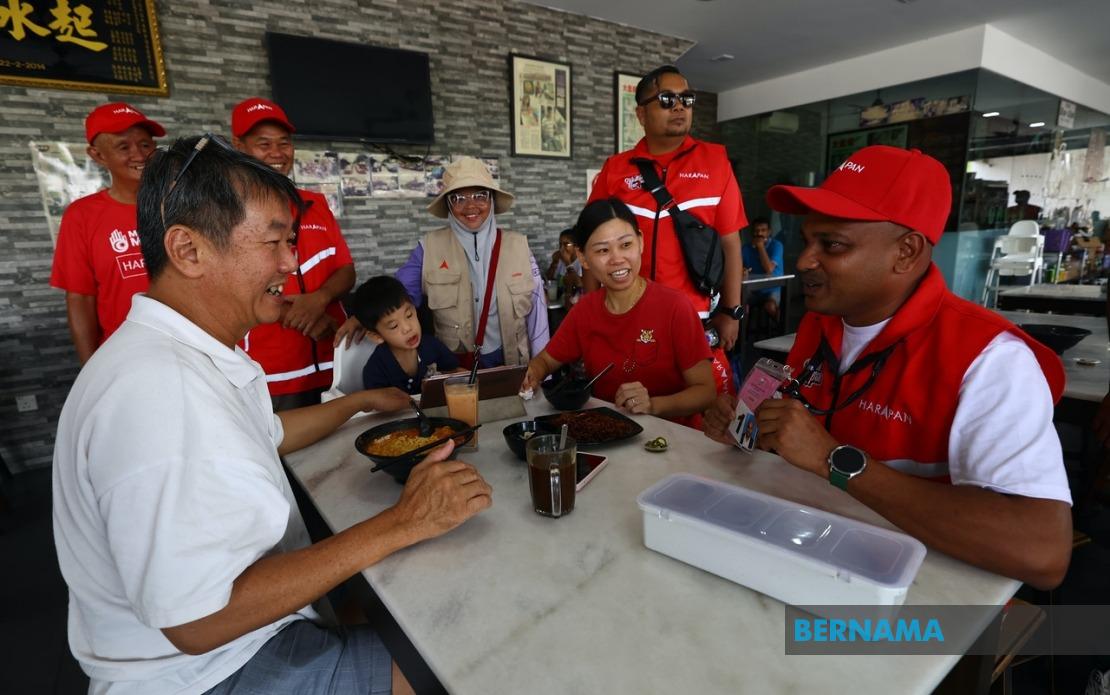
Pakatan Harapan candidate Guna Balakrishnan is making a final push across the Layang-Layang state constituency in the closing stages of his campaign, seeking to connect with remaining voters before Johor's state election on July 11. With nearly 80 per cent of the constituency already canvassed, the PH campaign machinery is now concentrating its efforts on reaching the untouched 20 per cent of the electoral ground in what promises to be a tightly contested three-way race against Barisan Nasional and the incumbent Perikatan Nasional representative.
The intensity of the final campaign phase underscores the competitive nature of the Layang-Layang contest, where every voter contact and persuasion effort counts toward victory. Guna has acknowledged that the remaining days demand maximum mobilisation across the constituency, which encompasses 25,181 registered voters. His determination to bridge this final gap reflects the significance of this state seat within the broader context of Johor's electoral dynamics, where coalitional fortunes remain fluid and voter sentiment continues to shift across the peninsula.
Guna's campaign strategy hinges on articulating Pakatan Harapan's governance record and presenting a forward-looking vision tailored to Layang-Layang's specific development needs. He has framed his appeal around the coalition's ability to deliver tangible improvements to residents' daily lives, moving beyond rhetorical promises to concrete proposals addressing infrastructure, connectivity, and social welfare. This approach seeks to distinguish his candidacy from competitors by demonstrating a granular understanding of local challenges and offering evidence-based solutions grounded in national policy experience.
The manifesto unveiled by Guna encompasses multiple development pillars designed to resonate across different demographic segments within the constituency. Flood mitigation emerges as a centrepiece, reflecting the genuine vulnerability of communities in this region to monsoon-related inundation and drainage failures. Road upgrades and improved street lighting address fundamental infrastructure deficits that affect residents' safety, economic productivity, and quality of life. These terrestrial investments are complemented by digital infrastructure proposals, recognising that rural and semi-rural areas like Layang-Layang face persistent connectivity gaps that constrain economic opportunities and educational advancement.
The emphasis on digital access carries particular significance for Southeast Asian constituencies where internet penetration and bandwidth reliability directly influence whether young people can access higher education, participate in remote work opportunities, and engage with the broader digital economy. Guna's commitment to addressing unstable internet coverage positions this not merely as a convenience issue but as an equity problem affecting rural residents' chances for social mobility and economic advancement. This framing appeals to families investing in their children's futures and small business operators seeking to expand beyond traditional markets.
Human capital development initiatives within Guna's manifesto target multiple life stages and demographic groups, suggesting a long-term societal investment philosophy rather than short-term electoral pandering. Technical and Vocational Education and Training expansion addresses a persistent skills gap in Malaysia where secondary school graduates often lack pathways into meaningful employment outside university-dependent trajectories. Women's entrepreneurship programmes acknowledge the underutilisation of female economic potential and the necessity of supporting household incomes through business ownership. These components collectively propose a more inclusive growth model than development approaches centred solely on large infrastructure projects or industrial investment.
The proposed Senior Citizen Activity Centre represents a distinctive policy commitment reflecting demographic realities across Malaysia, where an ageing population requires dignity, social connection, and purposeful engagement beyond mere subsistence provision. This initiative suggests that Guna's vision extends beyond working-age voters to encompass the welfare and social integration of elderly residents, a constituency often neglected in electoral competition focused on younger demographics. The concept of PAWE—an activity centre promoting inclusive well-being—indicates attention to quality-of-life dimensions beyond material provision.
Local validation of Guna's campaign messaging comes from community members whose endorsements provide authentic insight into how campaign propositions resonate with actual voters navigating daily economic and social challenges. Trader Tan Ah Kiat's assessment that Guna comprehends local community needs reflects recognition that effective political representation requires intimate knowledge of constituents' lived realities rather than generic policy templates applied uniformly across diverse electoral territories. The specificity of Tan's concerns—flood mitigation, drainage infrastructure, street lighting—demonstrates that residents prioritise fundamental services over grandiose development schemes.
Kalaiselvan's appreciation for the TVET and women's entrepreneurship components suggests that Guna's messaging successfully connects with voters concerned about economic opportunity pathways for family members. The endorsement of the senior citizen welfare proposal indicates receptiveness across age groups to inclusive policy frameworks acknowledging that community well-being encompasses multiple generations. These testimonials, while anecdotal, suggest the campaign has identified resonant themes and effectively communicated them to diverse constituencies within Layang-Layang.
The three-cornered contest structure—involving Guna, Barisan Nasional's Chua Jian Boon, and incumbent Perikatan Nasional representative Abd Mutalip Abd Rahim—creates a fragmented competitive landscape where plurality victory becomes possible without achieving majority support. This dynamic potentially favours candidates able to consolidate coalition support and mobilise specific community segments more effectively than rivals. Guna's intensive final campaign phase reflects awareness that the margin between victory and defeat in such contests often depends on marginal voter persuasion and turnout management in the final week.
Early voting on July 7 and the main polling on July 11 will determine whether Guna's campaign intensity, manifesto focus, and community engagement translate into electoral success. The Layang-Layang outcome will form part of the broader Johor state election narrative, contributing to understanding whether Pakatan Harapan can rebuild electoral support after previous setbacks in East Malaysian and West Malaysian contests. Beyond Johor's borders, the Layang-Layang result offers insights into voter receptiveness to human capital investment, rural connectivity priorities, and inclusive development frameworks versus more traditional election messaging focused on administrative performance and coalition stability.

