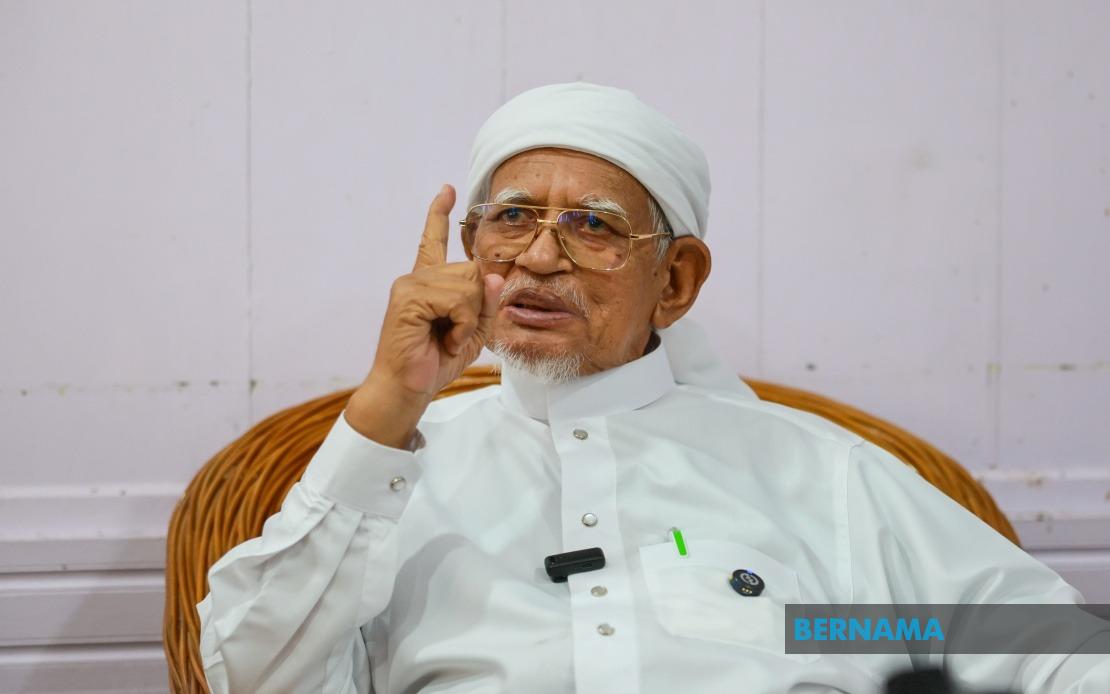
The leadership of Perikatan Nasional is embroiled in a fresh dispute over coalition membership following signals that Bersatu intends to pursue alternative political alliances. PAS president Tan Sri Abdul Hadi Awang declared in Marang that Bersatu has effectively ceased to be a member of PN after the party signalled its desire to establish a separate coalition. Speaking after delivering a duha lecture at the Rusila Mosque, he argued that no formal notification is required from the coalition to Bersatu because the party's membership automatically terminates once it expresses interest in forming another grouping.
The tension centres on how PN interprets its own constitutional framework and the rights of member parties to pursue external alliances. Hadi's position rests on the principle that stating an intention to join or create competing coalitions amounts to an irrevocable break from the existing partnership. In his view, such declarations trigger automatic withdrawal mechanisms without requiring bureaucratic procedure or consensus from other component members. This interpretation suggests that coalition membership carries inherent exclusivity obligations that supersede formal constitutional processes.
Bersatu president Tan Sri Muhyiddin Yassin had previously indicated through media reports that the party would construct a new coalition with several other parties following the Negeri Sembilan state election. These signals prompted speculation about Bersatu's long-term commitment to PN, which has already experienced fractious relationships among its component parties. The timing of Bersatu's coalition-building ambitions raises questions about whether the party views its current PN membership as temporary or transitional.
Bersatu secretary-general Datuk Seri Mohamed Azmin Ali directly contradicted Hadi's interpretation, insisting that the party maintains legitimate standing within PN. He pointed to the absence of any constitutional provision permitting automatic membership revocation, arguing that Hadi's unilateral declaration lacks legal foundation. Azmin emphasised that PN's internal procedures provide for structured decision-making rather than impulsive pronouncements by individual party leaders.
According to Clause 7A of the Perikatan Nasional Constitution, membership matters involving component parties fall exclusively within the purview of the presidential council. Azmin stressed that this body has not convened to formally assess or determine Bersatu's continued membership status. The constitutional framework thus establishes a clear hierarchy of decision-making authority, with individual party presidents occupying a subordinate position relative to the collective presidential council. This structural arrangement reflects an attempt to prevent unilateral actions that could destabilise the coalition through ad hoc pronouncements.
Azmin's response underscores a fundamental disagreement about the locus of power within PN's governance structure. By emphasising that Hadi possesses no veto authority over Bersatu's membership, he challenged the PAS president's implicit claim to act as arbiter of coalition membership. This dispute reveals tensions between centralised decision-making through the presidential council and the autonomy individual party leaders assert in making public statements about their party's coalition status.
The legal and constitutional dimensions of this disagreement carry implications for PN's cohesion and operational credibility. If individual party presidents can effectively nullify membership through public declarations, the coalition becomes vulnerable to rapid fragmentation driven by rhetorical posturing rather than substantive political realignment. Conversely, if membership can only be altered through formal presidential council action, the coalition gains institutional stability but potentially traps member parties in arrangements they wish to exit.
Bersatu's stated intention to form alternative coalitions after the Negeri Sembilan election suggests strategic calculations about its political viability within the current PN framework. The party may perceive greater electoral advantage or policy alignment with other potential partners, prompting the pursuit of exit options. This reflects broader patterns in Malaysian coalition politics where member parties continuously evaluate the cost-benefit calculus of their current associations against available alternatives.
The dispute also illustrates how constitutional ambiguity can become a flashpoint in coalition politics. Both Hadi and Azmin cite the PN Constitution to support contradictory interpretations, suggesting the document may contain provisions susceptible to conflicting readings or may lack clarity on crucial membership procedures. Such ambiguities create openings for stronger voices to prevail through rhetoric and assertion rather than unambiguous constitutional language.
Azmin announced that Bersatu would lodge a formal complaint with the Registrar of Societies regarding Hadi's claims, escalating the dispute beyond internal coalition discussions to regulatory authorities. This move introduces an external arbiter into what was initially a matter of coalition governance. The Registrar's involvement could clarify whether Hadi's assertions hold legal merit or whether they constitute an overreach of his institutional authority. Such regulatory intervention might establish precedent for how membership disputes within multi-party coalitions are resolved in Malaysian politics.
For Malaysian observers and regional analysts, this clash reveals fault lines within PN that extend beyond immediate coalition management. The disagreement between its largest Malay-Muslim party (PAS) and the smaller Bersatu reflects broader questions about power distribution within coalitions and the mechanisms available to member parties for asserting their interests. The outcome will likely influence how PN functions operationally and whether component parties perceive the coalition as a stable long-term arrangement or a temporary tactical alliance.
The incident underscores the inherent instability of coalitions comprising parties with divergent ideological orientations and electoral bases. Bersatu's apparent willingness to explore alternative partnerships suggests the party views PN primarily as a vehicle for retaining relevance rather than as a permanent political home. This transactional approach to coalition membership creates persistent uncertainty about PN's durability and capacity to function as a cohesive electoral force in future national contests.

