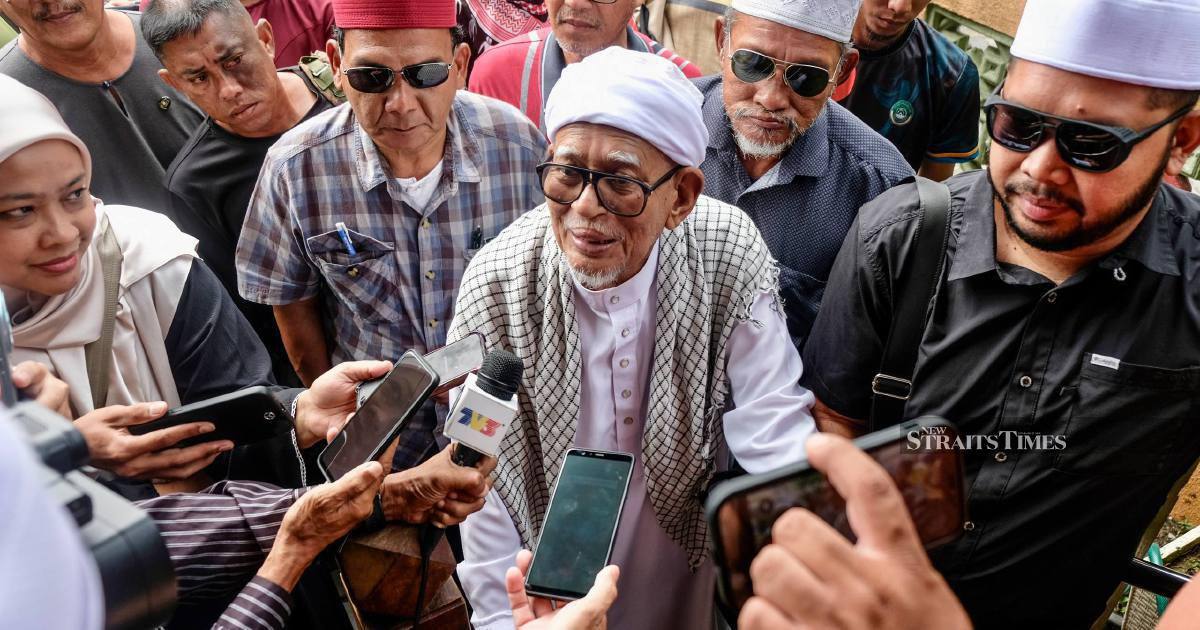
The absence of Prime Minister Datuk Seri Anwar Ibrahim from a special parliamentary sitting examining the Royal Commission of Inquiry report on Lembaga Tabung Haji (TH) has drawn sharp criticism from PAS president Tan Sri Abdul Hadi Awang, who questioned the appropriateness of the premier's non-attendance at such a significant legislative proceeding.
Hadi's remarks, made in Marang, reflect broader concerns within the opposition about the government's engagement with matters of considerable public importance. The Tabung Haji RCI report represents a critical examination of one of Malaysia's most prominent Islamic financial institutions, affecting hundreds of thousands of pilgrims who entrust their savings with the organisation for their Hajj journeys. The royal commission's findings carry substantial implications for governance, financial accountability, and public confidence in religious endowments.
The parliamentary sitting itself underscores the gravity with which legislators regard the RCI's work. Establishing a dedicated parliamentary session signals recognition that the report's contents merit thorough legislative scrutiny and debate. In such contexts, the presence of the Prime Minister would ordinarily signal executive commitment to addressing concerns raised and demonstrating leadership on matters affecting public institutions and citizen welfare.
Tabung Haji has historically occupied a unique position within Malaysia's financial landscape, serving not merely as a savings institution but as a trust managing one of the most spiritually significant obligations undertaken by Malaysian Muslims. Any inquiry into its operations carries implications extending beyond routine corporate governance to touch upon religious responsibility and stewardship of community assets. The RCI's investigation presumably examined concerns regarding financial management, transparency, and accountability within the organisation.
Hadi's criticism touches upon questions of political accountability and executive responsibility that resonate beyond partisan divisions. When Parliament convenes specially to deliberate on matters of institutional integrity and public financial stewardship, the attendance of the head of government conventionally demonstrates that executive authority takes such matters seriously. The absence, conversely, risks suggesting deprioritisation or reluctance to engage directly with legislative scrutiny.
For Malaysian readers and observers tracking governance standards, the exchange highlights recurring debates about executive-legislative relations and the tone set from government regarding institutional accountability. Whether the Prime Minister's absence reflected scheduling constraints, deliberate choice, or other considerations remains a point of interpretation, but the optics have clearly attracted political attention and criticism from significant parliamentary voices.
The timing of such a sitting during Malaysia's ongoing political dynamics adds another dimension. Anwar Ibrahim leads a coalition government navigating various policy priorities and political consolidations. Parliament remains a forum where different coalition partners, including PAS which serves in certain state administrations while retaining independent parliamentary voices, engage government on matters of national concern.
The Tabung Haji issue itself carries implications for Malaysia's Islamic finance sector and public confidence in religious institutions managing community resources. How government and Parliament respond to RCI recommendations will influence not only the organisation's future trajectory but broader perceptions of institutional oversight and the seriousness with which questions about financial stewardship in religious contexts are treated.
From a regional perspective, Malaysia's handling of such institutional accountability matters attracts attention from observers across Southeast Asia. The region's diverse nations maintain varying approaches to balancing religious authority with modern governance requirements. Malaysia's management of issues affecting Islamic institutions demonstrates how the country navigates these complexities, potentially influencing approaches elsewhere in Muslim-majority societies.
The parliamentary discussion itself likely covered detailed findings, recommendations for reform, and questions from legislators across party lines regarding specific aspects of Tabung Haji's operations and proposed remedial measures. Without executive representation at the highest level, Parliament deliberates these matters without direct input or accountability exchange with the government leadership.
Hadi's intervention serves to maintain political pressure on the government regarding the matter and establish PAS's position on institutional accountability. For the opposition, emphasising executive absence from significant parliamentary business represents a tactic to highlight perceived governance gaps or lack of commitment to particular policy areas. Such positions matter in Malaysia's competitive political landscape, where different coalitions and parties vie to demonstrate superior commitment to public interest and institutional integrity.
Moving forward, the substance of Parliament's conclusions and any subsequent government action on RCI recommendations will largely determine whether the Prime Minister's absence proves politically consequential or becomes a passing criticism. However, the incident itself illustrates how executive engagement with legislative proceedings remains symbolically important in parliamentary systems, with attendance at significant sittings carrying meaning beyond mere physical presence.

