The attendance of Sabah Chief Minister Datuk Seri Hajiji Noor and senior Gabungan Rakyat Sabah (GRS) officials at the 2026 PKR National Congress in Melaka this week has underscored the evolving political landscape in East Malaysia, where coalition partnerships and cross-party cooperation increasingly take precedence over traditional partisan divisions. The presence of Hajiji, who chairs the GRS coalition, alongside key cabinet ministers from Sabah signals a maturation in how the state's leadership engages with the federal government led by Prime Minister Datuk Seri Anwar Ibrahim, moving beyond conventional adversarial politics toward pragmatic collaboration centred on delivering tangible benefits to constituents.
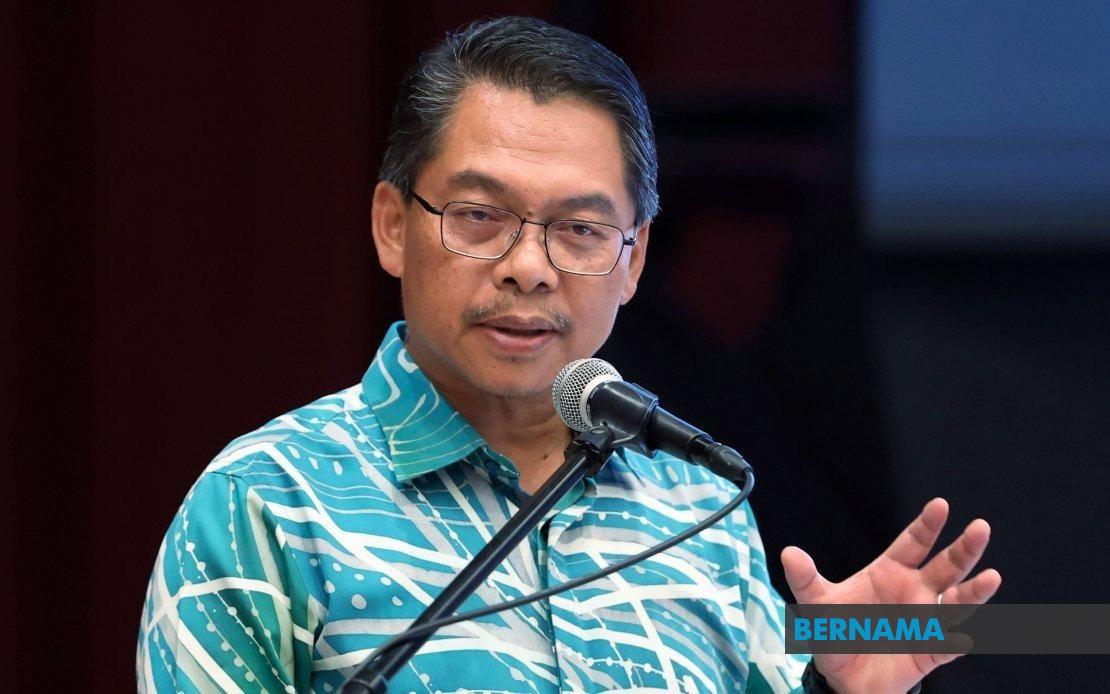
Sabah PKR Leadership Council chairman Datuk Mustapha Sakmud, who holds the ministerial portfolio overseeing Sabah and Sarawak Affairs in the Prime Minister's Department, characterised the delegation's participation as a reflection of robust institutional ties spanning multiple domains. In comments made during the congress proceedings, Mustapha articulated a vision of cooperation that transcends partisan boundaries, encompassing economic policy, infrastructure development, and social provision. This rhetorical positioning carries significance for Southeast Asia's political observers, as it demonstrates how Malaysia's two East Malaysian states are negotiating their unique constitutional standing within the federation through inclusive governance frameworks rather than through zero-sum political competition.
The substantive agenda articulated by Mustapha identified development outcomes as the ultimate measure of success for both federal and state authorities. Mustapha emphasised that transforming political stability into concrete improvements in living standards represents the shared objective uniting Sabah's leadership cadre, regardless of party affiliation. His statement specifically referenced enhanced economic opportunities, strengthened infrastructure, and responsive solutions to pressing community challenges as the benchmarks by which cooperative arrangements should be evaluated. This development-focused discourse reflects recognition that Sabah's electorate increasingly judges political leaders on capacity to improve material conditions rather than on partisan loyalty alone.
Central to Mustapha's positioning of the MADANI Government's responsibilities was the principle of equitable, inclusive national development that acknowledges regional diversity. He contended that the federal administration under Anwar bears an obligation to calibrate its policies and resource allocation to account for Sabah's particular geographic, demographic, and economic circumstances, rather than applying uniform approaches designed for peninsular Malaysia. This assertion of regional exceptionalism within the federal framework reflects long-standing East Malaysian perspectives on how the Malaysia Agreement 1963 (MA63) should inform contemporary governance. By framing federal responsibility around sensitivity to regional specificity, Mustapha positioned PKR as a party capable of honouring constitutional commitments to Sabah's special status while implementing national development agendas.
The prominence of MA63 implementation in Mustapha's remarks underscores its continuing salience in East Malaysian politics. He articulated PKR's commitment to advocating for Sabah's rights and interests through mechanisms that respect the state's constitutional position and distinctive status within the federation. The invocation of MA63 during a federal party congress by a Sabah-based leadership representative carries symbolic weight, as it reaffirms that state-level political actors view federal party participation not as subordination to peninsular-centric agendas but as a platform for advancing regional interests within a nationally representative forum. This framing attempts to resolve potential tensions between Sabah's incorporation into federal party structures and its assertion of constitutional autonomy.
The composition of the GRS delegation attending the PKR congress reflected Sabah's senior administrative structure. Alongside Hajiji's presence, the contingent included Deputy Chief Minister I Datuk Seri Dr Joachim Gunsalam, Rural Development Minister Datuk Rubin Balang, and ministers responsible for youth, sports, education, and technology portfolios. The breadth of ministerial representation across sectoral responsibilities indicated that attendance constituted an official state delegation rather than a token gesture by the chief minister alone. This comprehensive participation suggests that Sabah's cabinet-level officials view the PKR congress as a substantive policy forum where their respective administrative domains intersect with federal priorities. The inclusion of GRS deputy secretary-general Datuk Mohd Razali Mohd Razi and a state assemblyman further broadened the cross-sectional representation, encompassing party administration and legislative branches.
Musapha's explicit appreciation for the GRS delegation's presence carried performative significance within the PKR congress context. By formally acknowledging the attendance of leaders from a coalition government that holds executive power in a component state, Mustapha positioned PKR as a party capable of engaging constructively with political actors across Malaysia's federated structure. This symbolism matters within PKR's organisational dynamics, as it demonstrates the party's maturation beyond the oppositional posture that characterised much of its history. For peninsular PKR members observing the proceedings, the sight of a major East Malaysian political coalition attending their national congress reinforced PKR's positioning as a genuinely national political formation capable of operating within federal structures.
Musapha's characterisation of the delegation's presence as evidence that political differences need not obstruct cooperation on matters affecting Sabah and its constituents articulated an implicit critique of divisive partisanship. His framing suggested that the GRS leaders' attendance represented not a capitulation to federal authority or a betrayal of Sabah's interests but rather a sophisticated recognition that steering state development requires constructive engagement with federal power structures. This narrative carries particular resonance in Sabah, where voters have historically endorsed pragmatic alliances with federal governments to secure resources and policy attention. By positioning inter-party cooperation as consistent with defending Sabah's interests, Mustapha addressed potential concerns among GRS constituents that such engagement might compromise the coalition's autonomy or distinctiveness.
Prime Minister Anwar Ibrahim's role in officially opening the PKR National Congress under the theme "Memugar Reformasi, Membina MADANI" provided institutional context for the congress proceedings. The thematic emphasis on sustaining reform impulses while constructing the MADANI development vision establishes continuity between PKR's historical identity as a reform-oriented political force and its contemporary positioning within a governing coalition. The presence of GRS leaders within this setting, surrounded by PKR delegates contemplating the party's reformist trajectory and development commitments, created symbolically rich optics suggesting that East Malaysian constituencies constituted genuine partners in realising the MADANI vision rather than peripheral beneficiaries of federal programmes.
From a Malaysian federalism perspective, the GRS attendance at the PKR congress illustrates how contemporary coalition governance requires mechanisms for cross-party communication and coordination that transcend electoral competition and parliamentary opposition. The congress provided a venue for senior Sabah administrators to engage directly with federal party leadership on policy implementation, resource allocation, and strategic priorities affecting their constituents. Such forums enable the kind of informal consensus-building around development agendas that formal federation council meetings or intergovernmental committees may not facilitate. For Sabah's leadership, participation in federal party congresses offers opportunities to shape policy evolution, access decision-making networks, and ensure that regional interests receive consideration when federal parties formulate their strategic direction.
The broader significance of this gathering for Southeast Asian observers extends to how Malaysia's federal arrangement accommodates political diversity across its constituent territories. Unlike centralised systems where regional governments remain subordinate to national parties, Malaysia's constitutional structure permits significant autonomy for state governments and facilitates independent regional political formations like GRS. The active participation of Sabah's GRS-led administration in a federal party congress, coupled with Mustapha's articulation of cooperative federalism, demonstrates mechanisms through which Malaysian federalism permits both regional political distinctiveness and productive engagement with federal governance structures. This model offers potential lessons for other multinational federations navigating tensions between regional autonomy and national integration, particularly those in Southeast Asia grappling with similar constitutional and political complexities.

