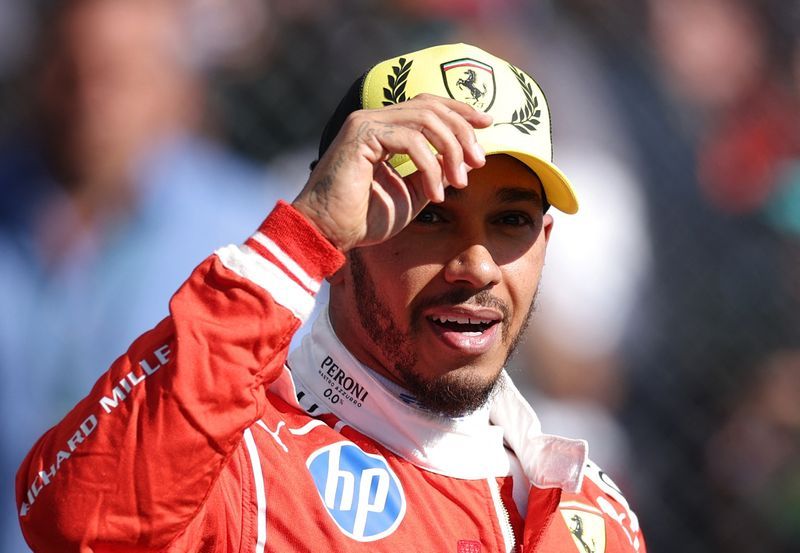
Lewis Hamilton arrives at the Hungaroring this weekend positioned to give Ferrari momentum heading into Formula One's August break, while Mercedes confronts an increasingly urgent performance puzzle that has left George Russell stranded in the title fight. The seven-time world champion boasts an enviable record at the Budapest track, having claimed eight victories there across his career—an unmatched achievement at any circuit on the calendar. With a recent pole position at the venue in 2023, Hamilton commands experience and comfort that could prove decisive in a race where tactical execution and precision frequently determine outcomes.
Russell's predicament has become the dominant talking point in the paddock as the Briton confronts a dramatic reversal of fortune. Once regarded as the season's title favourite and carrying the moniker "Mr Consistency," Russell now languishes 50 points adrift of the championship leader following his third non-scoring race of the campaign, a costly gravel excursion at Spa that undermined Mercedes' championship ambitions. The car's fundamental weakness on straights has exposed limitations in the team's technical direction, raising questions about whether their strategic approach will yield dividends before the calendar turns toward the second half of the season. Compounding Mercedes' distress is the contrast with Russell's 19-year-old Italian teammate Kimi Antonelli, whose ascent has been meteoric—the teenager has accumulated six victories from ten rounds, establishing himself as a formidable and increasingly confident competitor.
Hamilton's repositioning into second place overall, now 45 points behind Antonelli following Russell's misfortune, provides Ferrari with a platform for optimism at a circuit historically favourable to the Scuderia's competitive envelope. The Hungarian Grand Prix represents an entirely different competitive landscape compared to high-speed circuits where Mercedes and Red Bull typically flourish. Hungaroring's characteristics—tight corners, limited straights, and a premium on aerodynamic downforce rather than raw engine horsepower—suggest that Ferrari's engine deficit becomes less pronounced, though team principal Fred Vasseur has deliberately tempered expectations to avoid overconfidence. Vasseur's cautionary tone reflects the volatile nature of Formula One, where weekend-to-weekend performance fluctuations remain commonplace regardless of circuit profile.
Ferrari's recent form provides legitimate encouragement, with Charles Leclerc demonstrating superior consistency across the previous two race weekends. Leclerc claimed victory at Silverstone and secured second place in Belgium, establishing himself as the Scuderia's primary protagonist at this juncture. Hamilton's contribution to Ferrari's constructors' standing has been respectable rather than dominant, with a Barcelona triumph offset by fourth-place finishes at Silverstone and Spa. The contrast between Hamilton and Leclerc's recent trajectories underscores that Ferrari's championship pathway may depend increasingly upon Leclerc's ability to maintain momentum while Hamilton serves as a constructors' asset—a dynamic shift from traditional Mercedes dynamics where consistency from both drivers proved fundamental.
Antonielli's assessment that Hungary could evolve into a genuine four-team battle reflects the unpredictable character of lower-speed circuits where car balance and driver precision supersede aerodynamic efficiency gains. Red Bull and McLaren, despite their relative dominance this season, face circuit characteristics that diminish their technological advantages. Antonelli's Monaco-inspired observation—that drivers must simply extract maximum performance from machinery without reliance upon specialized systems—captures the essence of what makes Budapest so appealing as a leveller. The tighter confines and reduced energy deployment requirements theoretically create scenarios where mid-pack teams occasionally surprise front-runners through superior execution.
Historical patterns suggest Budapest's unpredictability remains legitimate. Four of the top seven championship contenders have previously won at the Hungaroring, though notably Russell and Leclerc lack that credential. Last year's race, where Lando Norris delivered a commanding McLaren one-two performance ahead of Oscar Piastri following Leclerc's pole position, demonstrated that technical superiority can still manifest even at circuits supposedly favoring different machinery characteristics. Such precedent warns against dismissing McLaren despite their relative underperformance at certain venues this season.
McLaren's planned upgrades—including a new floor and modified aerodynamic elements—signal the team's determination to address performance gaps with hardware rather than software optimization alone. The parallel testing of an experimental rear wing addition suggests McLaren's engineers are exploring different aerodynamic philosophies to combat recent setbacks. Furthermore, the decision to field reserve driver Leonardo Fornaroli, last year's Formula Two champion, during Friday practice sessions while Piastri rests indicates McLaren's commitment to developmental work ahead of the mid-season push. Such decisions reflect the computational intensity modern Formula One demands, where data accumulation and technical iteration consume enormous resources across the calendar.
Aston Martin's long-awaited chassis upgrade represents another variable in Hungary's competitive equation, though the team will face a distinct disadvantage regarding engine performance. The delay in receiving Honda's latest power unit until the Dutch Grand Prix at month's end means Aston Martin competes with previous-generation components. This staggered equipment delivery reflects the logistical complexities inherent in contemporary Formula One, where homologation regulations and supply chain coordination frequently impact competitive windows. Aston Martin's structural improvements may partially offset engine disadvantages on a circuit prioritizing mechanical balance over straightline velocity.
The strategic implications for Malaysian and Southeast Asian Formula One enthusiasts extend beyond weekend entertainment value. The competitive fluidity currently dominating the championship illuminates how quickly advantage shifts in motorsport's modern era. Mercedes' reversal from championship favourites to troubled competitors within weeks demonstrates that technological leadership proves ephemeral without continuous innovation and execution. Similarly, Ferrari's resurgence under Vasseur's leadership suggests that organizational stability and long-term strategic coherence increasingly determine success over short-term tinkering. For regional audiences observing these dynamics, the lesson remains that Formula One's unpredictability stems fundamentally from the interdependence between human performance, mechanical reliability, and strategic acumen—elements that rarely align simultaneously for extended periods.

