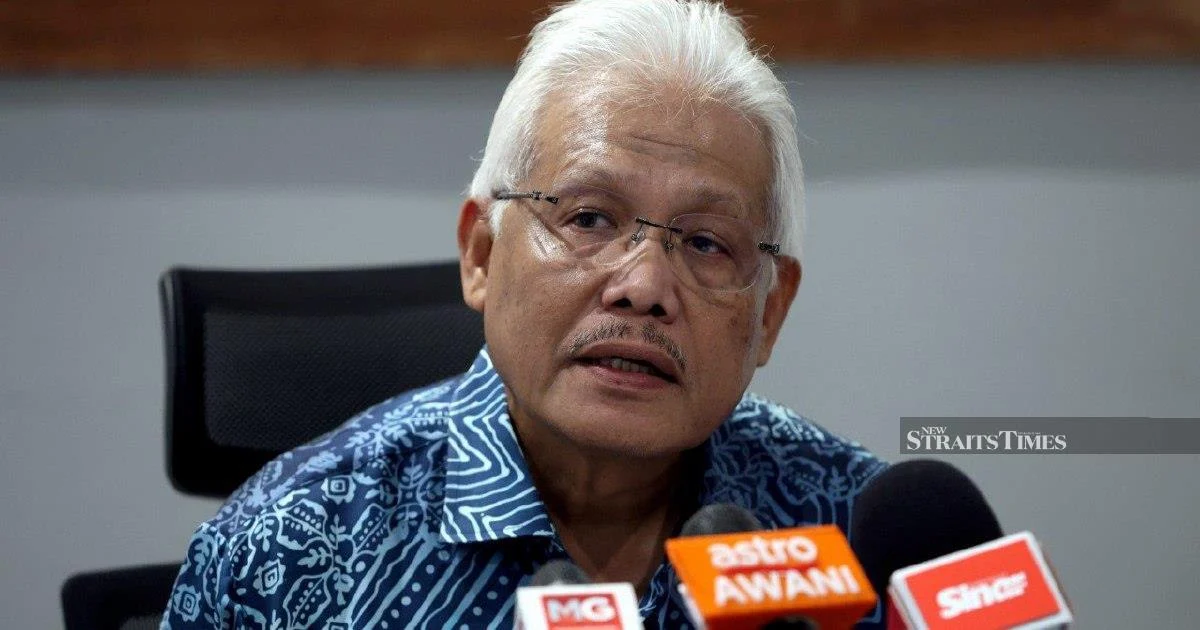
Hamzah Zainudin's newly rebranded Parti Wawasan Negara has declared an intention to act as a political bridge between Pas and Umno, two of Malaysia's largest Malay-Muslim parties, in a bid to consolidate ethnic unity and prevent schisms that could undermine the broader community. The repositioning reflects an emerging strategy within Malaysia's fractious political landscape, where smaller parties increasingly attempt to leverage their flexibility and perceived neutrality to influence relations between rival titans of Malay politics.
The party, previously operating as Parti Cinta Malaysia, has adopted a more expansive mandate under its new name, signalling both organisational renewal and a recalibration of political ambitions. This transformation carries symbolic weight in Malaysian politics, where rebranding often signals a departure from previous positioning and an attempt to capture fresh political space. The move to Parti Wawasan Negara—literally "Vision Party of the Nation"—suggests aspirations toward a more inclusive, nation-building identity that transcends narrow factional interests.
The proposed intermediary role addresses a genuine tension within Malaysian politics. Pas, the Islamic Party of Malaysia, and Umno, the dominant component of the Barisan Nasional coalition, have experienced periods of intense rivalry and fragile cooperation, with their relationship fluctuating based on electoral considerations, ideological disputes, and personal political ambitions among party leaders. These oscillations create uncertainty affecting Malay-Muslim political orientation and can complicate coalition-building at both federal and state levels, ultimately rippling through the broader governance structure.
Hamzah Zainudin's positioning as a potential mediator is not without political calculation. By positioning Parti Wawasan Negara as a non-threatening third party with connections across the Malay political spectrum, the party potentially increases its relevance and bargaining power in coalition negotiations. Smaller parties that can credibly claim bridge-building capacity often secure disproportionate influence during delicate political formations, particularly when major partners face mutual suspicion.
The emphasis on preventing divisions "detrimental to the people" invokes a common rhetorical device in Malaysian politics—appeal to national or communal interest above partisan advantage. This framing suggests that intra-Malay political conflict carries broader social costs, implying that political stability within this crucial demographic bloc benefits all Malaysians through reduced polarisation and more coherent policy direction. The argument resonates with longstanding concerns about the dangers of fractured Malay-Muslim representation in Malaysia's multi-ethnic context.
From a regional perspective, Malaysia's ability to maintain internal political stability within its dominant ethnic bloc has implications for Southeast Asian governance more broadly. Malaysia's model of managing multi-ethnic politics through community-based political parties differs markedly from approaches in neighbouring Thailand, Indonesia, and Singapore, and instability within the Malay-Muslim political architecture could reverberate through broader regional political dynamics and investor confidence.
The timing of this initiative deserves scrutiny. Malaysian politics operates on constant electoral calendars at federal and state levels, with various state assemblies facing dissolution and reconstitution regularly. Parti Wawasan Negara's emergence as a mediatory force may capitalise on a political moment where both Pas and Umno recognise mutual vulnerabilities, particularly regarding federal government stability and state-level competition. The party's bridge-building aspirations are most credible—and most useful to potential allies—when larger parties face genuine uncertainty.
However, the practical challenge of serving as an effective intermediary should not be underestimated. Pas and Umno harbour deep ideological differences regarding Islam's role in governance, economic policy preferences, and competing visions of Malay political leadership. These are not merely tactical differences amenable to compromise through a third-party mediator, but fundamental disagreements about the nation's direction. A party seeking genuine bridge-building must navigate these structural tensions without appearing to capitulate to either side or to dilute its own principles.
The success of Parti Wawasan Negara's mediation efforts will largely depend on whether its leadership can develop concrete policy proposals and governance frameworks that address the legitimate concerns of both Pas and Umno while offering substantive improvements over their current competitive stalemate. Vague appeals to unity, while rhetorically effective, prove insufficient to sustain political coalitions facing material pressures and electoral competition.
For Malaysian voters and observers, the emergence of Parti Wawasan Negara as an attempted mediator illustrates a persistent feature of Malaysia's political economy: the availability of political space for entrepreneurial leaders to construct new organisations and claim bridging roles. Whether this particular initiative generates lasting political impact or dissipates as one of numerous ephemeral political formations will depend on institutional capacity, sustained leadership commitment, and whether Pas and Umno find sufficient mutual interest in third-party mediation versus direct bilateral negotiation.

