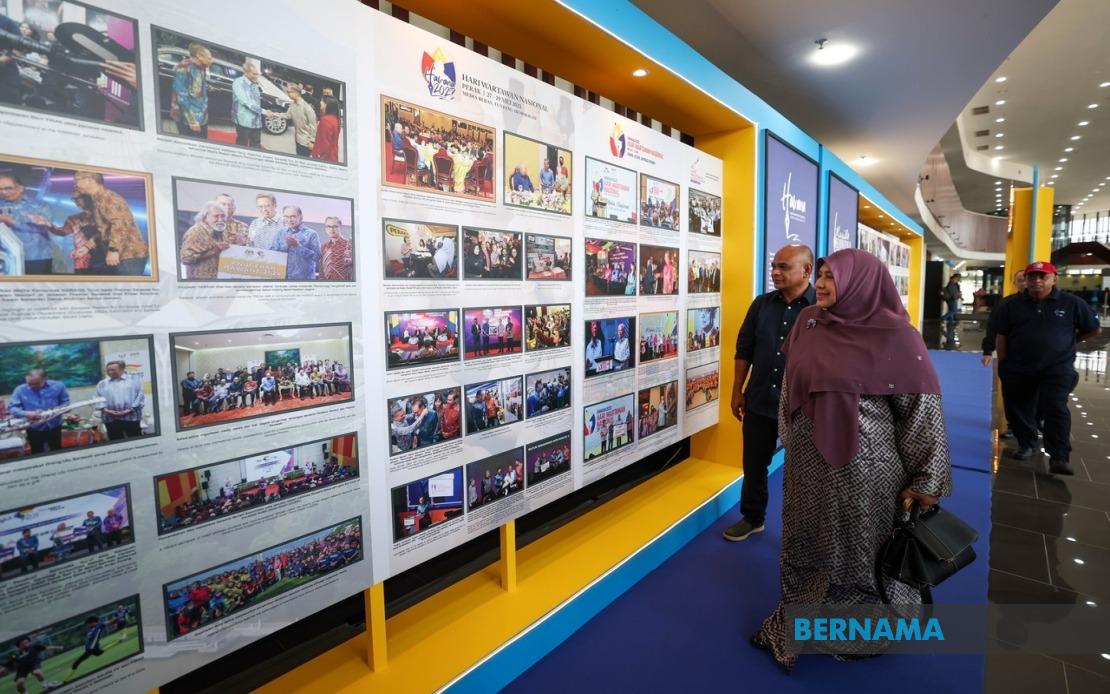
The National Journalists' Day (HAWANA) 2026 summit begins tomorrow at the PICCA@Arena Butterworth Convention Centre, marking a significant occasion for Malaysia's media landscape as Prime Minister Datuk Seri Anwar Ibrahim prepares to officiate proceedings at 3 pm. The initiative has undergone intensive final preparations over the past 72 hours, with organisers confirming that groundwork stands at approximately 80 per cent completion as the country's premier platform for recognising journalistic excellence prepares to welcome delegates.
Bernama chief executive officer and HAWANA 2026 Working Committee chairman Datin Paduka Nur-ul Afida Kamaludin outlined the operational scale and coordination required to host an event of this magnitude. Multiple rehearsal sessions have been conducted to ensure seamless execution across all aspects of the programme, reflecting the complexity involved in orchestrating a gathering expected to attract approximately 1,000 media practitioners from Malaysia and international locations. The logistical undertaking extends beyond the summit itself, encompassing comprehensive planning for accommodation, transport, and ancillary services.
The decision to relocate HAWANA from its traditional Kuala Lumpur venue to Penang presented distinct challenges that required meticulous attention. Nur-ul Afida acknowledged that this geographical shift introduces variables absent from previous iterations held in the capital, where accessibility and proximity naturally encourage broader participation. The move to Butterworth necessitates consideration of competing professional commitments, travel time, and personal circumstances that may influence attendance patterns among media professionals scattered across the peninsula.
Organisers have invested considerable effort in forging partnerships with Penang's hospitality sector to address infrastructure constraints inherent to hosting a national event outside the capital. Accommodation providers across the state have committed to supporting both the organising team and attending media personnel, a collaborative approach that reflects recognition of the summit's importance to Malaysia's journalism community. These arrangements underscore the pragmatic challenge of maintaining event quality and accessibility when operating beyond established metropolitan infrastructure.
The anticipated attendance variance compared with Kuala Lumpur editions presents both practical and symbolic considerations. While urban concentration in the capital naturally facilitates higher turnout, the Penang location offers opportunities to engage journalists and media organisations beyond the traditional Klang Valley corridor. The dispersed geographical base of Malaysia's media landscape means that participants in northern regions benefit from reduced travel burdens, potentially broadening representation beyond what major urban proximity alone would provide.
Beyond the main summit programme, HAWANA 2026 will incorporate multiple collateral events orchestrated by key institutions within the Malaysian media ecosystem. The Malaysian Media Council, Federation of Malaysian Media Clubs (GKMM), and Malaysian Press Institute (MPI) have scheduled complementary activities running alongside the primary summit, amplifying the overall impact and creating additional networking opportunities for attendees. These satellite programmes extend the intellectual and professional engagement beyond the central gathering, enabling deeper exploration of specific topics and sectoral interests.
The summit's overarching theme, "Media Integrity Strengthens Credibility," addresses a fundamental concern within contemporary journalism discourse. As media landscapes globally confront challenges ranging from misinformation to eroding public trust, Malaysia's journalism community gathers to examine how integrity mechanisms reinforce institutional credibility. The thematic focus suggests organisers recognise the necessity for the profession to articulate and strengthen its foundational commitments to accuracy, transparency, and ethical practice.
HAWANA, organised under the Ministry of Communications with Bernama as implementing agency, represents the culmination of national efforts to celebrate journalistic achievement and professional development. The platform historically serves dual purposes: recognising individual and collective contributions to journalism excellence, while simultaneously providing a forum for charting future directions in media practice and industry evolution. For Malaysian journalists, the summit functions as both recognition ceremony and strategic convening space.
The anticipated attendance of approximately 1,000 media professionals transforms the summit into a consequential gathering within Malaysia's media ecosystem. By drawing practitioners from diverse outlets, regions, and specialisations, HAWANA 2026 creates rare opportunity for cross-sector dialogue and collaborative thinking about shared professional challenges. The international dimension—with overseas media professionals expected—enables comparative perspective-sharing and exposure to global best practices in journalism.
Prime Minister Anwar Ibrahim's role as guest of honour underscores government commitment to supporting media professionalisation and institutional development. High-level political patronage signals official recognition of journalism's role in national discourse and democratic functioning. The PM's presence lends gravitas to discussions surrounding media integrity, suggesting alignment between government expectations and industry efforts to maintain professional standards.
For Malaysian media practitioners, the summit represents a critical juncture for considering how journalism can maintain credibility amid rapid technological change and shifting information consumption patterns. The gathering occurs within a context where traditional media outlets navigate competition from digital platforms, citizen journalism, and social media—all requiring thoughtful professional responses regarding standards and accountability. HAWANA 2026 provides structured space for the journalism community to collectively examine these pressures and develop coordinated responses.
The relocation to Penang, while presenting logistical complications, also signals willingness within Malaysia's journalism establishment to decentralise professional gatherings beyond capital city concentration. This geographical diversity potentially strengthens the summit's representative character and accessibility. For northern Malaysian journalists, reduced travel burden may translate into enhanced participation and more extensive engagement with summit content and networking opportunities.
As final preparations conclude, the HAWANA 2026 summit emerges as significant occasion for Malaysia's journalism community to convene, recognise professional achievement, and collectively address challenges facing contemporary media practice. The gathering's success will substantially depend on whether it generates actionable insights and renewed professional commitments that extend beyond the summit's duration into ongoing industry practice and institutional development.
%22%2F%3E%3C%2Fpattern%3E%3C%2Fdefs%3E%3Crect%20width%3D%22100%25%22%20height%3D%22100%25%22%20fill%3D%22url(%23ph4q0m9g)%22%2F%3E%3Crect%20width%3D%22100%25%22%20height%3D%22100%25%22%20fill%3D%22url(%23ph4q0m9p)%22%2F%3E%3Ctext%20x%3D%2250%25%22%20y%3D%2250%25%22%20text-anchor%3D%22middle%22%20dominant-baseline%3D%22central%22%20fill%3D%22rgba(255%2C255%2C255%2C0.95)%22%20font-family%3D%22Georgia%2C%20'Times%20New%20Roman'%2C%20serif%22%20font-weight%3D%22700%22%20font-size%3D%22194%22%20letter-spacing%3D%22-0.02em%22%3ETeacher%3C%2Ftext%3E%3C%2Fsvg%3E)