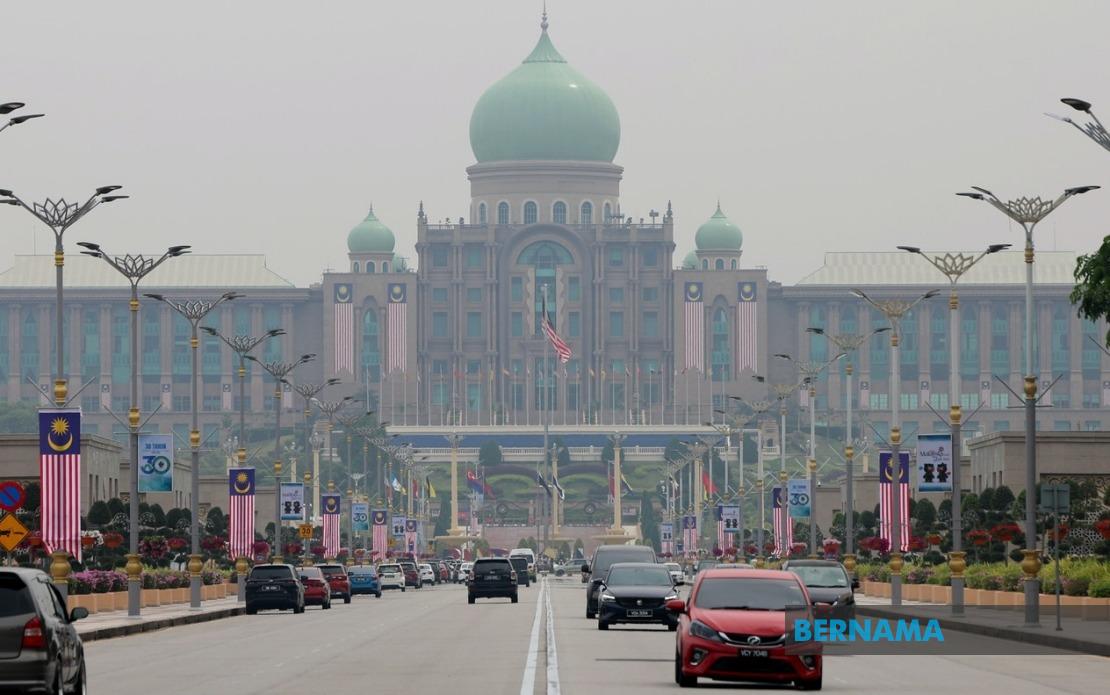
Prime Minister Datuk Seri Anwar Ibrahim will tackle the deepening haze emergency as a centrepiece of his bilateral discussions with Sultan Hassanal Bolkiah during an upcoming two-day working visit to Brunei, according to Malaysia's High Commissioner to the sultanate. The transboundary air pollution crisis, which has escalated significantly across parts of Malaysia, will feature prominently in the 27th Malaysia-Brunei Annual Leaders' Consultation (ALC-27), representing the most authoritative forum for high-level coordination between the two neighbouring nations.
Datuk Mohd Aini Atan, the Malaysian High Commissioner, confirmed that environmental degradation from regional haze represents a matter of shared concern demanding urgent attention at the leadership level. The timing of Anwar's visit underscores the gravity of the situation, with air quality readings across Sarawak reaching hazardous thresholds that pose significant health risks to millions of residents across Malaysian Borneo. The High Commissioner's emphasis on this agenda reflects recognition that unilateral action proves insufficient when pollution sources span multiple jurisdictions and international boundaries.
Sarawak, Malaysia's largest state by area and home to vast peatland and forest ecosystems, has borne the brunt of the current haze episode. Real-time data from the Malaysian Air Pollutant Index Management System (APIMS) captured the severity of conditions as of 5 pm on August 20, with the Serian district recording an Air Pollutant Index reading of 204—a level classified as "very unhealthy" according to Malaysia's air quality categorization system. This classification signals deteriorating visibility and respiratory hazards that warrant medical intervention for vulnerable populations including children, elderly persons, and those with pre-existing respiratory conditions.
The geographic spread of compromised air quality extends well beyond Serian, indicating a systemic regional problem rather than isolated pockets of pollution. Kuching, Sarawak's capital and the state's principal economic and administrative hub, registered an API of 195, while nearby Samarahan logged 182. Moving further inland, Sri Aman posted 179, Sarikei 158, and Sibu 152—all classified within the "unhealthy" range. This clustering of elevated readings across diverse locations within Sarawak suggests either diffuse pollution sources or transboundary drift from neighbouring jurisdictions, making regional cooperation essential for addressing root causes.
The presence of Sarawak Premier Tan Sri Abang Johari Tun Openg and Sabah Chief Minister Datuk Seri Hajiji Noor at the leaders' consultation adds substantive weight to environmental discussions, bringing state-level perspectives directly into national-level diplomatic channels. Their attendance ensures that frontline administrators dealing with immediate public health consequences can articulate local needs and constraints to the federal government and to Brunei's leadership. This vertical integration of stakeholder input—from federal to state government representatives—enhances the likelihood that any coordinated action addresses practical implementation challenges rather than remaining confined to abstract commitments.
The Annual Leaders' Consultation mechanism itself represents a carefully calibrated diplomatic vehicle designed for substantive bilateral engagement. Operating as the apex governing structure for Malaysia-Brunei relations, the ALC-27 convenes at irregular intervals when issues of sufficient magnitude warrant prime ministerial attention, marking this environmental crisis as a situation elevated beyond routine diplomatic channels. The consultation format permits comprehensive discussion spanning economic cooperation, security matters, cultural exchange, and environmental management, allowing leaders to contextualize transboundary haze within the broader bilateral relationship rather than treating it as an isolated problem.
Regional haze has historically emerged as a cyclical but severe challenge for Southeast Asia, with smoke from agricultural burning, peatland fires, and uncontrolled land clearing in Indonesia traditionally affecting Malaysia, Brunei, and Singapore. The crisis externalizes costs across borders, rendering bilateral and multilateral frameworks indispensable for managing what individual nations cannot resolve independently. Brunei, despite its smaller landmass and population, experiences significant exposure to haze-driven air quality degradation due to its proximity to major pollution sources across the region.
The scheduled discussion reflects a recognition that transboundary environmental challenges demand integrated responses spanning multiple policy domains—from emergency management and public health to land use planning and industrial regulation. Malaysian and Bruneian officials will likely explore mechanisms for real-time information sharing, coordinated environmental monitoring, and joint pressure on upstream sources of pollution. Such discussions gain particular relevance given that both nations share maritime boundaries and engage in fisheries management through multilateral frameworks, suggesting existing institutional relationships that could be leveraged for environmental cooperation.
The timing of Anwar's visit carries additional significance given Malaysia's broader regional diplomatic objectives under his administration. Demonstrating commitment to addressing environmental challenges affecting neighbours signals serious intent toward sustainable regional development and climate stewardship—considerations that shape Malaysia's standing within ASEAN and among major trading partners increasingly focused on environmental governance. The haze crisis thus transcends narrower bilateral concerns, potentially influencing how Malaysia positions itself within regional environmental initiatives and international climate commitments.
Public health implications weigh heavily on both governments. Air quality at "very unhealthy" levels elevates respiratory hospital admissions, complicates management of chronic conditions, and disrupts economic activity through reduced visibility affecting transport and commerce. Schools, workplaces, and outdoor sectors face operational constraints when API readings persist at hazardous levels. Healthcare systems experience heightened demand for respiratory treatments, compelling government discussion of preparedness measures, medical stockpiling, and public communication strategies.
The leaders' consultation will likely produce joint statements acknowledging shared vulnerability to transboundary haze while committing to enhanced cooperation on environmental monitoring and management. Whether such statements translate into substantive policy changes—including stronger enforcement mechanisms, land use restrictions, or technology transfers supporting cleaner agricultural practices—remains contingent on political will and resource allocation. Previous haze episodes have prompted similar high-level discussions, yet recurring seasonal crises suggest implementation gaps between diplomatic commitments and operational reality.

