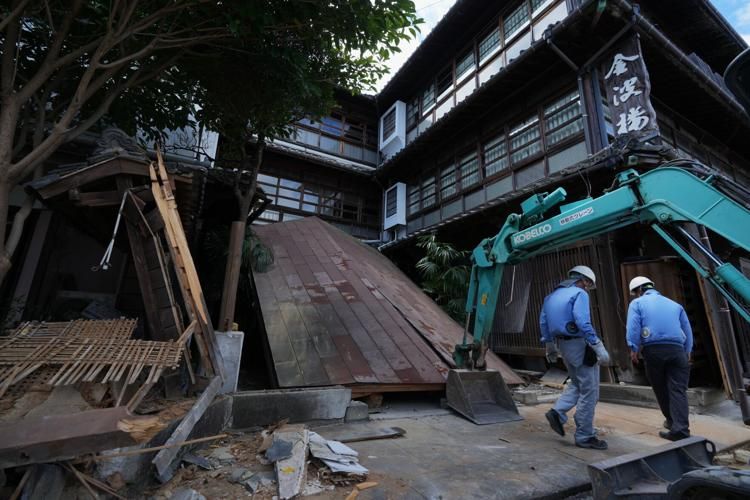
Japan's disaster response agencies are grappling with a compounding crisis in Kumamoto Prefecture as extreme heat exacerbates the challenges facing thousands displaced by a powerful 7.1 magnitude earthquake that struck the southwestern region on Tuesday. The latest confirmed fatality—an elderly woman in her 70s who succumbed to heat stroke while sheltering in a stationary vehicle—underscores the secondary dangers now threatening survivors as temperatures in the region soar to dangerous levels. With the official death toll now standing at 36 and search operations still ongoing across collapsed structures and debris fields, the prefecture is confronting a cascading set of public health emergencies that extend well beyond the initial seismic damage.
The woman was discovered deceased in an unrunning car on Thursday, according to reports from NHK public television, prompting renewed warnings from regional officials about the perils of remaining in vehicles without adequate cooling during such extreme conditions. Kumamoto Governor Takashi Kimura expressed his anguish at the preventable nature of her death, subsequently urging the thousands of evacuees still sheltering in cars to prioritize vehicle maintenance for air-conditioning operation or to relocate to air-conditioned evacuation centres. The tragedy highlights a critical gap in disaster preparedness, particularly the vulnerability of populations seeking refuge in makeshift arrangements when formal shelter capacity is overwhelmed.
The prefecture's infrastructure remains severely compromised in the disaster's aftermath, with nearly 47,000 households still without access to clean water and widespread fuel shortages hampering the distribution of essential supplies. Gas stations that have resumed operations face extraordinary demand, generating long queues as residents attempt to maintain fuel supplies for vehicle air-conditioning systems. This shortage of fuel creates a vicious circle: those without adequate resources to keep vehicles running are forced to choose between the crowded, poorly ventilated conditions of emergency shelters or the dangerous isolation of parked cars.
Meteorological conditions have intensified the crisis substantially. The Japan Meteorological Agency recorded extreme heat readings of 36.6 degrees Celsius in Kumamoto city on Saturday, with forecasts suggesting temperatures could climb further as the week progresses. Such conditions pose particular risks for vulnerable populations—the elderly, children, and those with pre-existing health conditions—already stressed by displacement and trauma. Beyond heat stroke, authorities recognize the elevated risk of dehydration-related illnesses and blood clotting complications in sedentary populations confined to vehicles for extended periods.
Approximately 9,000 people remain accommodated in makeshift evacuation centres housed in converted community facilities, school gymnasiums, and classroom spaces, the vast majority of which lack functional air-conditioning systems. Experts have long criticized Japan's approach to emergency sheltering, pointing to documented problems where overcrowding, inadequate sanitation, and loss of privacy create additional stress and compound health vulnerabilities among disaster survivors. The conditions in these facilities, already substandard, become untenable when combined with regional heat waves.
In response to mounting public health concerns, Kumamoto authorities announced plans to distribute informational leaflets at car shelter sites, providing guidance on heat illness prevention including recommendations to maintain adequate hydration, perform regular movement to prevent circulation complications, and seek air-conditioned facilities when possible. The prefectural government is also implementing an accelerated supply operation delivering water, food supplies, portable sanitation facilities, air-conditioning units, and privacy partitions to evacuation centres. Prime Minister Sanae Takaichi committed government resources to addressing these deficiencies during a task force meeting on Saturday, pledging comprehensive support for improving survivor conditions.
The earthquake's destructive force remains evident across multiple disaster sites. An explosion suspected to be triggered by a gas leak devastated the Aeon Mall in Kashima town, collapsing structural elements and trapping workers even after the initial evacuation of approximately 3,000 shoppers. Rescue operations at this site concluded Saturday after teams extracted five survivors and recovered seven bodies, with the second floor of the facility completely collapsed. Separately, a chimney collapse at the Nippon Paper Industries factory in Yatsushiro city has claimed nine lives among eleven trapped employees, with two rescued.
Searching for missing persons continues with substantial deployment of Japan Self Defense Force personnel, local police, professional rescue teams, and search dogs across the prefecture. Governor Kimura has emphasized that rescue operations must not leave anyone unaccounted for, reflecting the reality that the total number of missing persons remains unconfirmed. Current official figures record 105 injured persons in Kumamoto, with two additional deaths still under investigation to determine earthquake causation.
The scale of structural damage extends across residential and commercial zones. More than 180 homes have been completely destroyed, while official assessments indicate over 3,800 buildings sustained damage, including 20 classified as severely compromised. These figures translate to thousands of families entirely displaced from permanent housing and hundreds of thousands facing weeks or months of repairs before habitation becomes possible. Power supply restoration has progressed substantially, with fewer than 900 households experiencing continued outages, though the regional power utility reported no immediate service interruptions.
For Southeast Asian observers and Malaysia's disaster management professionals, the Kumamoto situation illustrates how secondary hazards—heat illness, disease, and infrastructure failure—can transform initial earthquake casualties into a prolonged humanitarian emergency. The region's tropical and subtropical climate creates conditions where heat-related mortality compounds seismic fatalities in ways that temperate-zone preparedness plans may underestimate. The contrast between formal shelter capacity and the numbers seeking refuge demonstrates how rapidly disaster needs can exceed planned response infrastructure, forcing populations into ad hoc arrangements that introduce new dangers.
The Japanese government's mobilization of national resources, while substantial, has proven insufficient to immediately eliminate the conditions enabling preventable deaths like the heat stroke fatality. This reflects a broader challenge in disaster response: the time lag between identifying emerging threats and implementing comprehensive protective measures. For developing nations with more limited resources, the Kumamoto experience suggests that effective earthquake preparedness must explicitly account for compound risks, particularly during seasons of extreme heat, requiring pre-positioned air-conditioning capacity, water distribution networks, and fuel reserves specifically designated for disaster response.

