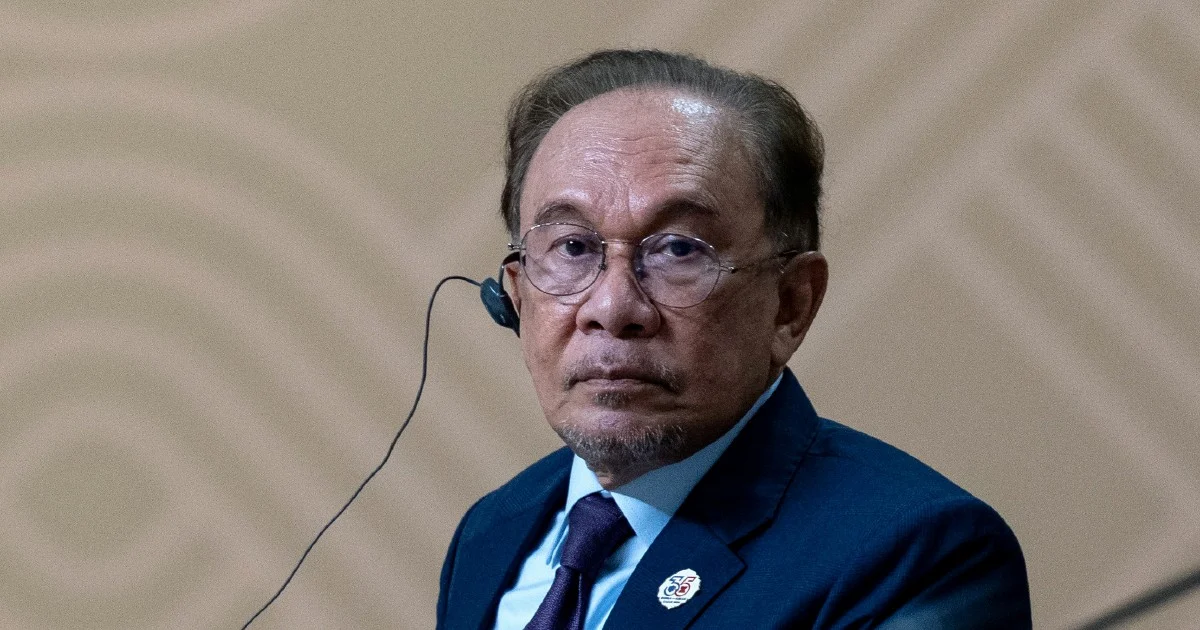
Malaysia's High Court has granted Prime Minister Datuk Seri Anwar Ibrahim's application to set aside a subpoena requiring him to give witness testimony in a RM30 million civil lawsuit, removing a potential distraction from his executive duties during a sensitive period of governance.
The decision shields the country's chief executive from court involvement in the dispute, a matter that could have complicated his already demanding portfolio. Courts across Asia have grappled with balancing the demands of justice against the operational requirements of sitting heads of government, and Malaysian jurisprudence is evolving similarly through judgments like this one. The case centred on a substantial monetary claim, and legal experts note that subpoenaing sitting prime ministers raises distinct questions about the separation of governmental and judicial functions.
The High Court's ruling recognises the practical reality that a prime minister's time and attention are necessarily committed to national administration. The principle underlying such exemptions acknowledges that while no one is above the law in principle, the extraordinary nature of the prime ministerial office sometimes requires accommodation within the legal framework. This approach mirrors judicial practices in other Westminster-influenced democracies, where courts recognise institutional exigency as a legitimate factor in determining witness participation.
The lawsuit, valued at RM30 million, involves claims that would normally require comprehensive witness testimony to establish the factual foundations supporting either party's position. By excusing Anwar from this obligation, the court has effectively placed the burden of presenting its case more heavily on other witnesses and documentary evidence. This adjustment inevitably alters the litigation dynamics, potentially affecting both parties' ability to fully present their respective accounts of the disputed transactions or events.
Those following Malaysian corporate and commercial law will recognise that such disputes frequently turn on individual testimony, making the loss of particular witnesses—however justified by circumstance—a significant development. The defendant or claimant who had anticipated Anwar's evidence must now recalibrate their legal strategy, substituting other proof where possible or accepting that certain factual gaps may remain unresolved through direct testimony from him.
The application itself demonstrates how political office intersects with civil litigation in modern Malaysia. While Anwar contested the subpoena, the court ultimately agreed that his position warranted relief, suggesting that the bench accepted arguments regarding either the burden on his official functions or alternative means of establishing the disputed facts. The judgment thus navigates between competing public interests: on one hand, the principle that litigation should not be frustrated by non-compliance with compulsory process, and on the other, the necessity that government continues operating effectively.
Regional observers of Malaysian governance note that such judgments occur within a broader context of judicial independence and the rule of law. The High Court's willingness to grant relief to a sitting prime minister, while simultaneously enforcing the subpoena principle for ordinary citizens, underscores how the judiciary maintains distinct standards appropriate to different circumstances. This particularised approach to justice reflects mature judicial thinking rather than ad hoc political accommodation.
The RM30 million quantum suggests this is no trivial matter for the plaintiff or defendant involved. Commercial stakes of this magnitude typically involve complex transactions, multiple parties, and significant financial consequences. The dispute's nature—whether contractual breach, fraudulent misrepresentation, or another civil wrong—remains to be established through the evidence ultimately presented at trial, now necessarily without Anwar's direct testimony.
Future litigation involving sitting holders of high office may reference this judgment, potentially establishing precedent for how Malaysian courts handle witness subpoenas directed at prime ministers or other senior officeholders. The parameters established—whether based purely on executive burden, national interest, or other factors—could influence subsequent applications in analogous circumstances. Legal practitioners managing cases involving senior government figures will likely cite this decision when contemplating witness strategy.
For Anwar, the ruling provides relief from a distraction that could have consumed significant time and created complications regarding separation of powers and executive function. The Prime Minister's office demands constant attention to parliamentary, cabinet, and ministerial matters, foreign relations, and crisis management, making court appearances genuinely disruptive to governance. The High Court's recognition of this reality reflects how contemporary constitutional democracies accommodate both the rule of law and effective government.
The broader significance extends beyond this particular dispute to questions about judicial process and executive accountability in Malaysia's constitutional framework. While Anwar escapes the witness stand, the principle that government leaders remain subject to legal proceedings persists. The case will proceed without his testimony, and the truth about the disputed RM30 million in question will be established—or remain contested—based on whatever evidence the parties can muster through alternative means.


%22%2F%3E%3C%2Fpattern%3E%3C%2Fdefs%3E%3Crect%20width%3D%22100%25%22%20height%3D%22100%25%22%20fill%3D%22url(%23ph4q0m9g)%22%2F%3E%3Crect%20width%3D%22100%25%22%20height%3D%22100%25%22%20fill%3D%22url(%23ph4q0m9p)%22%2F%3E%3Ctext%20x%3D%2250%25%22%20y%3D%2250%25%22%20text-anchor%3D%22middle%22%20dominant-baseline%3D%22central%22%20fill%3D%22rgba(255%2C255%2C255%2C0.95)%22%20font-family%3D%22Georgia%2C%20'Times%20New%20Roman'%2C%20serif%22%20font-weight%3D%22700%22%20font-size%3D%22194%22%20letter-spacing%3D%22-0.02em%22%3ETeacher%3C%2Ftext%3E%3C%2Fsvg%3E)