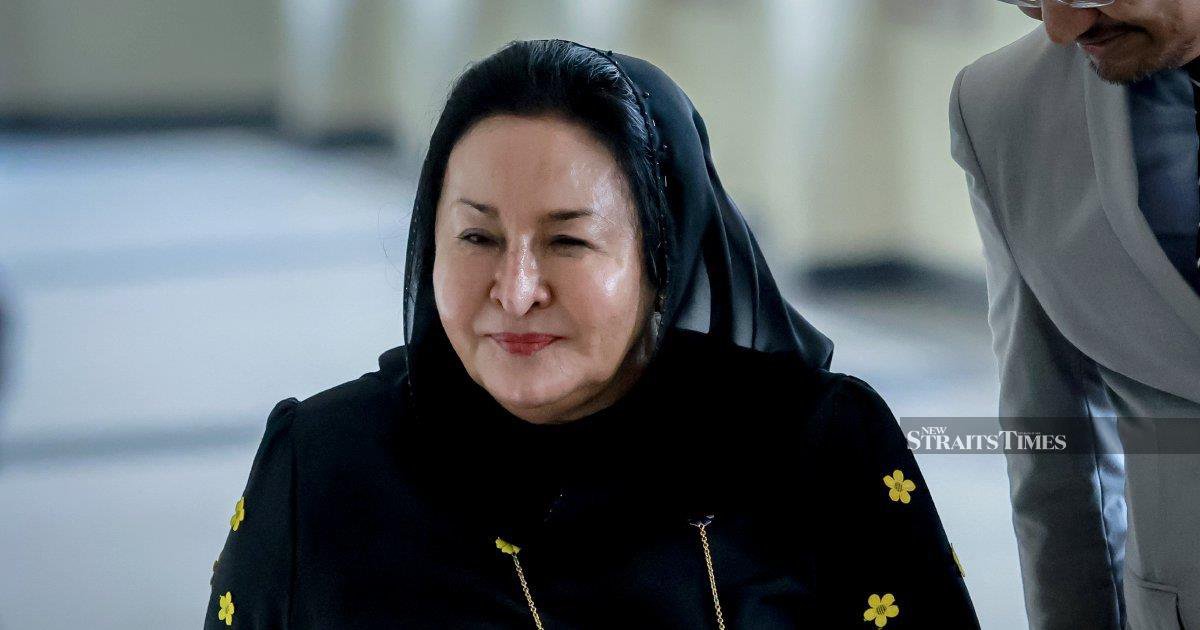
The High Court has scheduled August 12 as the date for a critical decision on whether Datin Seri Rosmah Mansor will be permitted to defer a substantial RM67.5 million payment owed to Global Royalty Trading SAL, a Lebanese jewellery company. This hearing represents another significant moment in the ongoing financial obligations that have pursued Rosmah since her husband's departure from office and the subsequent change in Malaysia's political landscape.
The case underscores the complex web of commercial transactions and personal liabilities that have emerged during legal scrutiny of the former Prime Minister's family finances. Global Royalty Trading SAL's claim against Rosmah reflects the substantial sums involved in high-end luxury goods purchases during the administration of Najib Razak, whose tenure as Prime Minister ended in 2018 following electoral defeat and mounting allegations of financial impropriety.
Rosmah's application to defer the payment suggests financial constraints or liquidity challenges that have compelled her legal team to seek relief from the court. Such deferment requests are typically granted only when applicants can demonstrate legitimate hardship or when the court believes justice requires postponement of immediate payment obligations. The arguments presented on August 12 will likely centre on Rosmah's current financial circumstances and her capacity to meet the full obligation immediately.
The RM67.5 million figure represents an enormous sum in the context of Malaysian household finances, even among the wealthy elite. To contextualise the scale for readers, this amount exceeds the annual salaries of hundreds of Malaysia's highest-paid executives combined and reflects the extraordinary spending patterns associated with Malaysia's most privileged circles during the previous administration. Such transactions have become emblematic of the lavish lifestyle questions that dominated post-2018 political discourse.
Global Royalty Trading SAL's pursuit of this debt through Malaysian courts demonstrates the international dimensions of Rosmah's financial entanglements. Lebanese companies and Middle Eastern jewellers have figured prominently in accounts of luxury acquisitions made during Najib's premiership, with detailed records subsequently emerging through various legal proceedings and journalistic investigations. The decision to pursue recovery through Malaysian courts suggests the Lebanese firm views the local legal system as offering the most promising avenue for debt collection.
Rosmah has faced multiple legal and financial challenges since her husband's removal from office, including corruption charges, tax investigations, and civil claims related to asset purchases and spending patterns. Her willingness to request deferment rather than contesting the debt's validity suggests her legal strategy focuses on managing payment obligations rather than disputing the underlying commercial relationship with the jewellery company. This approach may indicate confidence in ultimately meeting the obligation, merely requiring additional time.
The High Court's decision will establish important precedent regarding whether courts will accommodate such requests from prominent figures facing substantial financial liabilities. Malaysian jurisprudence on commercial debt deferment typically balances creditor interests against debtor circumstances, particularly when individual defendants demonstrate hardship. However, courts also remain mindful of public interest in ensuring that financial obligations are met, especially when substantial sums are involved.
For Malaysian observers, this case continues the protracted reckoning with the financial practices of the previous administration. The systematic emergence of such claims through court proceedings has gradually revealed the scale and scope of expenditures undertaken during Najib's tenure, providing citizens with detailed information about spending patterns that might otherwise have remained obscure. Each court decision thus contributes incrementally to public understanding of governance and accountability during that era.
The August 12 hearing will also illuminate the broader question of enforcement mechanisms available to creditors pursuing claims against high-profile debtors in Malaysia. Whether courts prove willing to enforce such obligations or permit deferment carries implications for how commercial relationships involving prominent political figures are managed going forward. The decision may also signal the judiciary's approach to balancing individual circumstances against systemic expectations regarding financial accountability.
International observers watching Malaysia's post-2018 institutional evolution will view this proceeding as further evidence of the country's legal system's engagement with complex financial accountability questions. The willingness of Lebanese creditors to pursue claims through Malaysian courts, and the Malaysian judiciary's readiness to hear such cases on their merits, reflects functional legal frameworks capable of processing disputes involving cross-border commercial transactions and high-value asset claims.
As August 12 approaches, all parties involved will prepare comprehensive submissions regarding payment capacity, financial circumstances, and equitable considerations relevant to deferment decisions. The outcome may significantly impact Rosmah's financial situation and may establish important precedent for how Malaysian courts handle similar applications from other financially troubled debtors pursuing judicial relief from immediate payment obligations.

