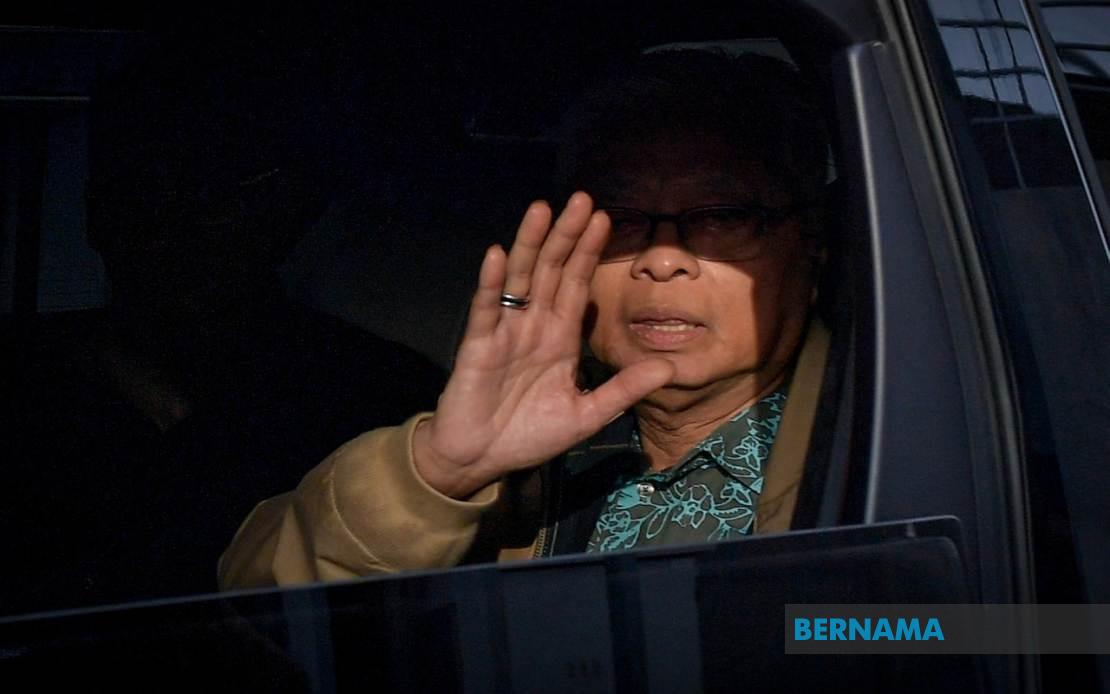
The High Court in Kuala Lumpur has confirmed the acquittal of content creator Jufazli Shi Ahmad, rejecting the prosecution's attempt to overturn a Sessions Court decision that cleared him of charges connected to YouTube videos critical of former Prime Minister Datuk Seri Ismail Sabri Yaakob and the ruling UMNO party. Judge Datuk Aslam Zainuddin delivered the ruling on August 10, determining that the Sessions Court judge's original decision to discharge and acquit the defendant stood on its merits, bringing an end to a legal saga that stretched across multiple years and courtroom proceedings.
The case centred on content posted through a YouTube channel called 'King Maker Politik' in mid-2022, when political tensions were running particularly high in Malaysia. Jufazli had been accused of uploading a video intended to offend and annoy the former prime minister, with the material flagged by law enforcement just days after publication. The prosecution pursued the matter vigorously, framing the charges under the Communications and Multimedia Act 1998, legislation that carries substantial penalties including fines reaching RM50,000 or imprisonment up to one year for offences of this nature.
Beyond the initial accusations about the video content itself, authorities levied a secondary charge against Jufazli for his refusal to surrender the password to his YouTube account when requested by police during questioning at the Dang Wangi District Police Headquarters. This obstruction charge, prosecuted under different provisions of the same communications law, carried even more severe maximum penalties—up to RM100,000 in fines or two years imprisonment. The dual charges reflected the authorities' determination to pursue the matter comprehensively, treating both the speech itself and the non-cooperation as separate legal infractions warranting punishment.
The Sessions Court had previously decided that the prosecution failed to establish its case sufficiently to proceed to trial, a determination that typically signals judicial skepticism about the strength of evidence or the framing of charges. Rather than accepting this outcome, the prosecution appealed to the High Court, requesting that Judge Aslam reconsider and reverse the lower court's decision. This appeal mechanism allows higher courts to reassess case law applications and judicial reasoning, though reversals are not automatic and require compelling grounds.
In his judgment, Judge Aslam conducted a thorough review of the case file, the Sessions Court judge's detailed reasoning, and arguments submitted by both the Deputy Public Prosecutor Mohamad Fadhly Mohd Zamry and Jufazli's legal representative Ramesh N.P. Chandran. After this comprehensive examination, the High Court concluded that the Sessions Court judge had correctly applied the law and that no grounds existed for interfering with the acquittal decision. The judge's language—affirming that the Sessions Court decision was sound—underscores that the lower court had properly evaluated the evidence and legal framework.
This outcome carries significance for digital speech and online expression in Malaysia, where the boundary between legitimate commentary and prosecutable offensive communication remains contested. The case originated from a politically charged period when Malaysia's premiership was transitioning, and content critical of political figures and parties drew heightened official scrutiny. By upholding the acquittal, the High Court has essentially validated the Sessions Court's implicit position that the material in question did not cross the legal threshold into prohibited speech, or that the evidence was insufficient to prove the offences beyond reasonable doubt.
The Communications and Multimedia Act provisions under which Jufazli was charged remain broad and somewhat open to interpretation. Courts in Malaysia have grappled with defining what constitutes an "offensive communication" with intent to annoy, and the acquittal suggests at least some judicial reluctance to expand these provisions to capture online political commentary that, while perhaps critical or provocative, may fall within protected speech. The High Court's decision therefore provides a measure of precedent regarding acceptable bounds of digital criticism involving political figures.
For content creators and digital media participants across Southeast Asia, particularly those in Malaysia who engage in political discourse online, the judgment offers a degree of reassurance that pursuing speech charges through multiple court levels carries no guarantee of success. The two-tier rejection of the prosecution's position—first in the Sessions Court and now affirmed at the High Court level—sends a signal that courts will carefully scrutinise the evidence and legal basis for such prosecutions rather than automatically deferring to law enforcement interpretations.
The case also illustrates the distinction Malaysian courts may draw between different types of potential violations. While the substantive charge regarding the video content itself could not sustain a prosecution, the secondary charge regarding password provision raised separate legal questions about cooperation with authorities. The fact that the High Court upheld the acquittal on both counts suggests that either the password refusal did not constitute a prosecutable offence under the circumstances, or that the connection between the refusal and legal authority was insufficiently established. This nuance matters for anyone navigating interactions with Malaysian law enforcement regarding digital accounts and security credentials.
The legal teams involved brought contrasting perspectives to the case. The prosecution, represented by Deputy Public Prosecutor Mohamad Fadhly Mohd Zamry, pursued the matter through appellate channels in seeking to resurrect charges that had been dismissed. Jufazli's counsel, Ramesh N.P. Chandran, successfully defended his client's acquittal through the appellate process, demonstrating the importance of robust legal representation when facing communications act charges. The adversarial proceedings allowed both the lower and higher courts to thoroughly examine whether the prosecution's legal theory could withstand scrutiny.
Regional observers of Malaysian legal developments will note that this judgment occurs amid broader global conversations about online expression, hate speech, and the proper limits of government regulation in digital spaces. While Malaysia maintains communications laws that other democracies have questioned, courts nonetheless retain the capacity to interpret and apply these provisions in ways that protect legitimate speech. The High Court's decision reflects judicial engagement with these tensions, even within the framework of existing legislation.
Looking forward, the acquittal becomes final, foreclosing any further appeals by the prosecution in this particular matter. Jufazli is definitively cleared of the charges, and his case now stands as legal precedent regarding the application of communications offences to online political content. For the broader digital landscape in Malaysia, the judgment contributes to evolving jurisprudence around freedom of expression online, even as questions remain about how courts will address future cases involving different factual circumstances or more explicitly threatening or defamatory content.

