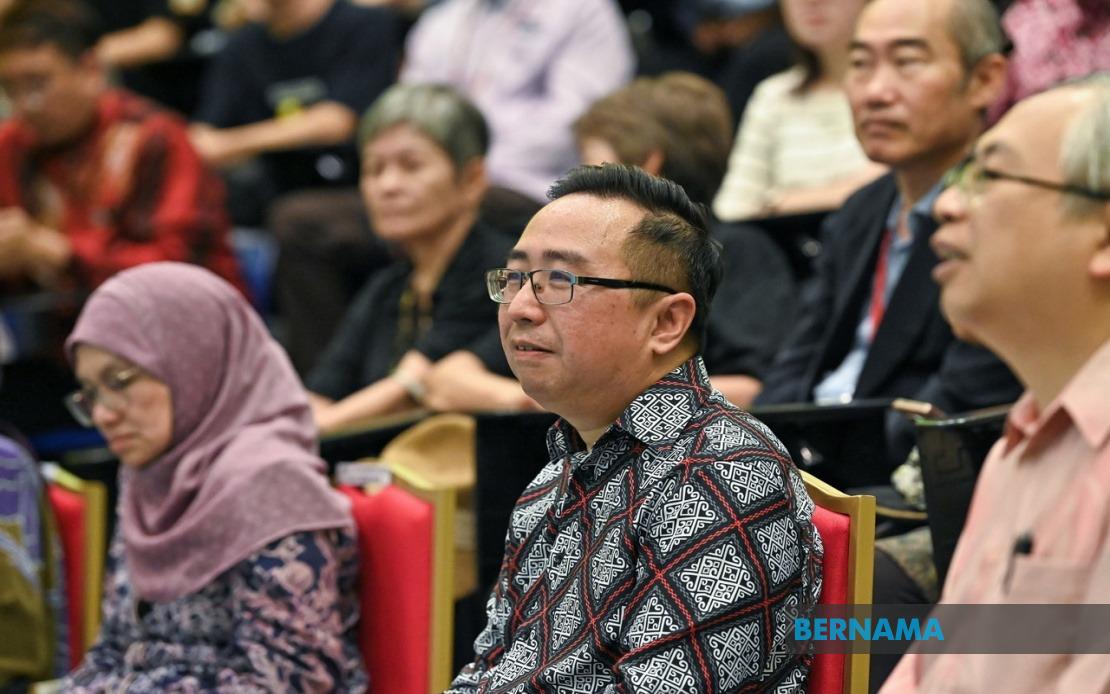
Science, Technology and Innovation Minister Datuk Chang Lih Kang has assured students pursuing STEM disciplines that their career prospects remain exceptionally promising, driven by an accelerating wave of high-technology investments flooding into Malaysia. Speaking at the 20th Malaysia Festival of the Minds held at Universiti Tunku Abdul Rahman Kampar Campus, Chang emphasised that the nation's expanding tech sector is generating far more vacancies than the current pipeline of qualified graduates can satisfy, reversing traditional concerns about oversupply in professional labour markets.
The minister's remarks come at a pivotal moment for Malaysia's positioning within global semiconductor and advanced manufacturing supply chains. He underscored that current demand for science and technology professionals substantially outpaces available talent, a gap that represents both an urgent challenge and a golden opportunity for students contemplating their educational pathways. Rather than relying solely on conventional recruitment channels, Chang indicated that his ministry is taking a proactive stance by directly engaging with university students to reshape perceptions about technology careers and counter widespread anxieties about automation and artificial intelligence displacing human workers.
The Ministry of Science, Technology and Innovation is framing its educational outreach as essential public communication work. Chang explained that the festival itself serves as a platform to demonstrate not merely that jobs exist in abundance, but to contextualise Malaysia's technological trajectory within broader regional and global economic shifts. By explaining government perspectives on innovation directly to prospective graduates rather than allowing misconceptions to take root, the ministry hopes to guide student decision-making towards disciplines that align with national economic priorities.
Beyond messaging, the government is backing its commitment to STEM talent development through substantial infrastructure investment. The ministry announced a two-year funding initiative allocating RM92 million from the Malaysia Science Endowment to accelerate Malaysia's advanced packaging technology capabilities—a critical component of semiconductor manufacturing that sits higher up the value chain than basic assembly operations. This represents an intentional strategic push to upgrade the nation's technological sophistication and manufacturing prowess.
Significantly, the initiative demonstrates a public-private partnership model that distributes investment responsibility. Five major industry partners have collectively contributed RM93 million, bringing the total mobilised investment to RM185 million and ensuring that technology development does not rest entirely upon government shoulders. Chang framed this matching-fund approach as essential for sustainability, as it signals to industry players that they retain direct stakes in the outcomes and that technological advancement serves their commercial interests.
The advanced packaging technology initiative, which was launched several months prior to this announcement, operates under a 2028 completion target. The sector faces genuine challenges in securing adequate funding and navigating the technical complexity of bringing next-generation packaging solutions to commercial viability. Yet Chang expressed confidence that Malaysia can accomplish this transition within the prescribed timeframe, contingent upon sustained collaboration between government agencies, universities, and industrial partners.
For Malaysian students weighing their options, the minister's statements carry important implications. The semiconductor and advanced manufacturing sectors represent some of the most capital-intensive and technologically demanding industries globally, commanding premium salaries and offering pathways into genuinely frontier research and development work. A student graduating with expertise in advanced packaging technology, for instance, would enter an international job market facing acute talent shortages rather than the competitive saturation that sometimes characterises other professional fields.
Regionally, Malaysia's positioning is particularly relevant. The nation has historically served as a manufacturing hub within Southeast Asia, but recent geopolitical dynamics and supply chain diversification away from concentrated production centres have elevated the strategic importance of local advanced manufacturing capabilities. Countries that can develop and retain sophisticated technical expertise gain competitive advantages in attracting high-value multinational investments seeking to hedge against regional concentration risks.
The government's strategy also reflects awareness that talent development cycles operate on extended timescales. Decisions made by secondary school students about university programmes today will determine the skilled workforce available to industry in five to seven years—precisely the window within which major technology infrastructure projects typically mature. By promoting STEM education now, policymakers are attempting to build capacity that aligns with anticipated sectoral growth.
Chang's emphasis on directly addressing student anxieties about technological displacement carries particular weight in Southeast Asian contexts, where narratives about automation eliminating traditional manufacturing jobs have generated genuine concern. By demonstrating that technology advancement simultaneously creates new categories of skilled employment that often command higher compensation than jobs it displaces, the ministry is attempting to reframe technological change from a threat into an opportunity—provided that individuals invest in acquiring relevant expertise.
The RM185 million advanced packaging investment also signals Malaysia's intention to move beyond low-margin contract manufacturing toward higher-value technical specialisation. Advanced packaging—the technologies that connect semiconductor chips to circuit boards and manage thermal and electrical performance—remains one of the few segments where significant value capture and intellectual property accumulation can occur within the semiconductor ecosystem.
For education policymakers and career counsellors, the minister's remarks provide clear signals about which technical disciplines will likely experience strongest labour market demand over the coming years. Students with expertise in materials science, electrical engineering, manufacturing process engineering, and robotics integration should anticipate robust opportunities as Malaysia's advanced packaging sector expands.
Looking forward, the intersection of Malaysia's investment commitments and acute talent shortages creates a genuine opportunity for STEM graduates willing to develop specialised expertise relevant to next-generation manufacturing. The question for individual students is whether they possess the determination to undertake rigorous technical training in fields where fundamental physics and engineering principles matter more than familiarity with current software platforms.

