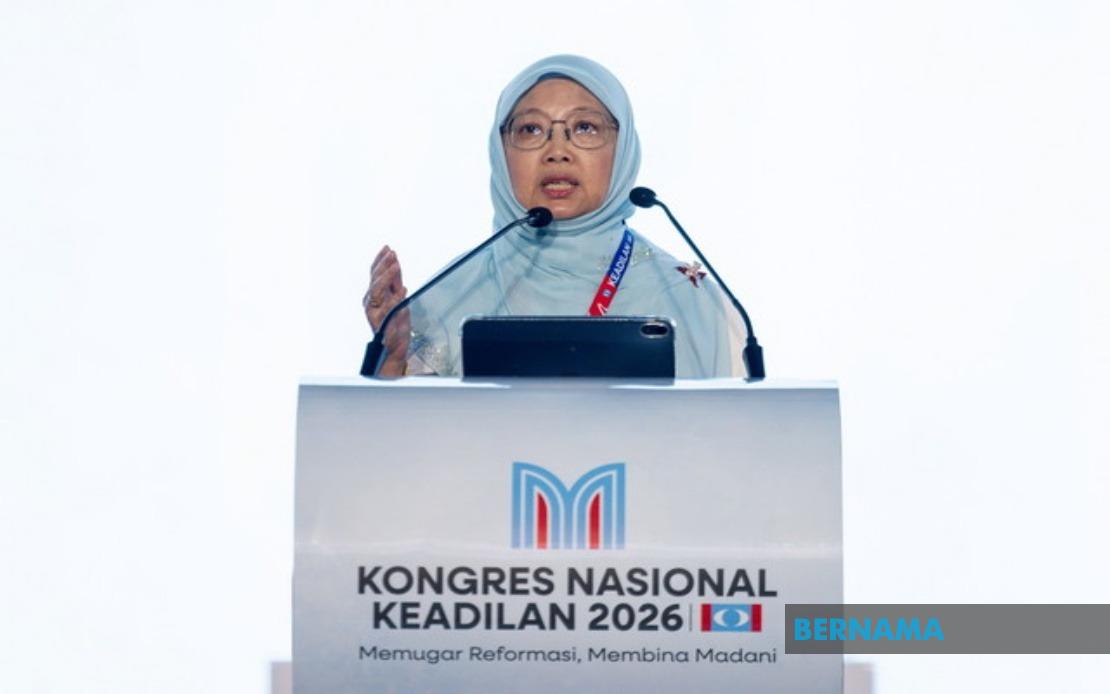
The transition from opposition movement to governing party presents PKR with its most critical examination yet, according to senior party figures. At the party's 2026 National Congress in Melaka, Datuk Seri Dr Zaliha Mustafa, the PKR vice president, underscored that occupying ministerial posts and legislative majorities counts for little if the fundamental restructuring of Malaysia's governance systems remains unfulfilled. The pronouncement carries particular weight given PKR's 27-year trajectory as a reform movement, a history that has shaped both the party's identity and the expectations of its supporters who view institutional change as central to the original mission.
The distinction Zaliha drew between seizing administrative control and achieving substantive reform goes to the heart of a tension within PKR's evolution. For nearly three decades, the party mobilized millions around the concept of systemic renewal, promising not merely different faces in government but a genuine recalibration of how power operates within Malaysia's bureaucracy, judiciary, and legislative apparatus. Now that PKR sits at the centre of a governing coalition, the party faces an acute test of whether its reform rhetoric translates into measurable institutional strengthening. Zaliha's remarks suggest that PKR leadership is acutely aware of this accountability, recognizing that party members and supporters will judge performance against the ambitious standards the movement itself has established.
The challenge of implementation looms large in this context. Zaliha acknowledged that genuine reform cannot be imposed through overnight directives, an implicit recognition that Malaysia's institutional structures, while often criticized, contain embedded interests and complexities that resist rapid transformation. Drawing on the historical example of Khalifah Umar Abdul Aziz—a reference also invoked by PKR president Datuk Seri Anwar Ibrahim—she framed measured change as compatible with unwavering commitment. This reasoning attempts to resolve a practical dilemma: how to pursue ambitious reform without either stalling meaningful progress or making destabilizing moves that undermine broader governance objectives. For Malaysian observers, this reflects the difficult realities confronting any government genuinely attempting institutional renewal within an established constitutional framework.
Crucially, Zaliha identified institutional strengthening, corruption combating, and equitable justice access as the concrete markers against which PKR should be evaluated. These are not abstract aspirations but measurable domains in which PKR's performance can be assessed by citizens, civil society organizations, and international observers. The emphasis on fighting corruption and abuse of power specifically addresses a cornerstone of PKR's historical messaging, suggesting the party recognizes that credibility depends on delivering tangible improvements in these areas. For a government that campaigned partly on anti-corruption grounds, any perception of institutional capture or selective accountability would undermine legitimacy far more than policy disagreements on technical matters.
A critical component of Zaliha's intervention concerned PKR's internal discipline and willingness to police itself. Her call for party members to hold one another accountable for lapses represents an acknowledgment that reform movements often lose public trust through hypocrisy—when those preaching institutional change themselves fall victim to the very abuses they condemned in previous administrations. This internal governance challenge may prove as consequential as formal policy implementation. Malaysian political history demonstrates repeatedly that public cynicism about political parties deepens when members enjoy apparent exemption from standards they demand of others.
Beyond institutional mechanics, Zaliha stressed that PKR must master the narrative landscape, particularly through digital platforms where the opposition retains considerable capacity to frame government actions negatively. Her observation that winning policy battles and numerical majorities provides no guarantee of public acceptance without controlling the broader narrative points to a sophisticated understanding of modern political communication. In Malaysia's fragmented media environment, where social media reaches far beyond traditional press gatekeeping, controlling how policies are understood and received determines political viability as much as the policies themselves. This dimension particularly affects PKR's standing among younger voters and urban constituencies that rely heavily on digital information sources.
The communication challenge Zaliha identified reflects a broader problem for governing coalitions: assuming that policy implementation speaks for itself. Governments often underestimate the effort required to explain their decisions, particularly when those decisions involve difficult tradeoffs or delayed gratification. In PKR's case, many promised reforms may require lengthy processes—institutional rebuilding, legislative changes, bureaucratic reorientation—that yield only gradual results. Without sustained explanation and narrative control, public patience erodes as immediate improvements fail to materialize. Zaliha's exhortation for structured, accessible, and rapid party communications acknowledges this dynamic.
For Malaysian readers, Zaliha's address carries implications extending beyond PKR's internal dynamics. Her conception of reform as institutional renewal rather than mere leadership succession offers a framework for evaluating whether the coalition government genuinely represents a departure from previous administrations or constitutes merely a rotating succession within the same structural arrangements. This distinction matters profoundly for citizens assessing whether political change has delivered meaningful improvements in governance quality, bureaucratic responsiveness, and rule-of-law protections. The test Zaliha outlined—strengthening institutions, reducing corruption, ensuring broad-based justice—defines realistic expectations for a reform-oriented government in a constitutional democracy.
Zaliha's warnings also implicitly acknowledge that PKR confronts skepticism from both supporters and critics. Some supporters worry that participation in existing governing structures necessarily compromises reform principles; others harbor concern that promised changes will dissolve into conventional political compromise. Opposition critics, naturally, question whether PKR can deliver meaningful change within Malaysia's established institutions. By framing governance as a test rather than a victory, Zaliha attempts to manage these expectations while signaling that the party recognizes the magnitude of its responsibilities. This rhetorical approach signals both realism about implementation challenges and determination to avoid complacency.
The historical reference to Khalifah Umar Abdul Aziz merits examination for Southeast Asian readers, as it reflects how PKR interprets reform through Islamic governance principles. This framing allows PKR to present institutional change not as secular or Western-derived but as rooted in Islamic tradition emphasizing justice and accountable leadership. For a multiethnic, multireligious nation, this interpretive move potentially broadens PKR's appeal while grounding reform in frameworks familiar to Malaysia's Muslim majority. Whether this philosophical foundation strengthens actual institutional performance remains an open question, but the invocation demonstrates PKR's attempt to embed reform within Malaysia's cultural and religious contexts rather than presenting it as externally imposed.
As PKR navigates the complexities of coalition governance, Zaliha's emphasis on patience paired with clarity of direction offers a measured defense against expectations of instant transformation. However, patience has limits in democratic politics. Supporters and citizens will demand tangible evidence of institutional improvement within reasonable timeframes. The party's success will depend on whether it can deliver incremental but genuine progress on the metrics Zaliha identified—institutional strengthening, corruption reduction, and justice accessibility—while maintaining narrative control to ensure these improvements reach public consciousness. Failing any of these elements risks squandering the political capital that brought PKR to power.

