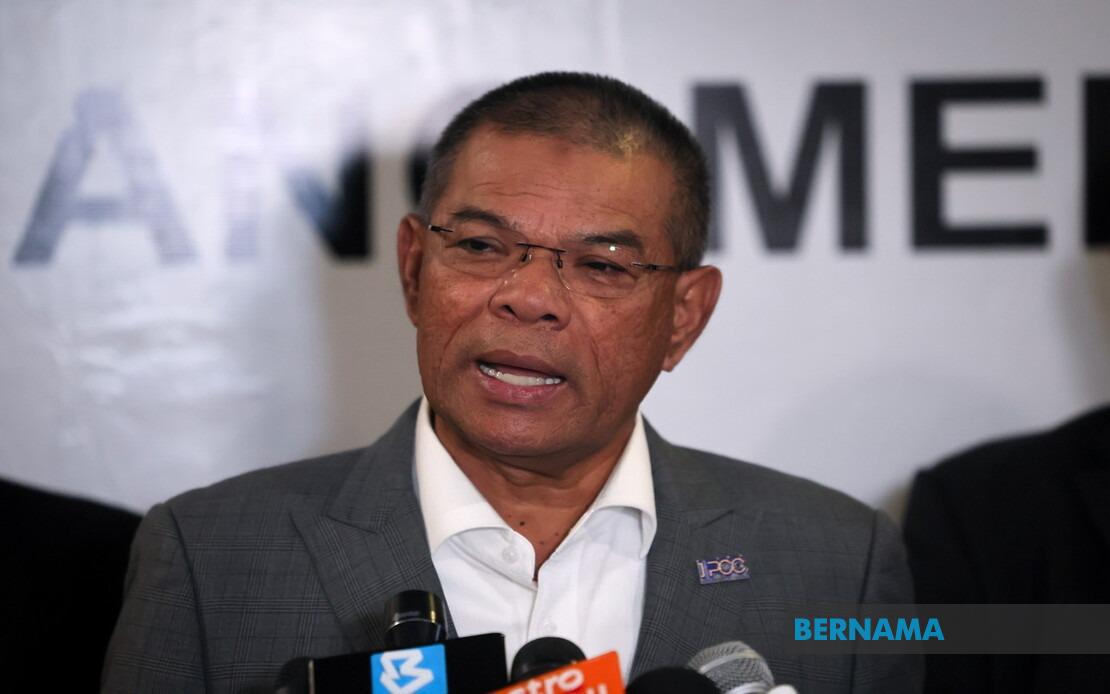
Home Minister Datuk Seri Saifuddin Nasution Ismail has issued a directive ordering the Malaysian Immigration Department to render complete cooperation with investigative authorities examining the circumstances surrounding a pre-dawn traffic collision that resulted in the deaths of three family members. The minister's announcement, made through a Facebook statement, underscores the seriousness with which the government views the incident and signals a commitment to ensuring accountability should the inquiry uncover any culpability.
In his statement, the Home Minister made clear that the investigation must be thorough and impartial. He stressed that should authorities identify any form of negligence, misconduct, or violation of applicable legislation during their examination of the evidence, those found responsible must face proportionate consequences. This declaration reflects the government's zero-tolerance stance on breaches of public trust, particularly when lives have been lost and public safety is at stake.
The minister also took the opportunity to express his condolences to the bereaved family, acknowledging the profound nature of their loss. On behalf of both the Ministry of Home Affairs and the Immigration Department, he conveyed prayers for the family to find strength and resilience during this deeply difficult period. Such expressions of sympathy are standard in ministerial responses to tragedies, yet they also serve to demonstrate the government's human acknowledgment of the suffering caused.
The fatal incident unfolded in the early hours of the morning along Jalan Sultan Ismail when an Immigration Department lorry, a Black Maria vehicle commonly used for detention and transport purposes, collided with civilian vehicles at the Maju Junction intersection. The collision proved catastrophic for pedestrians in the vicinity. Three members of the same family were killed in the impact, while a fourth person sustained serious injuries requiring medical attention. The incident has sparked considerable public attention regarding road safety protocols and operational procedures governing government vehicles.
According to eyewitness accounts and preliminary investigation reports, the Immigration lorry was operating empty at the time of the accident, having been dispatched toward the Chow Kit area for a planned enforcement operation targeting undocumented migrants. The vehicle reportedly proceeded through the intersection while its traffic signal displayed red, despite having its emergency beacon lights and audible siren activated. Simultaneously, a privately-owned Proton Saga sedan, which had been proceeding straight through the intersection under a green traffic light, was unable to react quickly enough to avoid the oncoming lorry.
The force of the collision was sufficient to cause the heavy Immigration vehicle to lose directional control entirely. The lorry skidded across multiple lanes before striking four pedestrians who were lawfully crossing or standing in the intersection area. The vehicle also collided with an Inokom Matrix multi-purpose vehicle, further compounding the incident's destructive scope. The sequence of events raises questions about vehicle dynamics, visibility, reaction distances, and whether emergency light activation automatically grants right-of-way privileges, particularly when traffic lights indicate otherwise.
Legal proceedings have been initiated under Section 41(1) of the Road Transport Act 1987, which addresses traffic-related offenses and collisions. This statutory framework provides authorities with the authority to investigate the incident comprehensively and determine responsibility. The investigation will likely examine multiple factors including vehicle maintenance records, driver qualification and training documentation, operational procedures governing emergency vehicle deployment, visibility conditions at the time, and adherence to traffic regulations.
The incident raises broader questions for Malaysian society regarding the operation of government vehicles, particularly large commercial or detention transport vehicles that carry inherent risks. Public trust in institutions depends partly on demonstrable accountability when accidents occur, especially when deaths result. The Home Minister's explicit directive for full cooperation signals to the public and the bereaved family that the government intends a transparent investigation rather than institutional defensiveness.
For the Immigration Department specifically, this incident may prompt operational reviews of how Black Maria vehicles are dispatched, trained, and monitored during enforcement operations. The department maintains significant responsibility for managing detention and transport operations across the country, and any systemic issues revealed through this investigation could have implications for departmental procedures nationwide. Enhanced training, stricter protocols for emergency vehicle operation, and improved intersectional safety measures may emerge as recommendations.
The broader enforcement context also bears consideration. The Immigration Department conducts regular raids against undocumented migrant populations, a operationally intensive aspect of Malaysia's border and immigration management. Balancing the speed and efficiency needed for such operations against public safety requirements remains an ongoing challenge for government agencies. This incident may necessitate careful recalibration of how urgent these operations are deemed and what safety procedures must be maintained regardless of operational objectives.
For Malaysian road users and the general public, the incident serves as a sobering reminder of the inherent dangers present even in carefully regulated urban environments. The involvement of an official government vehicle heightens public interest in ensuring both transparency in investigation and meaningful consequences should negligence be established. The family of the victims will likely seek answers regarding how such a tragedy could occur and what measures will prevent recurrence.

