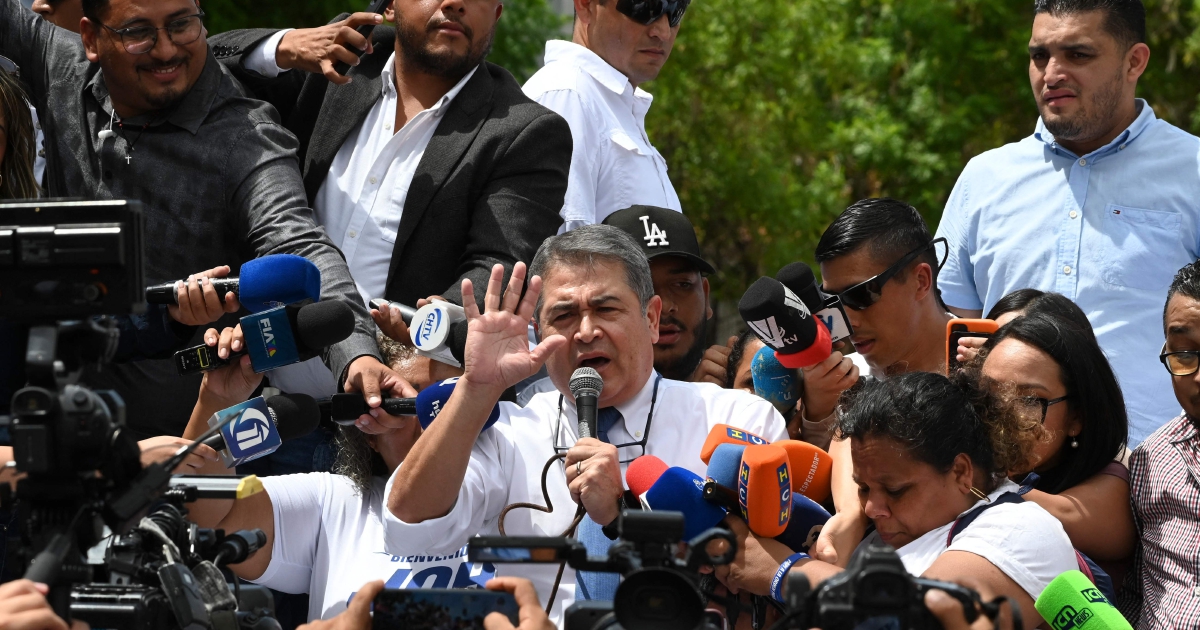
Former Honduran president Juan Orlando Hernandez will not face immediate detention as his corruption trial proceeds, following a Monday ruling by a Honduran judge. The decision permits Hernandez to remain free while facing accusations of misconduct during his decade in power, a period widely regarded as marred by institutional decay and criminal enterprise. The ruling comes roughly one year after Hernandez received a presidential pardon from Donald Trump that absolved him of United States drug trafficking convictions, a controversial intervention that has reverberated across Central America and raised questions about the reach of American executive clemency.
Hernandez's trajectory from president to courtroom defendant illustrates the turbulent political landscape in Honduras, where corruption allegations have ensnared multiple senior figures. During his presidency from 2014 to 2022, the former leader presided over a government that opponents and international observers say became increasingly compromised by ties to organised crime and illicit trafficking networks. His fall from power accelerated when the United States indicted him on narcotics-related charges, leading to his extradition to American courts where he faced serious federal accusations. That legal jeopardy seemed definitive until Trump's pardon in January last year, which effectively wiped away the American convictions.
The Trump pardon itself generated substantial controversy throughout the region and beyond. Critics argued that the clemency undercut anti-drug efforts across Central America and signalled tacit acceptance of alleged criminal conduct by a former allied leader. Supporters of Hernandez seized upon the pardon as vindication, while analysts debated whether the former president's political connections or other considerations influenced the decision. The pardon's reach, however, did not extend to Honduras itself, meaning Hernandez remained exposed to prosecution in his home jurisdiction. This jurisdictional distinction has proven crucial, as it allows Honduran authorities to proceed with their own investigations and trials irrespective of the American clemency.
The judicial decision to grant Hernandez freedom during his corruption trial reflects broader principles governing pre-trial detention in the Honduran legal system. Judges typically must weigh factors including flight risk, community ties, and the severity of charges when deciding whether defendants should be confined pending trial outcomes. Hernandez's status as a former head of state, his family connections within Honduras, and lack of immediate threat to flee appear to have influenced the court's calculation. Legal observers note that while he faces serious allegations, maintaining his liberty during proceedings allows him to participate more actively in his defence and remain engaged with family and civic networks.
The corruption charges against Hernandez centre on allegations that he exploited his presidential authority to accumulate illicit wealth and facilitate criminal operations. Investigators point to enrichment patterns during his tenure, transactions that allegedly benefited organised crime groups, and abuse of state resources for personal or criminal purposes. These accusations align with broader patterns of corruption that characterised his administration, patterns that contributed to his political defeat and contributed to Honduras's standing as one of the world's most corruption-ridden states. The trial will examine evidence accumulated over years of investigation and provide public accountability for a period in Honduran history marked by institutional dysfunction.
Honduras has struggled to establish effective mechanisms for prosecuting high-level corruption, a challenge that resonates across Central America where similar struggles plague Guatemala, El Salvador, and Nicaragua. International observers including the United Nations and regional human rights organisations have documented how corruption at senior levels undermines democratic institutions, diverts public resources from essential services, and enables transnational criminal organisations. The Hernandez trial therefore carries significance beyond individual accountability; it represents an attempt by Honduran institutions to demonstrate capacity for holding powerful figures answerable regardless of their former office. Success would signal strengthening judicial independence and rule of law; failure would reinforce perceptions of impunity.
The case also reflects underlying tensions between national and international justice systems in addressing crimes by political leaders. Hernandez's prosecution in America and subsequent pardon highlighted America's complex relationship with Central American accountability, where drug enforcement priorities sometimes overshadow corruption concerns. His return to Honduras for domestic trial introduces different dynamics and different legal standards. Honduran courts must navigate these complexities while maintaining proceedings that are transparent, procedurally sound, and capable of withstanding scrutiny from international observers monitoring judicial independence.
Meanwhile, the freedom granted to Hernandez during his trial reflects confidence, however qualified, that he will engage with the judicial process. Conditions may be imposed limiting his movement or requiring periodic court appearances. The judge's ruling essentially acknowledges that detention is not necessary to ensure his participation or protect witnesses, though such conditions remain subject to modification if circumstances change. This approach permits the trial to proceed while preserving the presumption of innocence that theoretically underpins Honduras's legal system, even for figures whose public reputations have already suffered considerable damage.
For Malaysia and Southeast Asian observers, the Hernandez case offers instructive perspectives on combating executive-level corruption and the challenges inherent in prosecuting former leaders. Many Southeast Asian nations have wrestled with similar dilemmas when addressing past administrations tainted by financial malfeasance or organised crime connections. The question of whether judicial systems can function independently of political pressures, and whether international cooperation enhances or complicates domestic accountability, remain relevant throughout the region. The Honduran precedent suggests that persistence by domestic institutions, despite international complications or executive interventions, remains possible though far from guaranteed.

