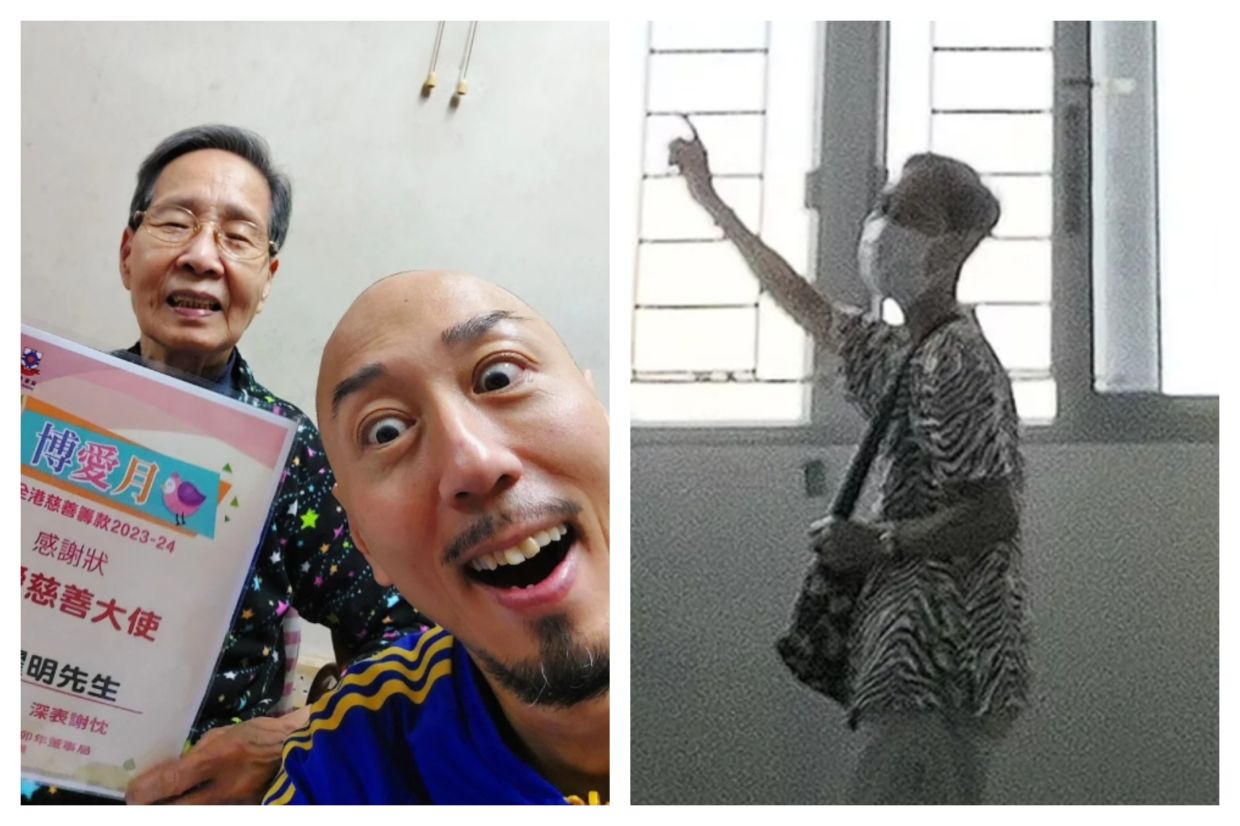
Hong Kong television actor Dai Yiu Ming has achieved a significant personal milestone by purchasing his first residential property as a gift for his ageing mother. The 54-year-old TVB actor announced the accomplishment through Instagram, where he posted photographs of the new residence including views from the windows. Though he acknowledged the substantial financial burden of the acquisition, Dai expressed no regret over the decision, framing it as an expression of filial devotion rather than a mere financial transaction. His announcement resonated widely with followers who praised his dedication to caring for an elderly parent, a value that carries particular significance across East and Southeast Asian cultures.
In his social media caption, Dai offered a poignant reflection on the nature of family bonds and time. He articulated that their shared existence in this lifetime was precious and irreplaceable, questioning whether future incarnations would reunite them. This philosophical perspective underscored his reasoning for prioritising the purchase despite its considerable cost. Rather than viewing the home as a luxury expenditure, Dai positioned it as an essential gesture acknowledging the sacrifices his mother had made throughout her life. His words touched many readers who saw in his decision a rare modern commitment to multigenerational family responsibility.
Dai's mother, now in her eighties, has endured a markedly difficult life characterised by material hardship. The veteran actor revealed that his mother had spent the majority of her existence residing in substandard housing, including shacks and aging public housing estates. More strikingly, she had survived warfare and its immediate aftermath, including a period sheltered in an air-raid bunker where she sustained herself by consuming sweet potato leaves—a harrowing memory that illustrates the severity of hardship Hong Kong residents experienced during the Second World War and its immediate aftermath. Through his account, Dai positioned his mother as a symbol of resilience and survival against historical odds.
Acknowledging the limitations of his own earning capacity, Dai spoke candidly about his financial constraints throughout his career. He explained that his modest income as a supporting actor had necessitated years of careful budgeting and frugal living in order to accumulate sufficient capital for this purchase. Rather than presenting himself as a major financial success, Dai adopted a humble stance, suggesting that his achievement was the result of discipline and persistence rather than extraordinary wealth or talent. This honest self-assessment likely enhanced his relatability for audiences in Hong Kong and beyond, where many viewers struggle with property acquisition in economically pressured markets.
The social media response to Dai's announcement demonstrated widespread admiration for his approach to family obligations. Commenters praised his sense of filial piety, a Confucian value that emphasises respect and care for parents and remains deeply embedded in East Asian societies. One user commended his unmatched sense of responsibility toward his mother, while another urged him to dedicate additional time to her companionship alongside the material provision he had made. These responses illustrated how Dai's decision transcended personal achievement and instead represented a broader cultural ideal of intergenerational reciprocity and family loyalty that many in the region aspire to emulate.
Dai's career path itself reflects the uncertainties and compromises that characterise many entertainment industry workers in Asia. In 1991, he enrolled in ATV's artiste training programme, subsequently making his television debut in 1993. However, after only one year with ATV, he departed the broadcaster, believing his professional efforts were not receiving adequate recognition or compensation. This setback forced him to transition into technical work as a computer repair technician, a temporary measure that lasted six months before he secured a contract with TVB later in 1994. His trajectory demonstrates how career instability within the entertainment sector can necessitate diversification and flexibility in income generation.
Since joining TVB, Dai has cultivated a steady reputation as a reliable supporting performer across numerous drama productions. Though he has not achieved the status of major celebrity or leading roles, his consistent work within the television industry has provided the foundation upon which his eventual property purchase was constructed. This pattern is instructive for understanding how many entertainment professionals build modest wealth—not through blockbuster success, but through sustained, unglamorous labour in secondary roles across extended periods.
A significant turning point occurred in Dai's personal and professional life following his father's death more than a decade ago. The loss of his father transformed the household dynamics, placing heightened responsibility on Dai as the primary male family member. The actor and his mother subsequently became each other's principal source of emotional and material support. This biographical context renders his property purchase particularly meaningful, as it represents the fulfilment of an obligation that became more pressing following his father's passing. The home acquisition therefore symbolises not merely personal achievement but the continuation of family responsibility across generations.
In 2017, seeking expanded professional opportunities and potentially higher earnings, Dai relocated to mainland China to pursue acting work. However, this venture proved unsustainable as he could not psychologically endure separation from his mother. He returned to Hong Kong within a relatively brief period, prioritising emotional connection and caregiving duties over career advancement. This decision illustrates how filial obligation frequently supersedes economic opportunity for many individuals in the region, and how personal values occasionally conflict with professional ambition. His choice to return exemplifies the precedence many place on family relationships over financial gain, a value system that remains influential despite increasing economic pressures.
The cultural resonance of Dai's achievement extends beyond Hong Kong itself to broader East Asian and Southeast Asian audiences who share similar values regarding family structure and intergenerational responsibility. In Malaysia, Singapore, and other regional societies, the narrative of modest workers striving to provide secure housing for ageing parents remains deeply relevant and emotionally compelling. Property ownership, particularly in densely populated urban environments, represents not merely shelter but a tangible symbol of care and respect. Dai's accomplishment therefore carries significance as an aspirational narrative that affirms traditional values in contemporary economic contexts where such achievements require exceptional dedication and sacrifice.

