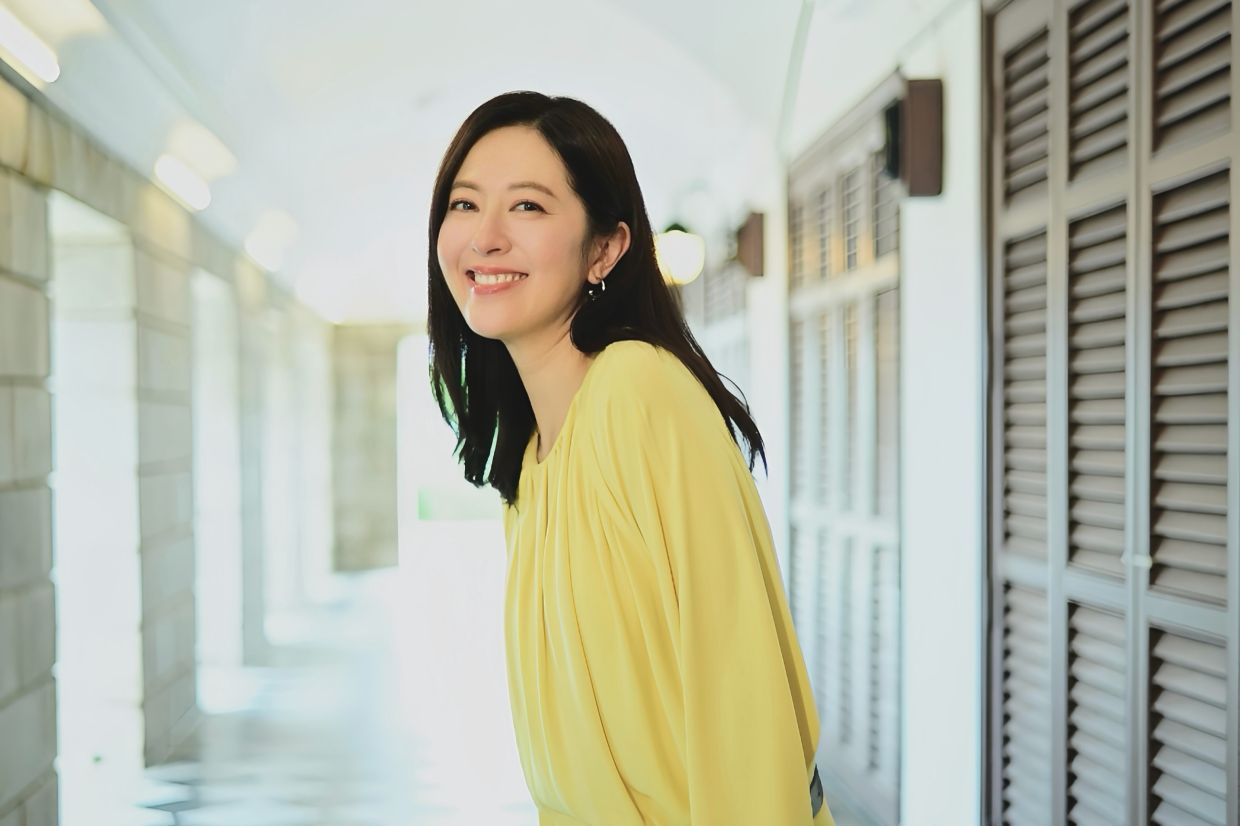
Hong Kong actress Natalie Tong has opened up about one of her life's deepest sorrows—the death of her mother in 2009—in an emotional appearance on a variety show, reflecting candidly on the years she spent chasing professional success while her parent's health deteriorated. Now 45, Tong discussed how career ambitions consumed her youth and left her with lingering regrets that have shaped her understanding of what truly matters in life. The television personality, who spent nearly two decades working in the intensely demanding entertainment industry, found herself unable to hold back tears as she recounted the circumstances surrounding her mother's passing and the lessons it taught her about mortality and family bonds.
Tong's mother required a pacemaker implantation procedure that needed regular replacements to manage her heart condition. When the time came for a critical replacement surgery, financial constraints forced the family to make a difficult decision to postpone the operation. At the time, Tong believed there would be ample opportunity to address her mother's health needs in the future, a miscalculation that would haunt her for years. She explained during the interview that she was entirely focused on advancing her acting career, devoting virtually all her energy and time to work commitments while her mother's medical situation remained unresolved. Looking back on that period, Tong acknowledged the painful reality that her family was not receiving the attention and resources they deserved while she pursued professional advancement.
The tragic turning point came when her mother took a trip, and upon returning home, suddenly began vomiting blood. The family rushed her to hospital in what must have been a terrifying ordeal, hoping that medical intervention could still save her life. However, the next morning brought devastating news—doctors informed Tong that her mother had died overnight. The shock of losing her parent so suddenly, after years of neglecting to spend quality time together or properly address her health concerns, proved psychologically overwhelming. Tong collapsed when receiving the news, unable to process the magnitude of the loss or comprehend that her mother was truly gone. She described the moment as one of complete emotional breakdown, the weight of her years of missed opportunities suddenly becoming unbearably real.
In the years that followed, Tong gradually came to terms with mortality and the transient nature of human life, though the wound of her particular loss never fully healed. What bothers her most is not merely the fact of her mother's death, but rather the specificity of what she failed to do—the conversations never had, the moments never shared, the care not provided when it could have made a difference. She articulated this complex emotion clearly, explaining that while understanding intellectually that death is inevitable, the emotional sting of regret remains sharp. The knowledge that certain things can never be rectified, that time once lost cannot be recovered, formed a painful lesson that redirected her entire approach to living.
This philosophical reckoning eventually led Tong to make a significant professional decision. In 2022, after 19 years of service as a contracted artist with TVB, one of Hong Kong's most prominent television broadcasters, she chose to leave the company. Her departure was not driven by a sudden dramatic incident or conflict, but rather by a deliberate choice to reclaim control of her time and prioritise her relationships with loved ones still living. By stepping away from the demanding schedules and constant work obligations that had defined her adult life, Tong aimed to prevent future regrets by investing in family bonds while she and her relatives were still alive to share those moments.
Rather than viewing her regrets as permanent anchors dragging her down, Tong has chosen to interpret them as catalysts for positive change. She emphasizes that having the capacity to recognise mistakes and alter one's life trajectory is genuinely valuable, a perspective that many people fail to achieve. By leaving TVB and restructuring her life around different priorities, she has consciously rewritten her personal narrative, moving away from the performer perpetually chasing roles and recognition toward someone who consciously allocates time to self-reflection and family relationships. This shift represents not a rejection of her career or talents, but rather a rebalancing of what success actually means in the context of a full human life.
Following her departure from television, Tong ventured into entrepreneurship within the food industry, opening a bakery in Causeway Bay during 2023. This new venture allowed her to build something tangible beyond entertainment while maintaining creative expression and business involvement. The bakery represented a concrete manifestation of her commitment to building a different kind of life, one where she could control her schedule and maintain presence in her personal relationships. Additionally, in 2025, Tong made her stage debut in a theatrical production, suggesting that while she has stepped back from the daily grind of television production, she has not abandoned performance entirely but rather engaged with it on her own terms.
Tong continues to maintain a public presence through occasional appearances on variety shows, where she has become increasingly open about her personal journey and life philosophy. These appearances allow her to connect with audiences from a more authentic place, sharing wisdom earned through loss rather than simply entertaining through performance. Her willingness to discuss grief, regret, and the process of life reconstruction has resonated with viewers who similarly struggle with balancing ambition and relationships. By speaking publicly about these deeply personal struggles, she has transformed her private pain into a message that might help others avoid the same patterns of neglecting loved ones in pursuit of external achievement.
Tong's story carries particular resonance in the context of Hong Kong and broader East Asian society, where competitive career environments and cultural emphasis on professional success can lead individuals to deprioritise family bonds. Her journey from regret-haunted overachiever to someone consciously choosing presence over productivity offers a counternarrative to the relentless hustle culture that dominates urban professional life. The realisation that no amount of career accomplishment can compensate for missed moments with family members, and that the opportunity to spend time with loved ones is genuinely finite and precious, represents a wisdom that extends far beyond her individual experience.
Moving forward, Tong has indicated that she views her remaining years as an opportunity to deliberately construct a different kind of legacy—one built on meaningful relationships and intentional living rather than accumulated professional credits. While she cannot undo the past or bring her mother back, she has found a way to honour that memory by ensuring that other relationships in her life receive the attention and time they deserve. This stance—accepting what cannot be changed while actively improving what can be—encapsulates a mature approach to dealing with profound regret that many people struggle to achieve.

