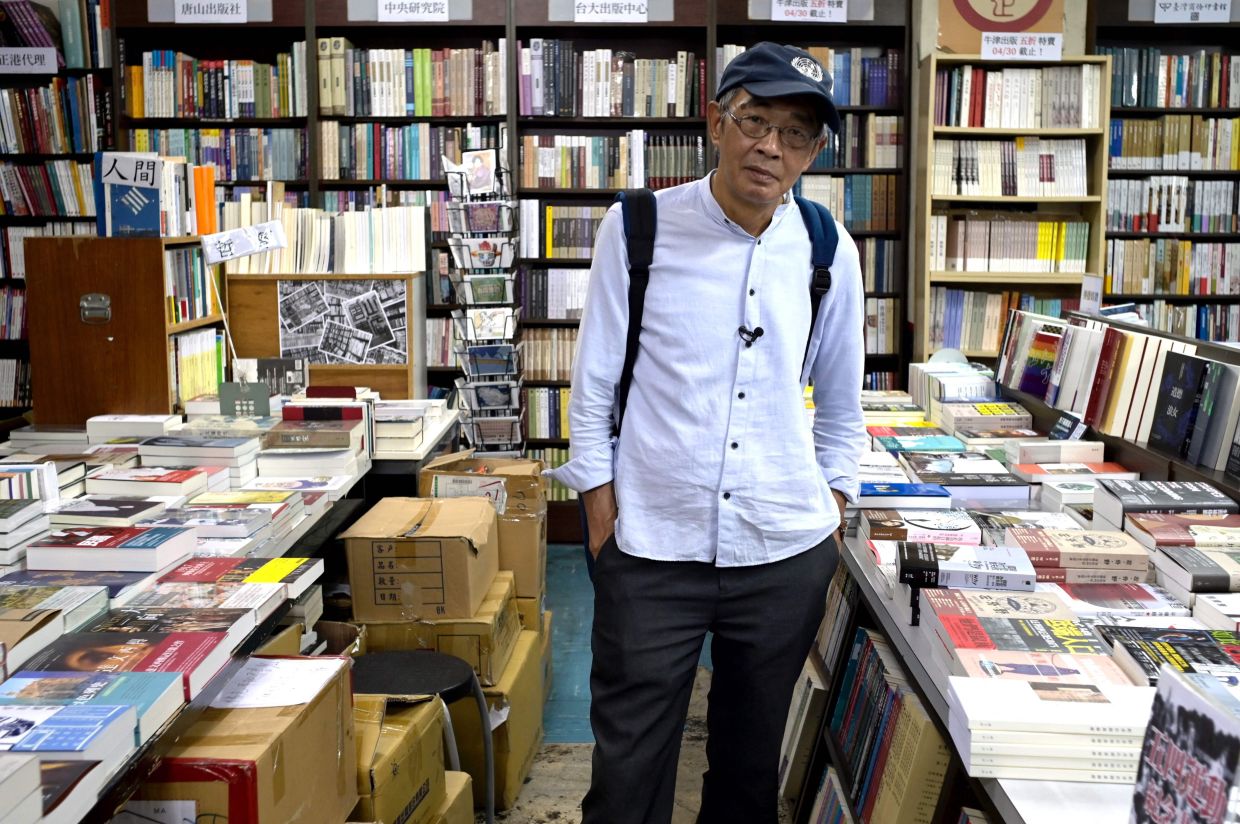
Lam Wing-kee, a Hong Kong bookseller who became an emblem of resistance against Beijing's tightening grip on free speech, has passed away in Taiwan at the age of 70. The Central News Agency of Taiwan reported his death on Thursday evening, citing undisclosed sources close to the family. Although the specific cause was not disclosed publicly, officials noted that Lam had suffered a recurrence of cancer in the preceding year and was hospitalised at MacKay Memorial Hospital in Taipei earlier in the week before slipping into a coma and ultimately succumbing to his illness.
Lam's prominence in discussions of civil liberties and freedom of expression stems from his role in managing Causeway Bay Books, a Hong Kong bookstore known for stocking publications unavailable on mainland China. These included volumes purporting to expose confidential details about the private lives of senior Communist Party officials and their alleged improprieties. His notoriety intensified dramatically in late 2015 when he became one of five individuals connected to the bookstore who vanished under mysterious circumstances, an episode that would reverberate across Asia and alarm observers of human rights. The disappearances sparked international scrutiny regarding Beijing's expanding reach into Hong Kong despite the territory's nominally separate legal framework and constitutional protections.
Lam's account of his detention, disclosed at a packed press conference in Hong Kong in 2016, provided rare firsthand testimony about the mechanics of Beijing's security apparatus. He described being apprehended by Chinese authorities in October 2015 shortly after crossing from Hong Kong into Shenzhen, a major Chinese city adjacent to the territory. Following his capture, Lam recounted being blindfolded and subjected to a gruelling 13-hour train journey eastward to Ningbo, a port city in Zhejiang province. Once there, he was confined to a single room under perpetual observation by rotating pairs of guards for five consecutive months. In a further indignity, he was compelled to appear on Chinese television and confess to alleged offences, a coercive spectacle designed to legitimise his detention in the eyes of the domestic Chinese public.
Among the other four individuals who disappeared alongside Lam, perhaps the most prominent was Gui Minhai, a book publisher and partial proprietor of Causeway Bay Books. Gui vanished from a coastal resort in Thailand, suggesting the reach of Chinese security services extended well beyond Hong Kong's borders. He was subsequently convicted in China in 2020 on charges of illegally furnishing state secrets to foreign entities and sentenced to a decade in prison, a verdict widely viewed by international observers as politically motivated punishment for his involvement in publishing sensitive material.
Fearing legal jeopardy in Hong Kong, particularly as Beijing consolidated authority over the territory, Lam relocated to Taiwan in 2019. He subsequently reopened Causeway Bay Books in Taipei in 2020, establishing a symbolic foothold for the principle of unrestricted publication in a democratic jurisdiction. The bookstore became both a commercial enterprise and a statement of principle, attracting patrons sympathetic to Hong Kong's deteriorating freedoms. However, in recent months, Lam's failing health necessitated the temporary closure of the shop. Speaking to Taiwan's Central News Agency last month, he expressed uncertainty about when reopening might be feasible given his medical circumstances.
Taiwan's President Lai Ching-te publicly mourned Lam's passing, releasing a statement on Facebook that elevated the bookseller's significance beyond a single individual. Lai framed Lam as a embodiment of democratic values and the price of defending liberty against authoritarian pressure. The presidential tribute highlighted how Lam's ordinary profession—selling books—became an extraordinary act of defiance, and how his experience illustrated fundamental truths about the fragility of freedoms and the generational commitment required to sustain them in the face of encroaching state control.
The political context surrounding Lam's death underscores the dramatic transformation of Hong Kong over the past decade. The massive pro-democracy protests of 2019, which mobilised millions of residents, were followed by a systematic dismantling of virtually every outlet for dissent. Chinese and Hong Kong authorities introduced a sweeping national security law in 2024 that grants state entities extraordinary powers to suppress what Beijing deems seditious activity. In a direct echo of the 2015 Causeway Bay Books incident, Hong Kong police arrested two individuals in June 2024 on suspicion of operating a bookstore that distributed seditious materials and received funding from foreign political organisations. This pattern illustrates how the authorities have maintained their focus on controlling the circulation of information and punishing those who facilitate such circulation, a priority that consumed Lam Wing-kee's life.
Lam's trajectory from ordinary bookstore manager to international symbol of press freedom reflects broader transformations across Asia regarding how states regulate information and punish dissent. His detention and forced television confession became didactic tools for understanding contemporary Chinese security practices and the vulnerability of Hong Kong's promised autonomy. For Malaysian observers, Lam's story carries particular resonance given ongoing domestic debates about media freedom, sedition law, and the balance between national security and civil liberties. The closure of Causeway Bay Books in Taipei, marked by a mourner's white rose placed outside its entrance on Monday, represents not merely the loss of a physical space but a diminishment of one of Asia's last openly defiant platforms for unrestricted publication.
Lam Wing-kee's death closes a chapter in the history of Hong Kong's decline as a free society, yet his legacy continues to animate discussions about the price of resisting authoritarianism. His willingness to speak publicly about his detention, despite obvious personal risks, provided documentary evidence of state abuses that might otherwise have remained obscured. For those monitoring developments in Hong Kong and across the region, Lam's life and death serve as reminders of how quickly freedoms can erode and how individual acts of courage, however costly, remain integral to preserving space for dissent and independent thought in an increasingly controlled information environment.

