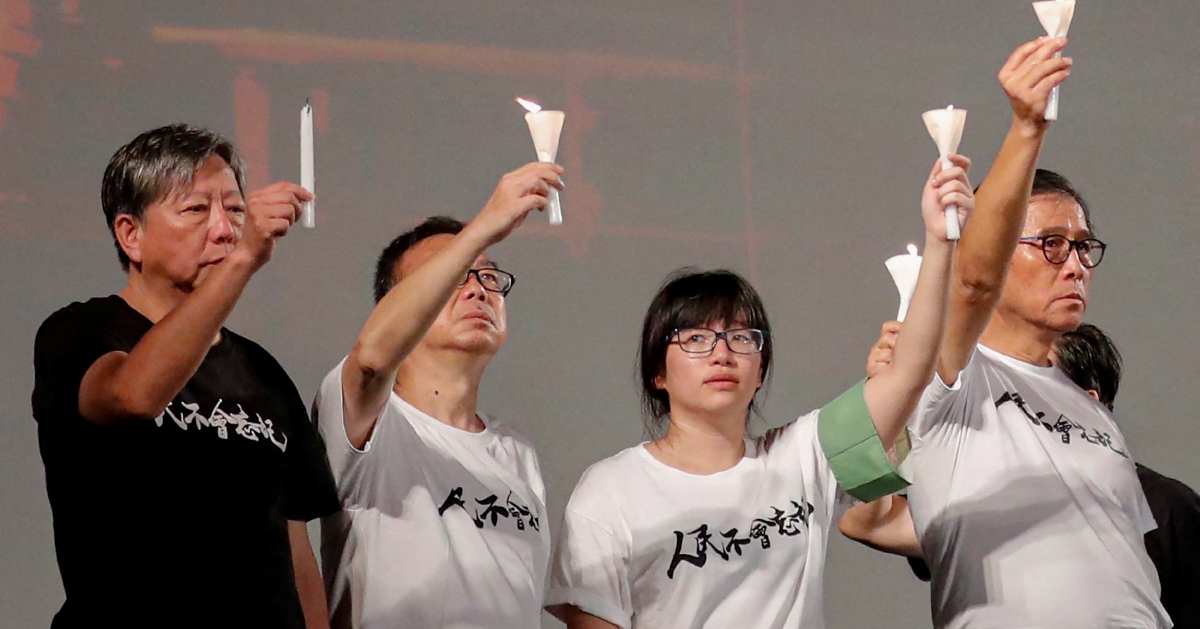
Two Hong Kong activists who orchestrated the city's longest-running June 4 vigils commemorating the 1989 Tiananmen crackdown have been convicted of inciting subversion, marking another significant contraction of political freedoms in the former British colony. The Friday verdict delivered by a Hong Kong court reflects the expanding definition of subversive activity under the National Security Law, a watershed moment for civil society organisations across Asia's financial hub.
The activists' prosecution centres on their role in arranging annual candlelit memorials honouring those killed during the military suppression of pro-democracy protests at Beijing's Tiananmen Square more than three decades ago. These vigils, historically held in Victoria Park, drew tens of thousands of participants in earlier years and served as Hong Kong's primary venue for discussing the sensitive historical event. The annual gatherings represented one of the few places globally where Chinese citizens could openly memorialise the incident, rendering Hong Kong's approach a stark outlier within greater China.
Under Hong Kong's National Security Law, imposed in 2020 following massive pro-democracy demonstrations, the definition of subversion encompasses activities deemed to undermine state power or constitutional order. Prosecutors argued that organising these commemorative events constituted incitement to subversion because the vigils inherently challenged Beijing's official narrative and prompted participants to question the legitimacy of the 1989 government response. This interpretation significantly expands the legal scope of what authorities consider threatening behaviour, extending restrictions beyond traditional sedition concerns to encompass historical commemoration itself.
The convictions carry profound implications for freedom of assembly and expression throughout the territory. Hong Kong residents have historically enjoyed greater civil liberties than mainland China, a distinction enshrined in the 1997 handover agreement's "One Country, Two Systems" framework. However, the steady erosion of these protections since 2020 has prompted international human rights organisations to question whether this distinctive legal arrangement remains meaningful. The Tiananmen vigil prosecutions exemplify how broadly-constructed security legislation can suppress activities that fall outside conventional definitions of political opposition.
The verdict also raises questions about Hong Kong's future as a cosmopolitan international city. Multinational corporations and financial institutions have long valued Hong Kong partly because of its rule-of-law traditions and relative openness compared to mainland jurisdictions. Expanding criminal liability for historical commemoration creates legal uncertainty for all residents and may further encourage talented individuals to relocate elsewhere in the region, particularly to Singapore, which offers stability without similar political constraints.
Southeast Asian governments have watched Hong Kong's trajectory with considerable interest, particularly as they navigate their own tensions between national security concerns and civil liberties. Malaysia, Indonesia, and other regional democracies grapple with similar tensions, and Hong Kong's experience demonstrates how security legislation can reshape political norms across societies. The activism that these convictions target has never been mainstream in Southeast Asia, yet the legal precedent established may influence how regional governments approach sensitive historical commemorations.
The Tiananmen vigil prosecutions must be understood within Hong Kong's broader political transformation since 2020. Political opposition figures have been imprisoned, pro-democracy media outlets forced to cease operations, and civic organisations disbanded under National Security Law provisions. Academic freedoms have contracted as universities navigate ambiguous guidelines, and international observers have increasingly questioned whether Hong Kong maintains sufficient autonomy to justify its separate legal status within China. The vigil convictions represent not an isolated incident but rather one element of systematic change.
The convicted activists operated within what they reasonably believed were protected spaces for historical commemoration. That authorities have retroactively redefined these activities as criminal subversion highlights the unpredictability that now characterises Hong Kong's legal environment. Citizens cannot reliably anticipate which previously-tolerated activities might attract prosecution, fundamentally undermining the rule of law principle that restrictions must be clearly defined and predictable in advance.
International reactions to the convictions have predictably split along geopolitical lines. Western governments and human rights bodies have condemned the verdict as further evidence of eroding freedoms, while Beijing and supportive authorities argue that commemorating Tiananmen inherently represents political challenge to national legitimacy. This polarisation has intensified as Hong Kong transforms into a domestic governance priority for Beijing, with security officials viewing commemoration as unacceptable questioning of state authority.
The vigil convictions carry symbolic weight beyond their immediate legal consequences. The June 4 commemorations historically represented Hong Kong's claim to moral distinctiveness from mainland China and its position as guardian of alternative historical narratives. By prosecuting those who maintained this tradition, authorities have signalled that Hong Kong's exceptional status in this regard has ended. Future historians may view the conviction date as a turning point in Hong Kong's integration into the mainland political and legal system.

