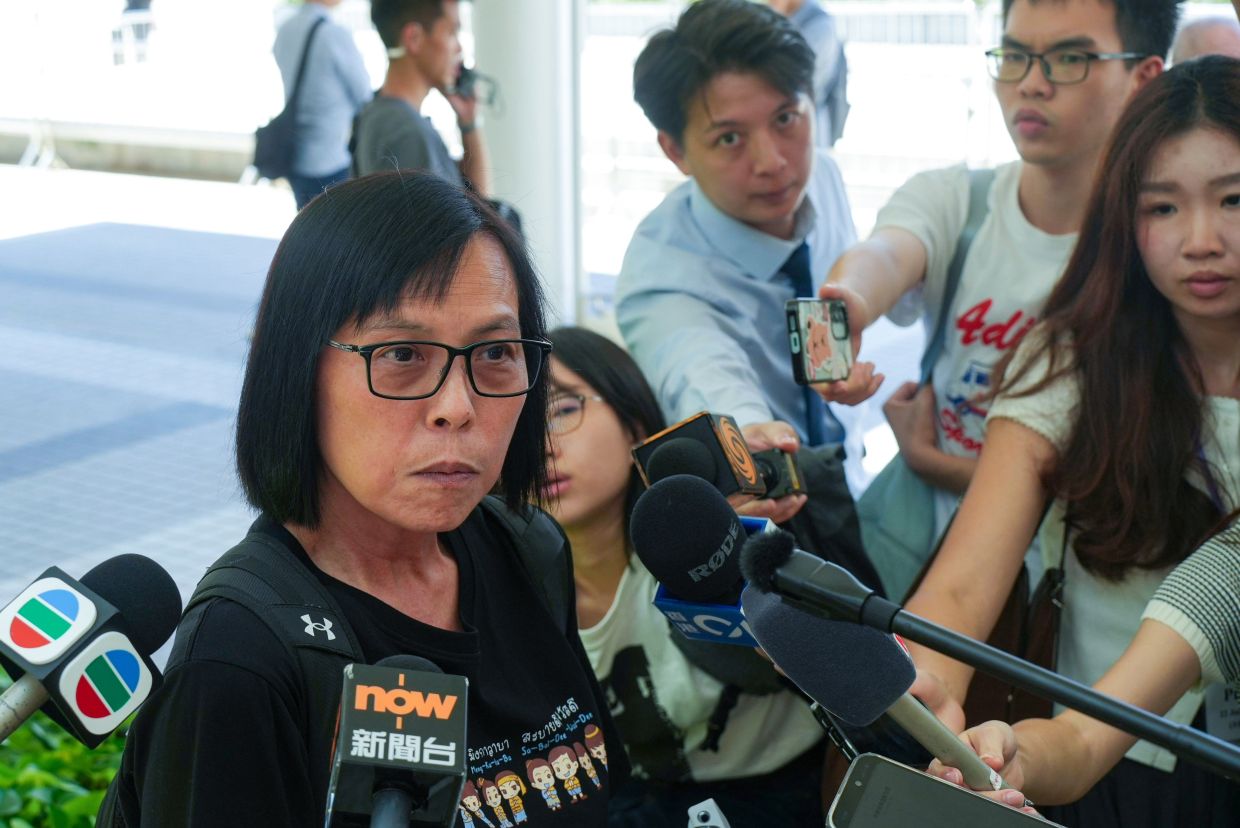
Hong Kong's independent committee tasked with investigating the Wang Fuk Court fire has announced it will not request conversion into a statutory commission of inquiry, a decision that has sparked concerns among survivors and observers about the investigation's comprehensiveness and capacity to compel testimony and evidence.
Justice David Lok Kai-hong, who chairs the panel, confirmed the committee's position as hearings resumed on Monday following a six-week adjournment. The refusal to pursue statutory status represents a significant limitation on the inquiry's investigative reach, as voluntary committees lack the coercive powers that statutory commissions possess to summon witnesses, demand documentation, and compel testimony under legal obligation.
The distinction between these two frameworks carries substantial implications for fire-disaster investigations in Hong Kong. Statutory commissions operate under legal authority that makes non-compliance with summons or requests for evidence a punishable offence, whereas voluntary inquiries depend on the cooperation and goodwill of those being investigated. This structural difference determines not only what evidence can be gathered, but whose accounts can be legally compelled and what consequences exist for evasion or obstruction.
Survivors of the Wang Fuk Court fire have expressed anxiety that the committee's voluntary status may permit involved parties—whether government departments, building management, or fire safety officials—to limit access to information or decline participation in ways that would be impossible under statutory framework. The fire, which devastated a residential building and claimed multiple lives, naturally invoked questions about building codes, maintenance standards, and emergency response protocols. Without statutory enforcement mechanisms, gathering comprehensive evidence about institutional failures becomes dependent on voluntary disclosure.
The decision also reflects a broader pattern in Hong Kong's approach to major investigations. When disasters occur, authorities typically establish committees rather than formal inquiries, though the statutory option remains available. This preference for non-statutory structures has occasionally drawn criticism from transparency advocates who argue it can result in less rigorous examination of systemic issues and institutional responsibility.
Hong Kong's legal framework does allow the chief executive to convert an independent committee into a statutory commission during investigation. Justice Lok's declaration that the panel will not request such conversion suggests the committee believes its current status is adequate, or alternatively, that pursuing statutory powers at this stage would face obstacles. The timing of such a transition request could also influence the investigation's trajectory and public perception.
The implications extend beyond Hong Kong to Southeast Asia more broadly, where fire safety in residential buildings remains an ongoing concern across the region. Malaysia, Singapore, Thailand, and the Philippines have all experienced tragic residential fires, and the question of how thoroughly and authoritatively such disasters are investigated affects public confidence in building safety standards and official accountability. The Hong Kong committee's approach may influence regional discussions about inquiry mechanisms and their effectiveness.
From a procedural standpoint, the resumed hearings represent the inquiry's substantive phase following preliminary stages. The six-week pause suggests either a scheduling adjustment or time required for document review and witness coordination. The continuation of hearings indicates the investigation is progressing, though the pace and scope of witness examinations will remain visible only as the committee releases findings or hearing summaries.
Survivors and affected families face uncertainty about whether the voluntary committee's investigation will address root causes comprehensively or focus narrowly on immediate circumstances. Statutory inquiries typically feature broader mandates to examine systemic issues, government policies, and regulatory failures. A voluntary committee may narrow its scope to more limited factual questions, leaving broader accountability questions unresolved.
The committee's composition and Justice Lok's leadership carry weight in determining the inquiry's credibility. Judicial figures heading such investigations typically command respect, though the voluntary nature of participation and evidence-gathering inherently constrains what even a well-intentioned chairman can accomplish without legal compulsion mechanisms.
Looking forward, the decision against pursuing statutory powers appears final unless the committee itself reverses course. This closes off one avenue through which survivors might have strengthened the investigation's enforceability. Observers will now focus on whether the voluntary framework produces thorough, credible findings that nonetheless satisfy public expectations for accountability and transparency regarding the Wang Fuk Court fire.
The broader lesson for Hong Kong and the region concerns the relationship between inquiry mechanisms and public confidence. When voluntary committees decline stronger powers without clear justification or public explanation, it creates space for concerns that accountability may be secondary to managing the investigation's scope and duration. Survivors and the public will ultimately judge whether the committee's findings offer adequate answers and whether the absence of statutory authority affected the investigation's completeness.