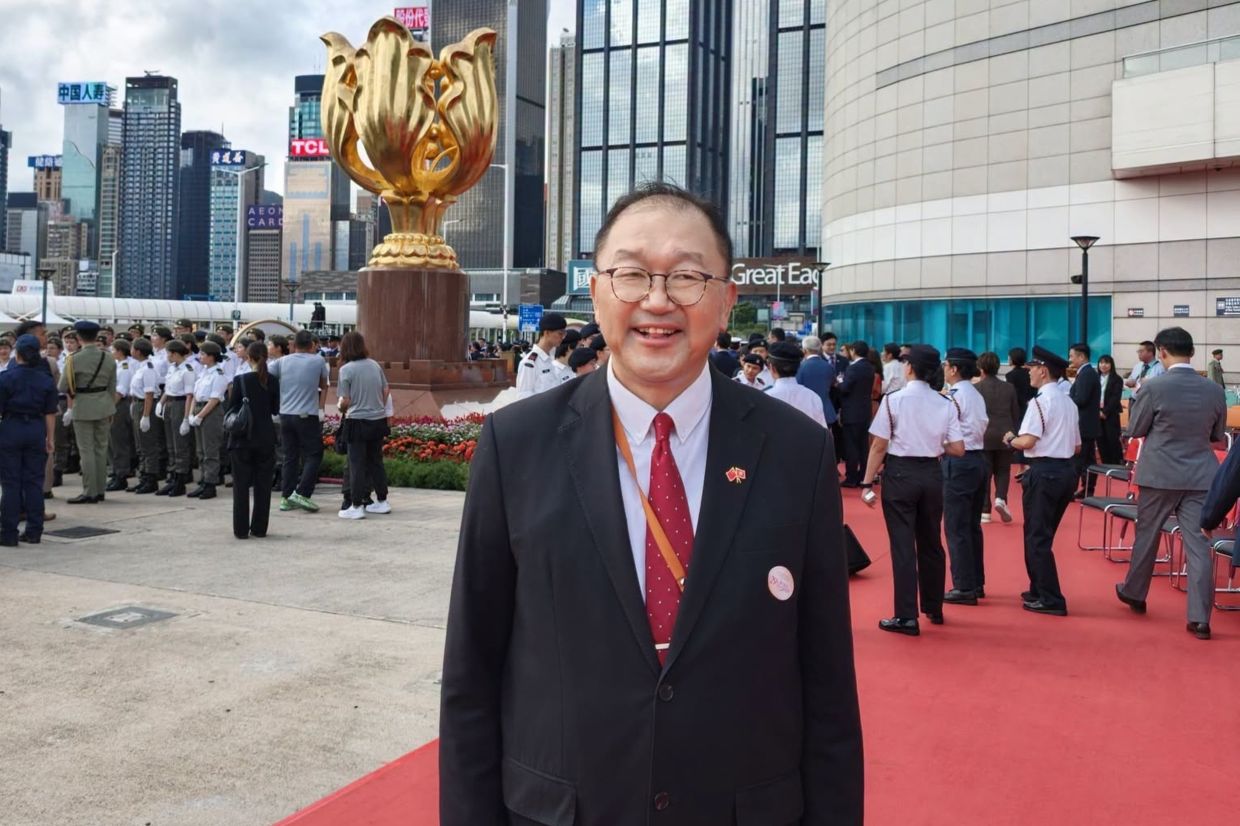
William Wong Kam-fai, a 66-year-old Hong Kong legislator, has become the first member of the Legislative Council to step down over a scandal in more than 26 years, following his arrest after a traffic incident that has sent shockwaves through the territory's political establishment. The resignation came on Friday, just days after Wong was detained on Monday evening when his vehicle struck two parked cars near a university staff residence, triggering both police investigations and intense scrutiny from the public and media alike.
Wong's swift departure from his legislative positions represents a significant moment in Hong Kong's recent political history, given that the previous comparable departure occurred in 2000 when Gary Cheng Kai-nam quit after winning his seat. The intervening quarter-century underscores how rare such resignations have become in the city's political landscape, even as standards for official conduct have intensified considerably. In his statement announcing the resignation, Wong expressed remorse for the distress caused both to society and to the Legislative Council itself, citing the need to protect the smooth functioning of the chamber and acknowledging the ongoing police investigation.
The incident occurred at approximately 10.46 p.m. on Monday when Wong lost control of his vehicle near a university staff residence, causing it to collide with a parked car that subsequently struck a second parked vehicle. Wong's arrest on suspicion of drink-driving and hit-and-run offences triggered an immediate political response, with observers and commentators treating the matter as one requiring urgent resolution to limit institutional damage. The speed of his decision to resign surprised few, as political figures and analysts quickly recognised that maintaining his position would only compound the reputational harm to both Wong himself and the legislature.
Legislative Council president Starry Lee Wai-king formally acknowledged Wong's resignation letter on Friday, expressing gratitude for his contributions to the body and his service to Hong Kong. Her measured response reflected the institutional consensus that Wong's departure was appropriate and necessary, though the statement conspicuously avoided detail regarding the underlying incident or its investigation. This careful approach typified reactions from senior figures, who appeared anxious to allow the matter to proceed through normal legal channels while distancing the legislature itself from the controversy.
Political analysts emphasised that Wong's resignation represented the optimal course of action to contain the reputational fallout. Lau Siu-kai, a consultant at the Chinese Association of Hong Kong and Macau Studies think tank, characterised the decision as minimising damage to both Wong and the Legislative Council, while preventing broader attacks on the principle of patriots administering Hong Kong. By resigning promptly rather than fighting to retain his position, Wong avoided the appearance of clinging to power despite serious misconduct, a calculation that analysts suggested would have proven far more damaging to political stability. This framing proved influential among establishment figures assessing the resignation's implications.
Analysts also anticipated that Wong would likely step down from his position with the Chinese People's Political Consultative Conference, the country's top political advisory body, though observers suggested central authorities would accept such resignations given the severity of the incident. Tam Yiu-chung, Hong Kong's former sole representative to the National People's Congress Standing Committee, concurred that resignation was the appropriate response for a legislator held to exacting standards of conduct. He stressed that the incident represented a serious mistake incompatible with the expectations placed upon elected officials, validating Wong's decision to step aside.
The loss of Wong's seat in the Legislative Council is unlikely to create significant operational difficulties for the chamber, primarily because he represented the Election Committee constituency rather than a functional constituency with specific sectoral responsibilities. This distinction proved important, as functional constituencies must reflect the views and interests of particular economic or professional sectors, while Election Committee seats carry fewer such obligations. Tam noted that the government would decide whether to hold a by-election to fill the vacancy, and that no legal requirement mandates such a by-election regardless of how much legislative term remains.
This precedent carries contemporary relevance in Malaysia and across Southeast Asia, where legislative bodies regularly confront questions about vacancy procedures and by-election protocols. Tan drew attention to an earlier case involving Stephen Wong Yuen-shan, an Election Committee constituency lawmaker who departed to serve as chief of a government think tank in late 2022, leaving his seat vacant for approximately three years without any by-election being held. The government's prior decision to prioritise financial considerations when evaluating by-election necessity suggests similar cost-benefit calculations may apply to the current vacancy, though no formal determination has yet been announced.
Wong's departure also highlighted the changing expectations around conduct from members of Hong Kong's establishment. The previous resignation in September 2000 involved Gary Cheng Kai-nam, who faced disclosure of undisclosed business ties, improper transfer of confidential government documents, and personal misconduct. Cheng subsequently served an 18-month prison sentence after conviction on four counts including bribery and misconduct in public office, establishing a cautionary precedent about the consequences of compromising official ethics.
The Chinese University of Hong Kong, Wong's employer, acted swiftly to distance itself from the incident, issuing a statement expressing deep concern and immediately suspending Wong from administrative duties. University officials carefully noted that the matter remained under police investigation and that further comment would be inappropriate pending the outcome. This institutional response reflected broader patterns across Hong Kong's professional establishment, where organisations moved quickly to signal their commitment to standards of conduct while maintaining procedural propriety regarding ongoing legal processes.
The incident carries wider implications for governance standards across Hong Kong's political system at a time when questions about institutional credibility remain significant. Wong's prompt resignation, while representing acknowledgment of wrongdoing, also demonstrated the continued responsiveness of senior figures to public expectations around accountability. However, the incident also underscores vulnerabilities in oversight mechanisms, given that Wong's driving occurred despite the apparent circumstances that led to his arrest, suggesting that informal standards may sometimes operate more effectively than formal enforcement mechanisms in constraining official conduct.

