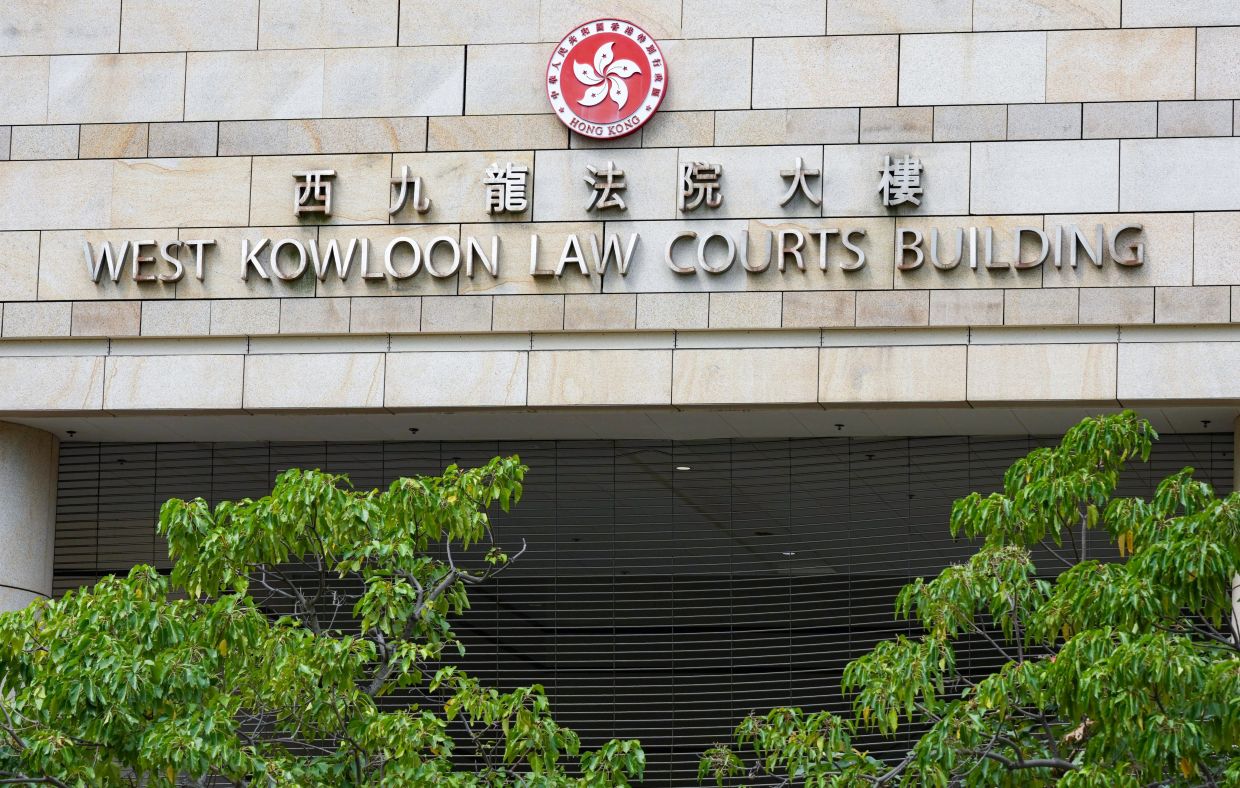
A 65-year-old man with a history of sexual assault convictions has received a four-month prison sentence after assaulting a secondary school student on a moving bus in Hong Kong, an incident that drew public attention following its circulation on social media platforms. The West Kowloon Court delivered the judgment on Tuesday against William Wu Yiu-shing, who admitted to committing indecent assault against the 17-year-old victim on June 5 aboard a double-decker Kowloon Motor Bus vehicle.
The offence occurred in broad daylight at around midday as the bus was stopped at the junction of Mong Kok Road and Sai Yeung Choi Street South in Mong Kok. What distinguished this case and amplified its social impact was the presence of a pedestrian outside the bus who recorded the entire assault on video and subsequently posted the footage online, transforming an individual criminal act into a matter of widespread public concern and discussion across digital networks.
According to the recorded evidence, Wu, dressed in a white tank top, extended his left arm toward the teenager, who was seated directly in front of him on the upper deck. The 37-second video showed him attempting to touch her chest and grab her while onlookers on the street repeatedly shouted warnings. Notably, Wu appeared to disregard these verbal interventions and persisted with the assault as the bus continued moving away from the intersection.
The victim recounted to investigating police that she experienced unwanted contact to her armpit area lasting several seconds and witnessed the defendant attempting to seize her. Frightened by the experience, she refrained from responding verbally or physically in the moment and instead departed for home immediately following the incident. Her inability to resist in real-time reflects a common pattern among assault victims experiencing shock and fear during such violations.
Authorities apprehended Wu the same day at the Hong Kong-Zhuhai-Macau Bridge border checkpoint as he returned from a visit to Macau. During police interrogation, he confessed to the offence and explained that he had committed the act to gratify his sexual desires. This admission became particularly significant when considered alongside his criminal history, as he carried three previous convictions specifically for indecent assault.
The sentencing occurred within the context of Hong Kong's legal framework governing such offences. Indecent assault ordinarily carries a maximum penalty of ten years' imprisonment, though when prosecuted in the magistrate's court—as this case was—the punishment is capped at two years. The four-month sentence fell substantially below this threshold, a decision likely influenced by Wu's guilty plea, his acknowledgment of guilt, and his legal representation's arguments regarding rehabilitation prospects.
During the Tuesday court proceedings, Wu's duty lawyer emphasised that the defendant had demonstrated frank recognition of his wrongdoing and admitted to perpetrating previous offences through similar conduct. The lawyer further highlighted that Wu expressed willingness to participate in psychological treatment programmes as part of his rehabilitation efforts, signalling potential receptiveness to intervention and behaviour modification. Such statements sometimes influence judicial discretion in sentencing decisions.
Wu has been held in custody since his prosecution commenced on June 8, meaning he had already spent considerable time in remand by the time of sentencing. According to standard early release arrangements in Hong Kong's correctional system, he is expected to become eligible for discharge approximately one month after the court's judgment, effectively reducing his actual time served considerably from the four-month sentence imposed.
This case carries broader implications for public safety consciousness in Hong Kong's densely packed public transport networks. The incident highlights vulnerabilities faced by young passengers, particularly during crowded commutes when predatory behaviour may occur despite surrounding crowds. The role of bystander video documentation and social media amplification has created new dimensions in how such crimes are processed socially and legally, potentially deterring future offenders through the certainty of public exposure.
For Malaysian readers, the Hong Kong prosecution serves as comparison point regarding how different jurisdictions handle repeat sex offenders and the balance between punishment, rehabilitation, and public safety. The case demonstrates ongoing challenges across the region in protecting vulnerable populations like schoolchildren using public transport, a concern equally relevant to Malaysian urban centres where mass transit systems carry millions of commuters daily.
The victim's experience and the broader community response underscore the necessity for comprehensive preventive strategies encompassing better enforcement, public awareness campaigns, and victim support services. The intersection of technology—enabling documentation and rapid information sharing—with law enforcement presents evolving opportunities for communities to respond more effectively to sexual harassment and assault in shared public spaces.

