Hong Kong's police force has moved against two individuals suspected of selling materials deemed seditious and channelling foreign political funding, marking another enforcement action under the city's contentious national security legislation. The arrests, made on Wednesday in late June, came as the former British colony approaches the 29th anniversary of its return to Chinese sovereignty, a date increasingly associated with concerns over eroding freedoms promised during the 1997 handover.
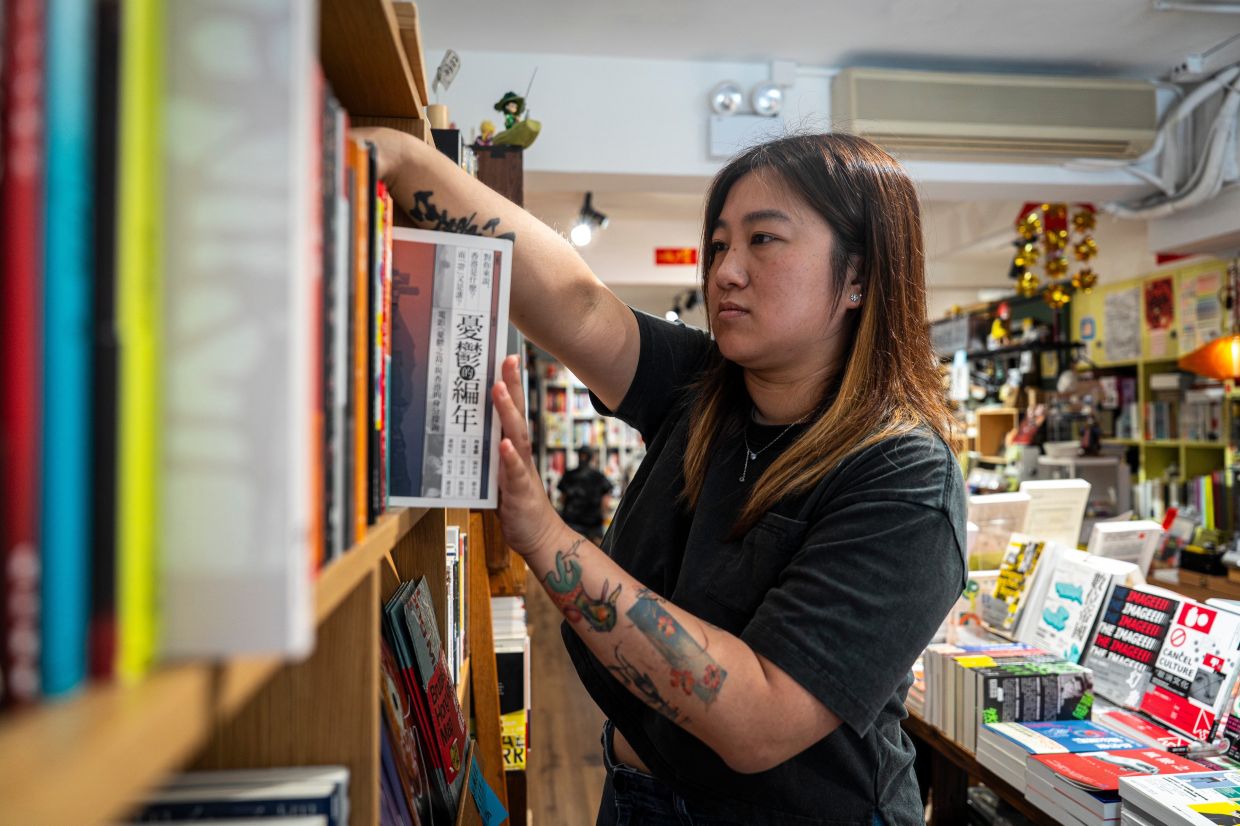
While official police statements did not name those detained, local news organisations including Ming Pao reported that Hunter Bookstore's operator Leticia Wong was among those apprehended. Wong has maintained a visible pro-democracy stance even as the city experienced a security crackdown following 2019's mass anti-government demonstrations. Her previous service as a district councilor and continued activism have kept her in the public eye despite an environment increasingly hostile to dissent.
Both individuals are said to operate a retail establishment in Sham Shui Po district, where Wong's independent bookstore functions as a gathering point for free thought and alternative literature. Authorities allege they displayed and sold publications with seditious content designed to incite animosity toward Hong Kong's government institutions, including the judiciary and law enforcement bodies. The charges also encompass allegations that the pair received monetary transfers originating from organisations with overseas political interests, raising questions about international support networks for local resistance movements.
Wong's bookstore has already faced sustained official pressure. Records she disclosed revealed that government authorities conducted 92 interventions against her shop between mid-2022 and mid-2025, ranging from routine inspections and visible police patrols to written warnings regarding alleged violations. These tactics, whether officially sanctioned or discretionary, create a chilling effect on business operations and signal regulatory disapproval without necessarily triggering formal prosecution. An anonymous letter that prompted a planned event organiser to cancel a booking at her premises suggests coordinated campaigns to isolate the business from potential patrons and collaborators.
The charges specifically reference the 2024 National Security Law, a piece of legislation that significantly expanded authorities' powers to prosecute activities deemed subversive. This legal framework replaced a previous ordinance and introduced broader definitions of prohibited conduct. Additionally, prosecutors have invoked separate financial crimes legislation related to handling proceeds from indictable offences, a tactic that effectively criminalises the financial aspects of political activity. The government has not specified which publications triggered the sedition allegations or identified which overseas organisations allegedly provided funding.
Previous enforcement actions suggest a pattern of targeting booksellers in Hong Kong. In March of this year, police detained the owner and staff members of another bookstore similarly accused of selling seditious materials, including a biography of imprisoned pro-democracy figure Jimmy Lai. Those individuals were eventually released on bail, though the cases remain active. The repeated focus on biographical and political literature, particularly materials about detained activists, reveals official concerns about narrative control and the power of documentation to sustain resistance movements.
Last year, a pro-Beijing newspaper had already singled out the independent book fair hosted at Wong's location, characterising it through the lens of "soft resistance." The publication specifically flagged plans to offer the aforementioned Lai biography, indicating that commercial distribution of such materials has become a flashpoint in broader battles over permissible speech. This scrutiny transformed what might ordinarily be routine retail inventory decisions into acts of political significance.
Hong Kong's government has consistently defended both its national security laws as essential infrastructure for urban stability, while simultaneously asserting that freedom of expression remains constitutionally protected within the jurisdiction. This apparent contradiction—the simultaneous invocation of security imperatives and civil liberties guarantees—reflects the central tension defining Hong Kong's current governance model. Officials argue that restricting certain categories of speech actually preserves broader freedoms by maintaining public order, a justification that critics view as fundamentally circular.
For Malaysia and other Southeast Asian observers, these developments carry substantial implications regarding the trajectory of civil liberties in the region. Hong Kong's experience demonstrates how national security frameworks, once implemented, can expand beyond stated parameters to encompass increasingly ordinary commercial and cultural activities. The targeting of independent bookstores and literature distribution networks illustrates how abstract security legislation translates into interference with quotidian business operations. For Malaysian readers, the Hong Kong case offers a cautionary example of how emergency powers designed to counter terrorism or sedition can ultimately become tools for suppressing political dissent and constraining the marketplace of ideas.
The enforcement pattern also raises questions about the sustainability of Hong Kong's international reputation as a relatively open financial and cultural centre. Historical advantages derived from Hong Kong's status as a gateway between Chinese and Western systems depend partly on perceptions of institutional reliability and freedom. As booksellers face prosecution for commercial activities that would face minimal legal scrutiny in comparable international financial hubs, questions mount about whether Hong Kong's regulatory environment is converging with mainland Chinese standards.

