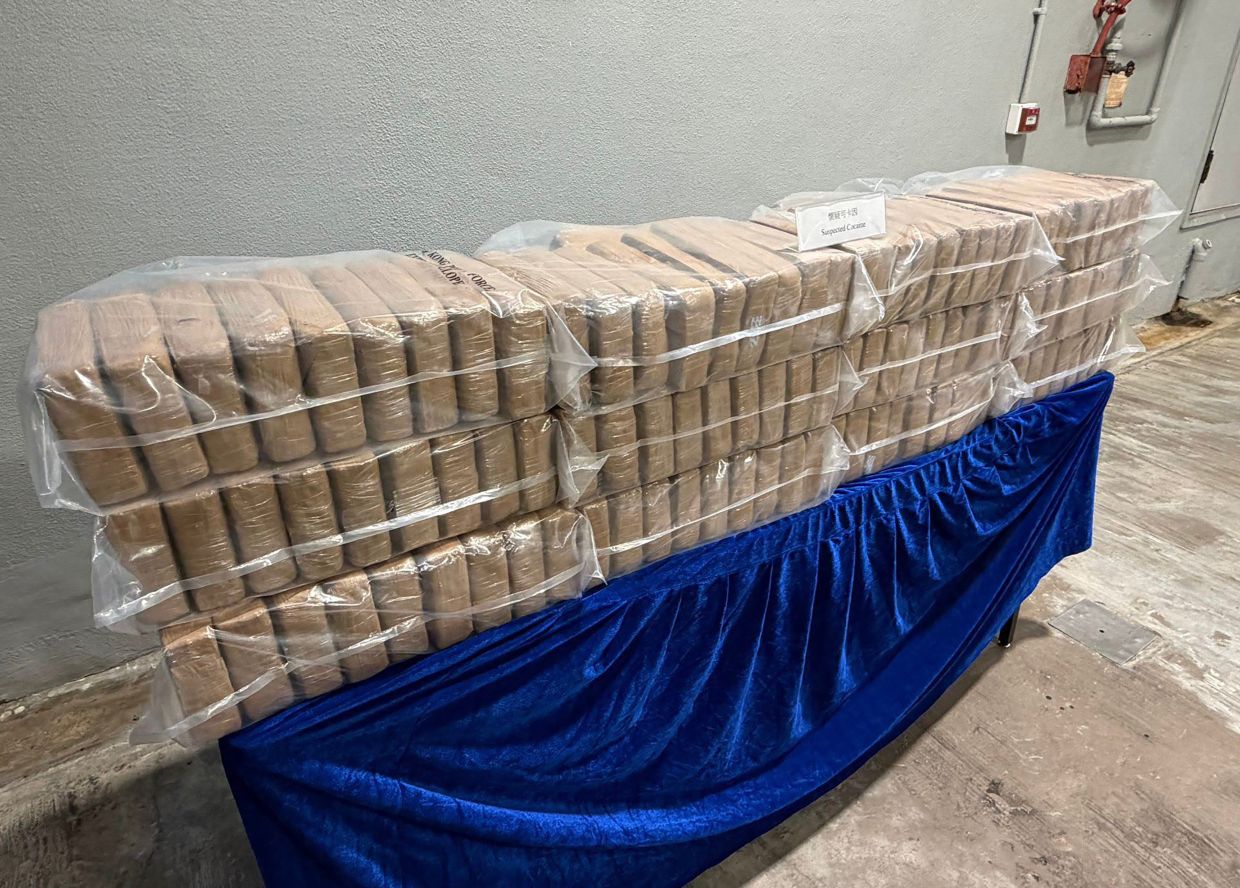
Hong Kong's narcotics officers have dismantled what appears to be a significant international drug trafficking network following back-to-back raids on vessels moored in Aberdeen Typhoon Shelter, with the combined seizures totalling 361 kilograms of cocaine and a street value estimated at HK$270 million. The latest discovery on Sunday involved a six-metre yacht where approximately 120 kilograms of cocaine bricks were recovered, coming just days after officers recovered 241 kilograms from another vessel in the same anchorage on Friday. The rapid sequence of operations has resulted in what police describe as the largest cocaine trafficking case recorded by the territory's law enforcement agencies over the past twelve months, signalling an escalation in regional drug smuggling activities through Hong Kong's busy harbour.
The scale and coordination of this operation reflects the sophisticated nature of modern transnational narcotics trafficking, which increasingly exploits Hong Kong's status as a major international maritime hub. The use of moored yachts as floating storage facilities represents a calculated strategy by criminal syndicates to evade detection, leveraging the sheer volume of maritime traffic and the practical challenges facing enforcement authorities. The choice of Aberdeen Typhoon Shelter, one of the territory's most congested anchorages, speaks to how traffickers deliberately conceal contraband among legitimate vessels and commercial activity. For Malaysian authorities and regional neighbours, the discovery underscores the permeability of maritime borders across Southeast Asia and the broader Indo-Pacific, where similar tactics are likely being deployed across multiple jurisdictions.
Investigators have concluded that the contraband recovered from both vessels formed part of a single integrated smuggling operation, based on matching packaging, weight distribution, and the similar specifications of the seized drug bricks. This assessment indicates that the trafficking organisation operated a layered storage system, distributing their inventory across multiple platforms to mitigate the risk of total loss through a single police interception. The strategy reveals organisational sophistication and substantial financial resources, hallmarks of major international criminal networks rather than opportunistic operators. For the regional law enforcement community, the discovery provides valuable intelligence about trafficking methodologies that may inform investigations elsewhere across Southeast Asia and Hong Kong's neighbouring territories.
The arrest of a 45-year-old local woman, identified as the registered owner of the second yacht, marks a departure from typical drug trafficking patterns where syndicates employ individuals with established maritime credentials or fishing industry connections. The arrested woman was listed as unemployed, raising questions about how she came to own and operate a yacht while lacking apparent legitimate income sources. This choice of front-person may reflect the syndicate's deliberate attempt to avoid attention by using individuals without obvious criminal profiles or established connections to the maritime industry. Police have indicated she remains in custody pending further interrogation as investigators work to establish her precise role and connections within the wider trafficking hierarchy.
The initial raid on Friday resulted in the apprehension of a suspected syndicate leader and two individuals identified as core operational members, all of whom have provided cover stories centring on unemployment or fishing-related livelihoods. The consistency of these claims across multiple detainees suggests either coordinated deception protocols within the organisation or a genuine pattern of using the fishing and maritime sectors as legitimate fronts for trafficking activities. For Malaysian authorities dealing with comparable smuggling challenges in the Strait of Malacca and surrounding waters, the case illustrates how conventional occupational categories can mask serious criminal enterprise.
The value assessment of HK$270 million reflects street-level retail pricing rather than the wholesale cost at which the cocaine likely entered Hong Kong's supply chain, indicating the substantial profit margins that drive international narcotics trafficking. The difference between acquisition cost and street value represents the financial incentive structure motivating criminal networks to accept the operational and legal risks associated with international smuggling. Understanding these economic dynamics is crucial for policymakers across the region attempting to develop counter-trafficking strategies that address underlying commercial motivations rather than merely interdicting supply flows.
The timing and geographic concentration of these seizures merit careful scrutiny, as the dual raids within such a short timeframe may indicate either heightened enforcement activity targeting known trafficking routes or perhaps intelligence-driven operations based on prior surveillance and information gathering. The placement of both vessels within the same anchorage suggests either operational convenience or a deliberate clustering strategy intended to minimise transit times and handling requirements. For Hong Kong's port authority and maritime administration, the incident raises questions about vessel monitoring systems and the adequacy of surveillance mechanisms covering major anchorages where criminal activity can apparently proceed relatively undetected.
Regional implications extend beyond Hong Kong to encompass the broader Southeast Asian maritime environment, where similar trafficking networks operate with varying degrees of success across Thailand, Malaysia, Singapore, and Indonesia. The sophistication displayed in this Hong Kong operation mirrors patterns observed in other major regional smuggling cases, suggesting interconnected criminal enterprises that exploit differences in enforcement capacity and judicial frameworks across jurisdictions. Malaysia's position astride critical maritime routes places it in a similar vulnerability profile, requiring sustained investment in maritime domain awareness and cross-border intelligence sharing mechanisms.
The case represents a significant operational success for Hong Kong's narcotics bureau but also underscores the scale of trafficking challenges confronting authorities across the region. The 361-kilogram seizure, while substantial, likely constitutes only a fraction of the cocaine volumes transiting through Asian waters bound for distribution networks in the territory and across Southeast Asia. The investigation's ongoing nature suggests that police may be pursuing additional syndicate members and uncovering further storage locations, potentially yielding additional arrests and seizures in coming weeks. For Malaysia and other regional governments, the Hong Kong operation serves as both a cautionary example of trafficking methodologies and evidence that coordinated enforcement efforts can yield tangible results in disrupting major criminal operations.

