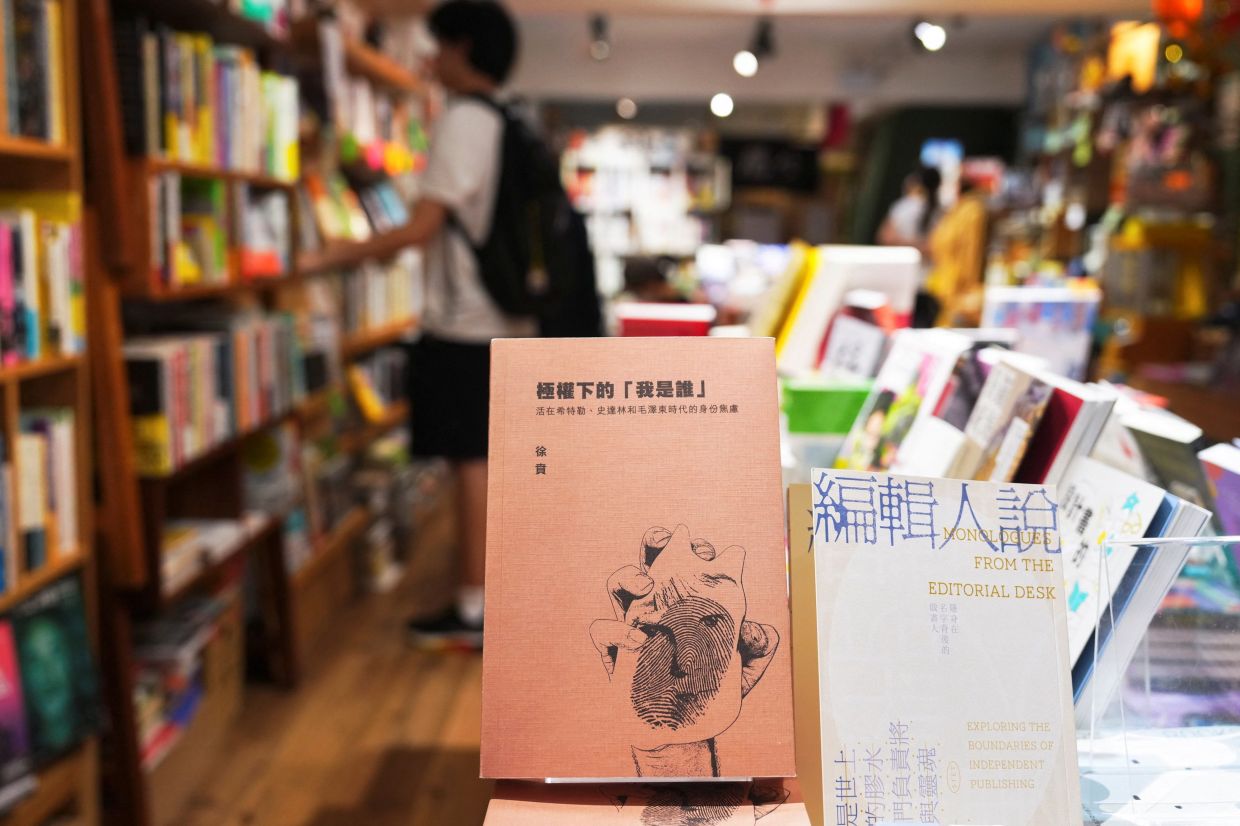
Hong Kong's Secretary for Security Chris Tang has instructed booksellers to take responsibility for vetting their inventory against potential threats to national security, stepping up pressure on the city's independent publishing sector just days after police arrested five people connected to two bookstores. The directive underscores an escalating campaign against retailers perceived as selling materials deemed problematic under the territory's national security legislation, a move that has drawn sharp criticism from Taiwan's leadership and raised fresh questions about the sustainability of free expression in the former British colony.
The latest police operation on Wednesday, which targeted Have A Nice Stay and Greenfield Book Store, represents the third enforcement wave against independent booksellers in as many months. Authorities alleged that the five detainees had displayed and distributed seditious materials designed to incite animosity toward Hong Kong's government institutions, courts, and law enforcement. Two of the arrested individuals were released on bail by Friday morning, though the underlying charges remain serious. The escalating frequency of these operations has created an atmosphere of uncertainty within the publishing community, with booksellers struggling to determine what constitutes prohibited content amid what many describe as deliberately vague legal boundaries.
Tang's remarks at the legislative building sought to normalise the security-checking requirement by drawing a comparison to food safety standards. According to Tang, booksellers bear an obligation comparable to that of grocers ensuring their products are safe for consumption and comply with regulations. However, the analogy glosses over a critical distinction: while food safety relies on scientific testing and established standards, determining whether a book threatens national security involves subjective judgment and undefined criteria that vary in application. Critics contend that this ambiguity deliberately chills free expression by forcing retailers into conservative self-censorship rather than operating under transparent rules.
When questioned whether the government intended to publish an official list of banned books to provide clarity, Tang rejected the proposal, arguing that such a catalogue would undermine law enforcement efforts targeting publications that deliberately seek to harm the nation. This position creates a logical paradox for booksellers, who are simultaneously held responsible for excluding problematic titles while being denied the very tool that would enable consistent compliance. The absence of authoritative guidance has prompted some retailers to adopt increasingly restrictive stocking policies, effectively creating a private censorship mechanism that achieves the same outcome without formal government involvement.
Have A Nice Stay, established by former journalists, announced its closure effective August 30 through a social media statement citing financial strain and the impossibility of navigating the undefined regulatory landscape. The bookstore's management acknowledged their inability to individually assess every publication for potentially problematic content, highlighting the practical dilemma facing small retailers caught between legal exposure and business viability. This closure follows a pattern of independent bookstores either shuttering operations or substantially reducing their catalogues in response to law enforcement pressure.
The enforcement pattern extends back several months, illustrating a sustained government focus on independent bookselling. In March, authorities arrested staff at Book Punch, including the proprietor, on suspicion of peddling seditious materials. That operation notably targeted works including a biography of Jimmy Lai, the pro-democracy media magnate currently serving a 20-year sentence following his conviction under national security provisions. In June, another pair of booksellers faced charges related to distributing allegedly seditious publications and receiving financial support from overseas political organisations, suggesting authorities view the international circulation of such materials as an aggravating factor.
The crackdown resonates across the Taiwan Strait, where it has attracted direct political commentary from the self-governing democracy that Beijing claims sovereignty over. Taiwan's President Lai Ching-te used Facebook to voice concern about the erosion of Hong Kong's publication freedom, framing independent bookstores as essential guardians of unconstrained intellectual discourse. Liang Wen-chieh, serving as deputy minister of Taiwan's Mainland Affairs Council, reported that some Taiwanese publishers have voluntarily removed titles from their Hong Kong book fair participation lists, exemplifying how the regulatory pressure extends beyond Hong Kong's borders into upstream publishing decisions across the strait.
This self-censorship by Taiwanese publishers demonstrates how regulatory pressure in one jurisdiction can create chilling effects throughout the regional publishing ecosystem. Publishers operating across multiple markets face the calculation of whether maintaining Hong Kong distribution channels justifies the legal and reputational risks associated with certain titles. The result resembles content control mechanisms typical of more restrictive environments, yet achieved through market-driven self-limitation rather than explicit prohibition.
For Malaysian readers and publishers, Hong Kong's experience offers instructive lessons about regulatory drift and the long-term implications of increasingly expansive security legislation applied to cultural commerce. Malaysia's own publishing industry operates under distinct legal frameworks, yet the Hong Kong precedent demonstrates how security-focused governance can gradually reshape what material flows through retail channels. Regional publishers watching this situation confront their own calculations about inventory, distribution networks, and market participation, particularly as security-related legal instruments expand across Southeast Asia.
The absence of clearly delineated legal boundaries transforms security regulation from a straightforward compliance mechanism into a tool that generates systematic uncertainty. Booksellers cannot reliably predict which titles will provoke enforcement action, leading them to adopt maximally conservative postures that restrict the public's access to ideas independent of any formal prohibition. This dynamic effectively privatises censorship, distributing regulatory power among thousands of individual retailers each making risk-averse decisions rather than concentrating it in an official list that could at least be publicly debated and challenged.
The implications extend to Hong Kong's international standing as a publishing hub and cultural centre. Authors, publishers, and distributors increasingly factor enforcement risk into decisions about whether to release or circulate titles in the territory. This represents a fundamental shift from Hong Kong's previous positioning as a relatively open marketplace for ideas within China's sphere, with particular significance given the city's historical role as a gateway for Chinese-language publishing addressing sensitive topics inaccessible within mainland markets.

