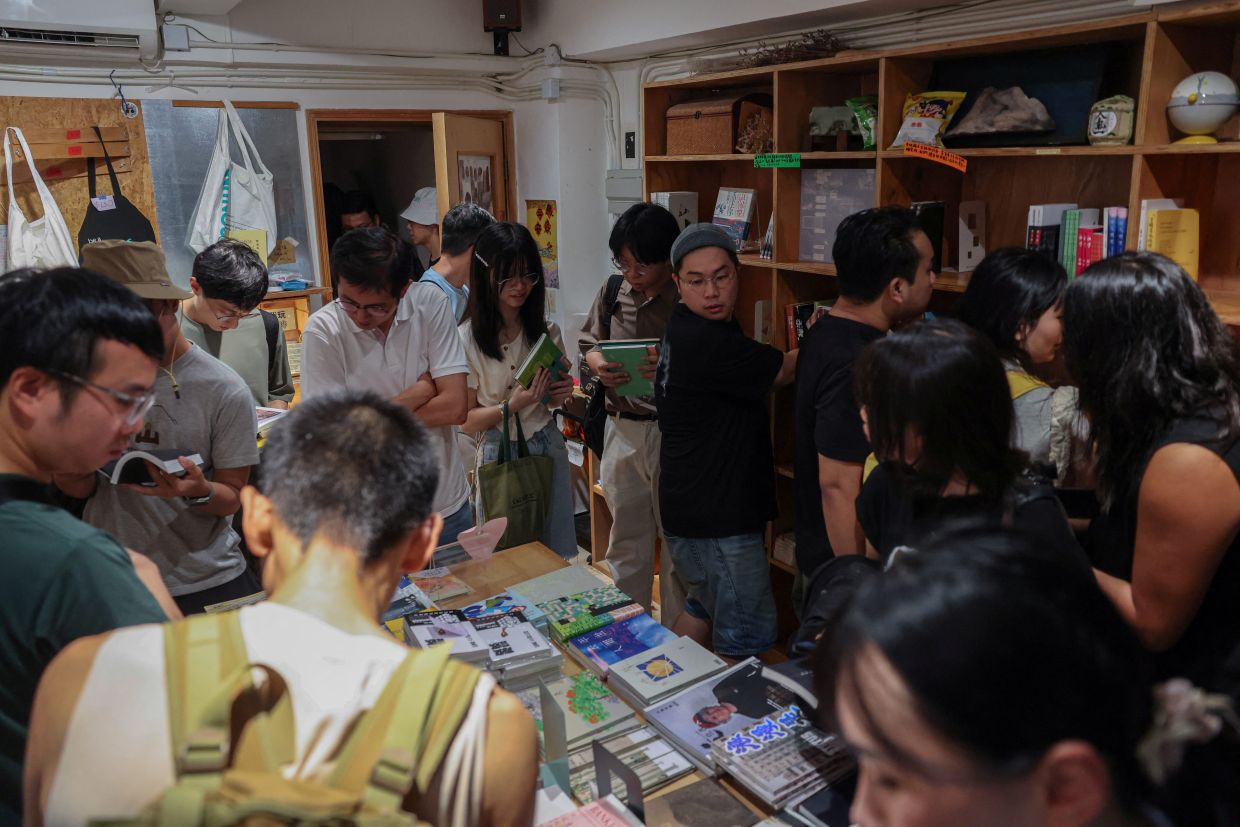
When Fleming Cheng, a university student from mainland China, discovered Greenfield Book Store in Hong Kong last year, he encountered a world previously inaccessible to him. The titles he had glimpsed only through VPN-bypassed internet searches were suddenly within reach—books offering critical perspectives on China's leadership and the Tiananmen Square pro-democracy movement that mainland censors had long suppressed. For Cheng and countless others from the People's Republic, these modest shopfronts scattered across Hong Kong represented something increasingly precious: a window onto viewpoints that diverged fundamentally from the official narrative at home.
Hong Kong's independent bookstores have functioned for decades as intellectual sanctuaries for mainland readers hungry for uncensored material. Tucked away in nondescript buildings off busy streets, they stocked volumes that would never survive Beijing's censorship apparatus. Yet this precarious ecosystem now faces existential threat. Within just four months, police targeted four separate bookstores with arrests based on alleged sedition charges under Hong Kong's 2024 national security legislation. The wave of enforcement has already claimed victims: Greenfield announced closure at its lease's expiration, while Have A Nice Stay, established by former journalists, shut its doors on August 30 even before its staff faced arrest that same day. The cumulative effect suggests a deliberate campaign to erase these spaces entirely.
The trajectory of repression in Hong Kong traces a clear arc beginning with the 2020 national security law imposed by Beijing. That legislation catalysed a dramatic transformation in the city's information landscape. Within months, leading pro-democracy activists faced imprisonment, civil society organisations disbanded, and libraries purged shelves of titles addressing the 1989 Tiananmen crackdown. The annual book fair saw independent publishers barred from participation, while state-aligned media openly denounced independent literary events as "soft resistance." A historical precedent foreshadowed these developments: in 2015, bookseller Lam Wing-kee and four colleagues associated with Causeway Bay Books vanished mysteriously, later revealing they had been detained by Chinese authorities. That incident sent shockwaves through the publishing world, prompting voluntary withdrawal of sensitive political titles from shelves.
The current enforcement wave represents an intensification rather than departure from this trajectory. Book Punch faced charges in March, Hunter Bookstore in June, and Greenfield and Have A Nice Stay in July—all accused of selling seditious publications. Yet authorities have deliberately avoided specifying which titles constitute seditious material, creating what observers characterise as deliberately opaque standards. Secretary for Security Chris Tang defended the approach, comparing compliance to food safety requirements: booksellers should simply ensure their stock does not "harm national security." The comparison proves revealing—it frames judgement of content as straightforward and objective while studiously avoiding any specification that might allow booksellers to comply with clarity.
This ambiguity produces precisely the intended chilling effect. Anonymous booksellers interviewed for this report described profound uncertainty about which works on contemporary Chinese politics remain permissible to stock. Landlords, themselves harassed by authorities, have begun reviewing tenancy agreements with independent publishers, effectively weaponising property law as an enforcement tool. The combination of arrest, undefined legal standards, and third-party pressure creates an environment where businesses cannot rationally calculate the risk of continued operation. Closure becomes less a choice than an inevitable consequence of unsustainable legal jeopardy.
For mainlander readers like Iris Wang from neighbouring Guangdong, these closures represent the gradual erasure of spaces that functioned fundamentally differently from their mainland equivalents. Wang appreciated Hunter Bookstore not merely for its inventory but for the intellectual environment it cultivated—a setting where reading itself became an act of independent thought rather than passive consumption. She purchased items there not as contraband but as ordinary commerce in a functioning marketplace of ideas. Such seemingly ordinary transactions have become extraordinary precisely because they contradict the mainland's information regime. The loss of these venues eliminates not just books but the possibility of encountering ideas outside official channels.
Long-term Hong Kong residents articulate a different but equally profound loss. Brian Leung found in independent bookstores a distinctive character and companionship unavailable in commercial chains. When arrests touched the shops he patronised, he experienced the closure as a theft of something Hong Kong had distinctly possessed—a capacity for pluralism and independent judgment that he had grown accustomed to assuming would persist. His assessment that bookstores had never "incited" him in the activist sense, that readers possessed the faculty to judge ideas for themselves, captures the underlying anxiety: the erosion of space where such judgement remains possible at all.
The international dimension of this crisis adds further urgency. Taiwan has emerged as the primary publisher of Chinese-language works addressing Hong Kong's political circumstances, with output increasing sixfold between 2020 and 2024 compared to the preceding five years, according to Tunghai University sociologist Cheng Tsu-Bang. These publications function as what scholars term "mutual support" between the two territories—the only Chinese-speaking jurisdictions maintaining unrestricted publishing. Yet even this lifeline faces threat. In July, FTV reported that a Taiwan-based logistics firm suspended shipments to Hong Kong bookstores under investigation and began demanding complete book inventories before serving other Hong Kong retailers. Such restrictions suggest that Hong Kong's publishing suppression may progressively isolate the territory from the only remaining unrestricted Chinese-language publishing ecosystem.
Migrant writers and publishers who have relocated to Taiwan describe the Hong Kong bookstore crisis in starkly elegiac terms. One author, speaking anonymously from Taiwan due to security fears, characterised independent bookstores as bridges connecting diaspora writers to their homeland and bringing accounts of Hong Kong's pro-democracy movement back to Hong Kong readers. The writer compared the collapse of Hong Kong's civil society to a boulder rolling downhill, inevitably crushing whatever lies in its path. The bookstores represented, in this metaphor, a small flower field where ordinary people could breathe and attempt to preserve what remained. The current enforcement campaign, the writer suggested, constitutes an explicit message that this "borrowed time"—the period in which such spaces could exist within Hong Kong's borders—approaches its terminus.
The implications extend beyond publishing or Hong Kong's borders. For mainland readers like Fleming Cheng, the closure of these bookstores would represent a comprehensive loss—not merely of access to prohibited titles, but of proof that such access remained possible anywhere within Chinese territorial jurisdiction. The possibility of visiting Hong Kong and encountering unmediated perspectives on history and politics validated the existence of intellectual alternatives to state-approved narratives. Eliminating that possibility reinforces the totalising character of information control across the Chinese-speaking world. Simultaneously, the suppression signals Beijing's determination to erase the last significant distinction between Hong Kong's information environment and the mainland's, completing the post-2020 integration of the territory into China's broader governance framework.
For Southeast Asian observers and readers, particularly those in Malaysia with longstanding ties to Hong Kong's publishing world, these developments warrant serious attention. The territorial compression of the last unrestricted Chinese-language publishing zone raises questions about the future availability of critical historical works and political analysis in the region. Malaysian readers, journalists, and publishers who have relied on Hong Kong bookstores as sources of uncensored material and who have distributed works through these channels may face disrupted supply lines. More fundamentally, the Hong Kong bookstore crisis exemplifies how national security legislation, vaguely drafted and selectively enforced, functions as a mechanism for eliminating spaces of intellectual pluralism. The model may prove instructive—or cautionary—for other regional governments contemplating similar security frameworks.

