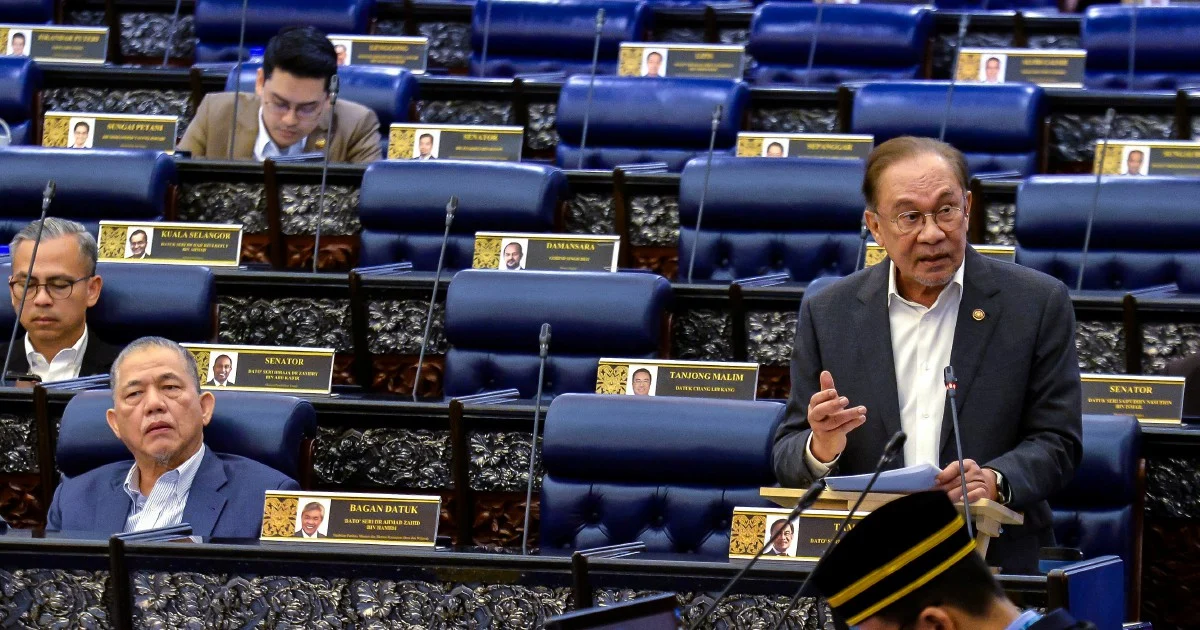
Prime Minister Datuk Seri Anwar Ibrahim has disclosed that Malaysian households are burdened with debt totalling RM1.73 trillion as of the end of March 2026, a sum that now accounts for 84.4 per cent of the country's gross domestic product. The disclosure underscores the increasingly precarious financial position of ordinary Malaysian families, many of whom are grappling with rising living costs, stagnant wages, and mounting obligations across mortgages, vehicle loans, and consumer credit.
The magnitude of this household debt figure demands scrutiny beyond the headline number. When debt reaches such proportions relative to GDP—a measure of the nation's total economic output—it signals that families collectively owe nearly as much as Malaysia produces in economic value over an entire year. This ratio, which economists describe as the household debt-to-GDP ratio, has become a critical indicator of financial stability and economic resilience in the region. The 84.4 per cent mark places Malaysian households among those carrying substantial debt burdens compared to peer economies in Southeast Asia, raising questions about the sustainability of current consumption patterns and lending practices.
The composition of Malaysian household debt reveals patterns that warrant closer examination. Mortgage obligations typically constitute the largest portion of household borrowing, reflecting the Malaysian aspiration for home ownership. Yet alongside mortgages sits a growing volume of personal loans, credit card debt, and vehicle financing. This diversification of debt sources means that households face multiple payment obligations to different lenders simultaneously, amplifying vulnerability should income disruptions occur. For many Malaysian families, particularly those in middle-income brackets, managing these overlapping commitments consumes a substantial portion of monthly earnings, leaving limited cushion for emergencies or unexpected expenses.
The economic environment in which this debt has accumulated adds context to the figures. Rising property prices have driven families to borrow more for housing, while inflation has eroded purchasing power, compelling consumers to supplement their income through credit. Vehicle ownership remains culturally significant in Malaysia, with many families stretched financially to afford automobiles. The proliferation of buy-now-pay-later schemes and consumer credit offerings has simultaneously lowered barriers to borrowing, enabling accumulation of debt that might not have been as easily accessible in previous generations. Together, these factors have created conditions favouring rapid debt accumulation.
The implications for Malaysian consumer spending and economic growth merit serious consideration. When households dedicate substantial portions of income to debt servicing, their capacity to spend on goods and services, invest in education, or build savings diminishes. This constraint ripples through the broader economy, as consumer expenditure drives a significant share of GDP growth. Retailers, restaurants, entertainment venues, and service providers depend on discretionary household spending; when that spending capacity is squeezed by debt obligations, economic expansion slows. Moreover, households heavily indebted are less able to invest in entrepreneurship or skill development, potentially limiting long-term economic dynamism and competitiveness.
Regulatory and policy responses to household debt face inherent tensions. Tightening lending standards could protect households from over-leveraging but might simultaneously reduce credit access for those seeking mortgages or pursuing legitimate business ventures. Conversely, maintaining permissive lending conditions supports short-term economic activity while risking further debt accumulation. Bank Negara Malaysia, the central bank, monitors household debt metrics closely as part of its financial stability mandate, implementing macroprudential measures designed to curb excessive borrowing without strangling legitimate credit demand. The challenge lies in calibrating these tools to encourage responsible lending while safeguarding systemic stability.
The vulnerability of highly-indebted households extends beyond individual family finances to pose broader systemic risks. Should economic conditions deteriorate—through recession, unemployment spikes, or income shocks—heavily-indebted households would face cascading defaults, imperilling financial institutions holding these loans. The experience of 2008 and subsequent regional crises demonstrated how household debt stress can trigger banking sector turbulence. Malaysian policymakers remain mindful of these historical lessons, though the scale of current household debt suggests that complacency would be unwise.
Geographical and demographic dimensions of household debt distribution remain underexplored in public discourse. Urban centres like Kuala Lumpur, Selangor, and Penang typically record higher absolute debt levels, as property prices and cost of living drive borrowing. Rural and lower-income households, conversely, may carry proportionally larger debt burdens relative to income, even if absolute figures are smaller. Young professionals establishing careers often accumulate debt earlier and more heavily than older cohorts, creating generational dimensions to financial stress. These variations suggest that blanket policy approaches may inadequately address localised financial pressures.
Amidst these challenges, financial literacy and debt management education emerge as critical priorities. Many Malaysian households lack comprehensive understanding of interest compounding, loan structures, or credit risk management. Enhanced public education campaigns promoting budgeting discipline, cautious borrowing, and long-term financial planning could reduce problematic debt accumulation. Additionally, transparent information about total indebtedness—enabling families to understand their complete financial obligations—remains essential for informed decision-making.
Looking forward, sustaining household financial health while maintaining economic growth requires multifaceted approaches. Policymakers must balance credit availability against prudential caution, regulators must monitor emerging risks vigilantly, and households themselves need greater awareness and discipline in borrowing. The RM1.73 trillion figure serves as a reminder that economic growth measured through GDP expansion masks underlying vulnerabilities when debt levels become excessive relative to productive capacity. Malaysia's challenge now involves arresting the trajectory of household debt escalation while supporting the economic participation and aspiration of its citizens.

