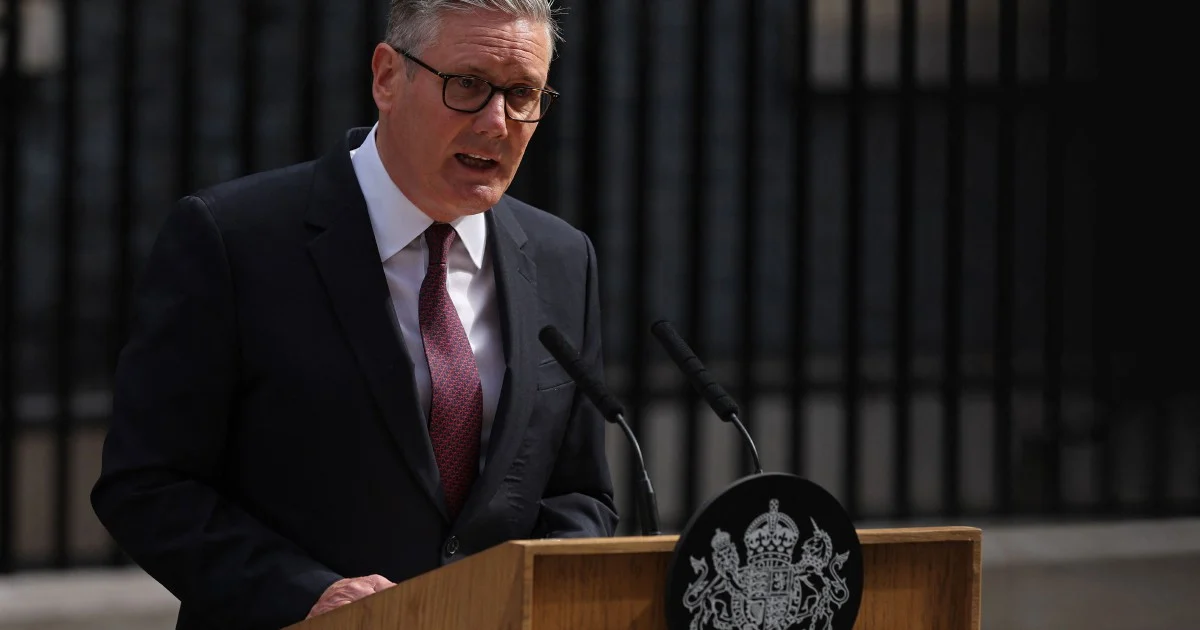
Prime Minister Keir Starmer declared on Monday that he would step down from his position, with the ruling Labour Party expected to install a replacement leader before the Houses of Parliament reconvene in September. This announcement sets the stage for Britain to experience its seventh change of premiership in just ten years—a remarkable turnover that underscores the deepening instability within Westminster politics and the fractious nature of contemporary British governance.
The timing of Starmer's departure carries particular significance for Labour's prospects. By establishing a September deadline for the selection process, the party aims to present a unified front when MPs return from the summer recess, allowing the incoming leader a brief window to establish themselves before the parliamentary calendar becomes crowded with urgent legislative business. This calculated approach seeks to minimize the window of vulnerability that typically accompanies a change in executive leadership.
Britain's process for selecting a new prime minister differs fundamentally from systems used in many other democracies, including Malaysia. The party holding the majority of parliamentary seats must choose its leader, who then automatically becomes prime minister without requiring a separate electoral vote in the House of Commons. This means the Labour Party membership and elected representatives will determine not just a party leader, but the nation's chief executive.
For the Labour Party specifically, the selection mechanism involves both grassroots members and elected MPs. The party will open a nomination window during which both membership candidates and backbench parliamentarians can put themselves forward. Typically, candidates require support from a threshold of MPs—traditionally around 34 members of parliament—to proceed to the members' ballot. This dual system theoretically balances democratic representation of the broader party base against the practical interests of the parliamentary caucus.
Once nominations close, Labour members across the country receive ballots and voting takes place electronically. The winner of this membership vote becomes leader and, given Labour's current parliamentary majority, automatically ascends to the premiership. This process usually spans several weeks, allowing candidates to campaign among both party members and MPs, articulating their vision for Labour's direction and their strategy for governing.
The compressed timeline Starmer has set presents genuine logistical challenges. Normally, leadership contests allow for extended campaigning periods that build anticipation and permit thorough vetting of candidates. The September deadline effectively condenses this schedule into the summer months, when parliament is in recess and many MPs and members may be on holiday. This creates pressure to move quickly while maintaining some semblance of a fair and transparent selection process.
Several senior Labour figures have already begun positioning themselves as potential successors, though few have openly declared candidacy at this stage. The race will likely reflect existing fault lines within the party between its centre and left wings, between those advocating a continuation of Starmer's centrist positioning and those pushing for a sharper left turn. This internal dynamic mirrors struggles that have plagued Labour repeatedly over the past fifteen years.
The rapid succession of prime ministers in recent years—from David Cameron to Theresa May to Boris Johnson to Liz Truss to Rishi Sunak and now Starmer's departure—has provoked considerable debate about the sustainability of British governance. Malaysia, by contrast, has seen only ten prime ministers since independence in 1957, reflecting greater stability, though certainly not without its own periods of turbulence and contested transitions. The frequency of British leadership changes raises questions about whether the constitutional conventions that underpin Westminster politics have become inadequate for contemporary political challenges.
Starmer's resignation follows mounting internal Labour dissent and declining public confidence in his leadership, despite the party's overwhelming election victory just over a year earlier. This collapse in fortunes—from commanding a 170-seat majority to struggling with double-digit approval ratings—illustrates how quickly British political dynamics can shift. The new leadership will inherit a party facing difficult decisions about public spending, economic strategy, and social policy in an era of constrained resources.
For Malaysia and the broader Commonwealth, Britain's recurring leadership crises raise questions about how Westminster-derived systems manage transitions of power. While Malaysian governments have experienced their share of leadership contestation and coalition instability—particularly since 2018—the underlying constitutional architecture has generally provided adequate frameworks for managing such transitions without the apparent chaos characterizing recent British politics.
The Labour Party's selection process, scheduled to conclude by September, will reveal which senior figure commands sufficient support among both parliamentarians and membership to lead the party forward. This decision will fundamentally shape not only Labour's electoral prospects but Britain's approach to major policy questions during what promises to be a challenging economic and social period. The implications extend beyond Westminster, affecting Britain's international standing and engagement with partners including Malaysia and other Southeast Asian nations.
Starmer's exit, while unexpected by many observers given Labour's recent election victory, reflects the volatile nature of contemporary politics where mandate and legitimacy can evaporate rapidly when a leader loses the confidence of key constituencies. The process to select his replacement will test whether Labour can manage an orderly transition and unite behind a new direction, or whether the party's internal divisions will continue to hamstring its effectiveness in government.