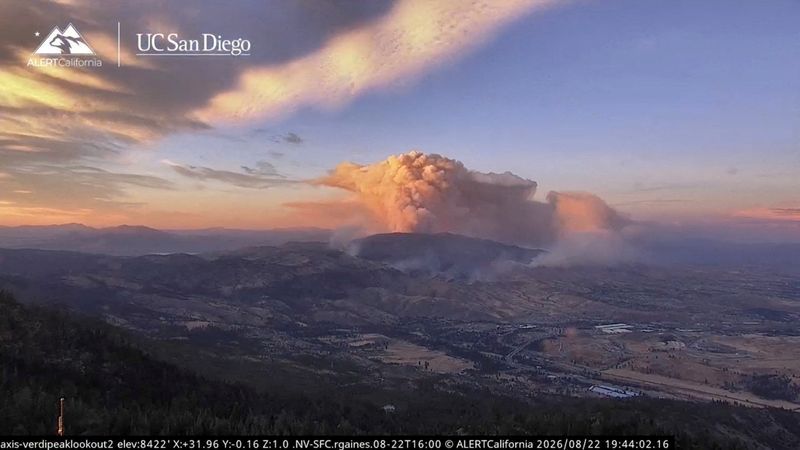
In an era when smartphones and social media generate an endless stream of imagery documenting everything from natural disasters to political upheaval, news organizations face an unprecedented challenge: determining what is genuinely captured on camera versus what has been fabricated or manipulated. Reuters, the world's largest news agency, has responded by establishing specialized teams of journalists whose sole responsibility involves verifying the authenticity of visual content pulled from the internet, a process that has become as essential to modern journalism as reporting itself.
The proliferation of artificial intelligence has fundamentally altered this landscape. Where doctored images once bore telltale signs of manipulation—misaligned fingers, garbled text, obvious distortions—today's AI-generated content achieves a level of sophistication that can deceive the human eye. The technology now allows creators to feed real photographs and video footage into AI systems, which then produce convincing altered versions of genuine events. This capability poses an acute threat to news organizations struggling to maintain credibility while operating under intense deadline pressures. The challenge became particularly visible following the alleged capture of Venezuelan President Nicolás Maduro in January, when social media users circulated AI-generated images showing him in handcuffs, a fabrication that nonetheless spread widely before being debunked.
Reuters' reliance on publicly-submitted images stems from a practical reality: despite maintaining approximately 2,600 journalists stationed across roughly 200 locations worldwide, the news agency cannot physically cover every significant event as it unfolds. Major news breaks spontaneously in remote locations and unexpected circumstances, often at times when no professional journalist is present. Eyewitness photographs and videos have therefore become integral to Reuters' news gathering, a practice grounded in the organization's founding Trust Principles established after World War Two, which emphasize providing unbiased, reliable reporting while continuously strengthening its services. Verified citizen imagery has proven decisive in major international stories, from documenting evidence of munitions used in strikes on schools to capturing details of police actions during civil unrest.
The distinction between authentic and fabricated imagery has grown increasingly blurred as AI capabilities advance. Beyond merely generating entirely fictional scenes, bad actors now leverage the technology to create plausible but false versions of real events. Additionally, social media users—sometimes deliberately, sometimes through carelessness—will recycle footage from past events and mislabel them as occurring in different times and places, leveraging confusion to spread false narratives about current crises. This layered problem demands systematic approaches that go beyond simple visual inspection.
Reuters' visual verification process begins with attempting to locate the original content creator, confirming their identity, and conducting interviews about their experience capturing the material. This human element remains foundational, as journalists can extract contextual details that algorithms cannot reliably determine. Metadata embedded in digital files provides crucial information about when and where images were recorded and what device captured them, creating a technical layer of verification that can corroborate or contradict claims about an image's origin.
Beyond metadata and source authentication, Reuters journalists employ comparative analysis using publicly available reference materials. Weather records reveal whether atmospheric conditions in a photograph match what meteorological data indicates occurred on a specific date. Satellite imagery provides independent confirmation of geographic features and landscape details. Street view databases and historical archives allow journalists to compare current images against previous versions of locations, identifying inconsistencies or confirming continuity. The angle and length of shadows in photographs can indicate the precise time of day a picture was taken, creating another verification checkpoint.
The verification team also contextualizes images within broader factual frameworks. Official reports, media coverage, and accounts from multiple eyewitnesses collectively create a composite picture against which new imagery can be tested. When several independent sources captured the same event from different angles, this corroboration strengthens confidence in authenticity. The process resembles puzzle assembly, where individual pieces gain significance only when positioned correctly within the larger picture.
Technological tools have been developed specifically to detect AI manipulation and generation. These detection systems scan images and videos for artifacts and statistical anomalies that suggest artificial creation or alteration. However, as with any security measures, these tools remain imperfect and occasionally fail to identify sophisticated manipulations or produce false positives. The limitations demand that Reuters journalists maintain final judgment authority, making editorial decisions that grow incrementally more complex as AI capabilities improve at evading detection.
For Malaysian and Southeast Asian readers, this challenge carries particular relevance as the region confronts increasingly polarized political environments where misinformation spreads rapidly across social media platforms. The 2026 U.S. midterm elections have already seen AI-generated advertisements deployed to mislead voters about candidates, demonstrating how synthetic media weaponizes elections globally. Similar tactics could easily target domestic political contests across the region, from Malaysia's complex multiethnic electorate to debates in other Southeast Asian democracies. Understanding how professional news organizations authenticate content becomes essential for readers attempting to navigate an information ecosystem where false imagery can spread instantaneously.
The volume of material Reuters' visual verification teams process daily illustrates the magnitude of this undertaking. Journalists review hundreds of photographs and videos, ultimately validating and publishing perhaps a dozen. This selective curation reflects not hesitation but rigor—the recognition that speed cannot override accuracy when publishing images that will shape public understanding of significant events. As artificial intelligence continues advancing, this gatekeeping function becomes increasingly critical to maintaining journalistic credibility and public trust in news reporting across all platforms and territories.

