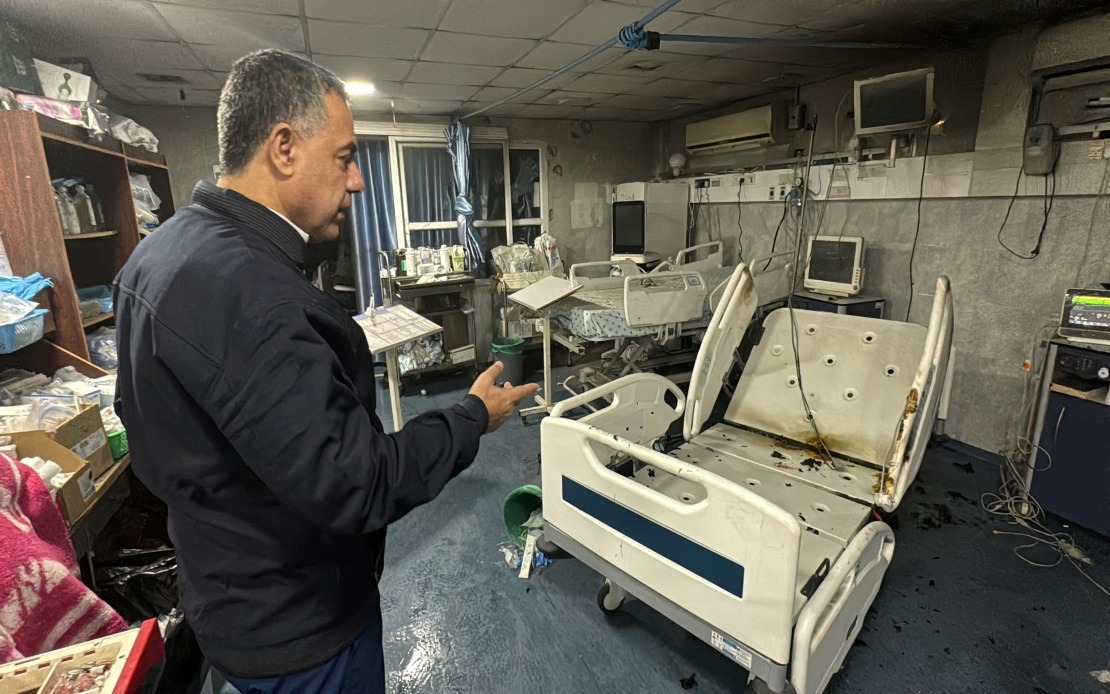
The detention of Dr Hussam Abu Safiya, who led Kamal Adwan Hospital in northern Gaza, has become the focus of mounting international concern after a human rights legal team documented what they describe as alarming deterioration in his physical condition. Physicians for Human Rights, an organisation that monitors healthcare workers and medical ethics, has sounded an alarm following a prison visit to the director at Israel's Nitzan Prison facility on July 2, claiming his health has undergone a marked decline since his transfer into Israeli custody.
According to the organisation's legal representative Nasser Odeh, the visit revealed evidence of severe physical trauma consistent with assault. The documentation includes extensive bruising to the head, facial region around both eyes, ears, and the neck area, along with what the team characterises as fresh injuries. These visible wounds were sufficiently extensive that Odeh reported difficulty in recognising the patient, indicating a significant degree of facial swelling and discolouration. Beyond the visible injuries, the medical assessment noted respiratory complications and repeated episodes where Dr Abu Safiya lost consciousness during the legal meeting, raising serious questions about potential internal injuries or neurological effects.
The conditions under which the prison visit took place underscore the severity of the situation. Dr Abu Safiya was brought to meet his lawyer while restrained with shackles on both hands and feet, and the meeting was conducted under the watch of uniformed and masked prison guards. This highly controlled environment, combined with the physical evidence of trauma, has prompted the human rights organisation to express urgent concern for the detainee's safety and wellbeing. The staging of the meeting itself—with visible security measures and restraints—has drawn criticism from observers who argue such precautions are disproportionate for a medical professional.
Naji Abbas, who heads the Prisoners and Detainees Department at Physicians for Human Rights Israel, has characterised the findings as among the most disturbing cases the organisation has documented since the onset of the current conflict. Abbas pointed specifically to Dr Abu Safiya's own expressed fear that he would not survive his detention alive, a statement that carries particular weight given the clinical evidence of trauma. The hospital director's apparent deterioration in condition came notably after he sought to challenge his ongoing detention through the court system, a sequence that the human rights group finds deeply troubling and suggestive of retaliation or punitive treatment.
The organisation has emphasised that Dr Abu Safiya remains held without formal charges or legal trial proceedings, a status that Physicians for Human Rights views as violating fundamental detention principles. The absence of judicial proceedings or stated legal grounds for detention has intensified calls for his release, alongside demands for freedom for other medical professionals the organisation says face similar circumstances. This aspect resonates particularly across Southeast Asia and the broader developing world, where concerns about preventive detention without legal process remain sensitive issues.
Physicians for Human Rights has formally renewed its call for Dr Abu Safiya's immediate release, framing the demand within the context of international healthcare worker protections. The organisation argues that doctors and medical administrators should enjoy specific safeguards under international humanitarian law, particularly when they have been performing medical duties in civilian healthcare settings. The case of Kamal Adwan Hospital, which served the civilian population of northern Gaza, adds complexity to the legal and ethical arguments surrounding Dr Abu Safiya's detention.
The human rights group has called for an immediate and independent investigation into the circumstances surrounding Dr Abu Safiya's detention, his transfer between facilities, and the documented injuries. Abbas stressed that Israeli authorities, as the detaining power, bear full legal and moral responsibility for the health, physical safety, and life of anyone held in their custody. This framing invokes the Geneva Conventions and international humanitarian law regarding the treatment of detainees, principles that carry weight in regional and international legal discourse.
The case reflects broader tensions regarding the treatment of healthcare professionals during armed conflict. Medical workers occupy a legally protected category under international law, with the expectation that they should be able to perform their duties without harassment or detention based on their professional roles. The detention of a hospital director, even in a conflict situation, raises questions about whether such individuals are being held as security risks or whether they face treatment that violates standards applicable to civilian medical personnel.
For Malaysian readers and Southeast Asian observers, the case highlights ongoing concerns about detention practices, the rule of law, and the treatment of healthcare workers in conflict zones. These issues have resonance in a region where medical neutrality and the protection of civilian infrastructure remain central to humanitarian principles. The documentation by international human rights organisations of specific physical evidence creates an independent record that adds credibility to claims of mistreatment and raises accountability questions that extend beyond the immediate case.

