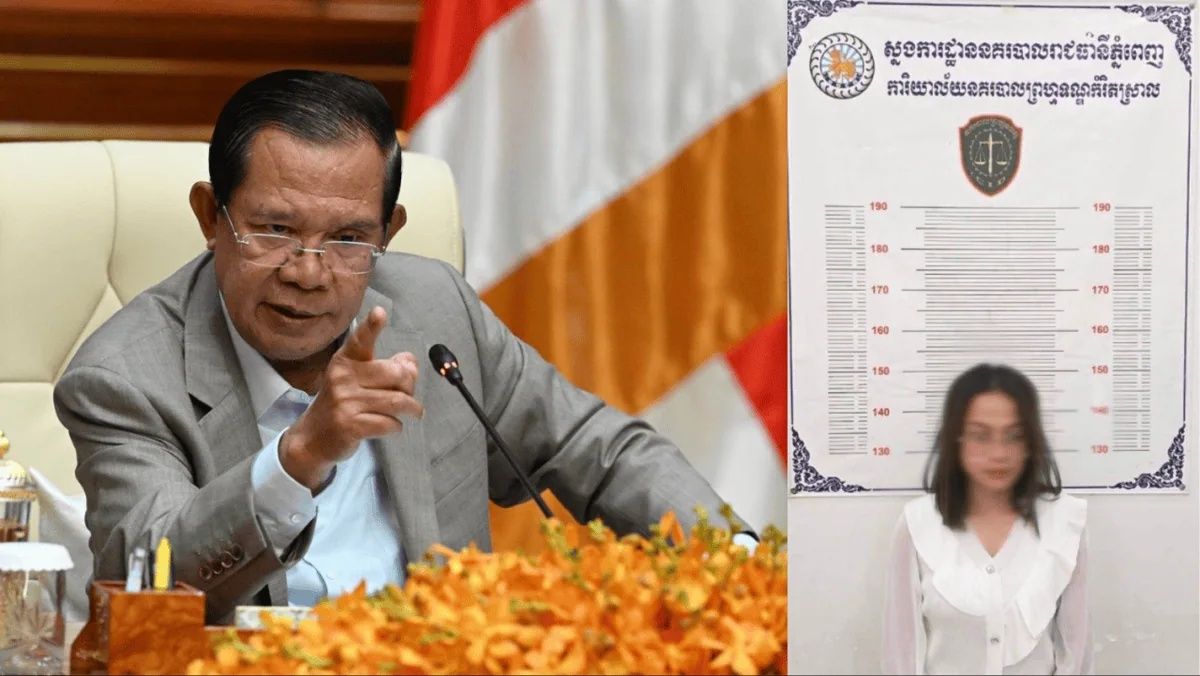
Cambodia's Senate president Hun Sen has ordered the National Council for Women to become active plaintiffs in court cases targeting individuals whose speech he characterizes as demeaning to women and Khmer social values. During a Friday meeting with council representatives, Hun Sen raised concerns about what he described as recent incidents of insulting language directed at government bodies and their personnel, signalling a new enforcement priority that blurs the line between protecting dignity and restricting public expression.
The directive emerged following a specific case in which an unnamed woman allegedly used vulgar language to criticize government institutions and civil servants. Hun Sen indicated that authorities had already required the woman and her spouse to formally apologize in writing, establishing a precedent for how officials intend to handle similar situations moving forward. This pre-emptive approach suggests a broader pattern of state intervention into personal disputes and social media conduct, extending government oversight into domains traditionally left to civil society or individual discretion.
An additional case highlighted by Hun Sen involved a woman named Chenda Sovannary, who was reported to have verbally abused a military member during a disagreement concerning a mobile telephone transaction. Hun Sen's public commentary on this dispute—questioning why someone would insult a soldier over such a mundane commercial matter—demonstrates official concern about the intersection of everyday conflicts and perceived disrespect toward state actors. His rhetorical expansion, noting that construction workers and other ordinary citizens deserve equal protection from insults, attempts to frame the initiative as universally protecting social respect rather than specifically shielding military or government personnel from criticism.
The mechanism Hun Sen envisions requires close court examination of cases involving alleged damage to social dignity, positioning the judiciary as an enforcement mechanism for his conception of proper public conduct. This judicial role represents a significant expansion of the law's application beyond traditional criminal or civil matters into the realm of speech and social comportment. The framing of such cases as matters deserving serious legal attention could establish precedent for interpreting existing statutes more broadly, allowing authorities to prosecute individuals for speech that falls short of direct threats or incitement but nonetheless offends official sensibilities regarding respect and decorum.
Hun Sen preemptively countered potential accusations of authoritarianism by drawing parallels to corporate content moderation practices. He noted that major social media platforms maintain ethical guidelines and community standards that restrict certain forms of expression, suggesting that government enforcement of similar principles should not be characterized as oppressive. This comparison, however, elides the distinction between private companies enforcing terms of service and state authorities prosecuting citizens through the criminal justice system. The analogy obscures questions about who determines standards, by what accountability mechanisms, and what consequences individuals face for violations.
The Senate president specifically called for systematic monitoring of online speech, particularly on Facebook, requesting that a dedicated team track instances of profanity and insults circulating through the platform. This directive signals intent to scale enforcement beyond individual complaints to proactive state surveillance of social media discourse. Such monitoring capacity, if operationalized, would represent significant expansion of state digital oversight and raises concerns about chilling effects on legitimate public discussion, satire, and the expression of grievances through online channels where Cambodians increasingly congregate.
Hun Sen instructed the National Council for Women to establish collaborative mechanisms with multiple ministries, including Interior, Information, Culture and Fine Arts, and Post and Telecommunications. This inter-agency coordination structure suggests a comprehensive government campaign addressing what officials view as corrosive speech across state institutions and cultural domains. The involvement of Culture and Fine Arts indicates that enforcement may extend beyond direct government criticism into artistic and cultural expression, potentially affecting creative freedom and intellectual discourse.
The framing of these measures as protective rather than restrictive recurs throughout Hun Sen's remarks, with repeated insistence that defending women's dignity and social values does not constitute rights suppression. This rhetorical move positions critics as opponents of women's welfare and national pride, making resistance to the policy politically difficult. By anchoring the initiative in protecting women—historically marginalized populations deserving genuine safeguards—Hun Sen attempts to preempt objections from civil liberties advocates or international observers concerned about press freedom and expression rights.
For Malaysian and Southeast Asian observers, Cambodia's trajectory merits attention as a case study in how governments can instrumentalize protection rhetoric to justify expanded legal authority over citizen speech. The Cambodian model constructs social media monitoring infrastructure and legal frameworks that could serve as templates for similar initiatives across the region. Whether other Southeast Asian governments adopt comparable mechanisms will partly depend on how Cambodia's policy evolves and whether it successfully avoids international diplomatic consequences or sustained civil society resistance.
The initiative reflects persistent tensions between national sovereignty, social cohesion, and individual liberties that characterize governance across authoritarian and semi-authoritarian systems. Hun Sen's insistence that such measures protect rather than constrain rights illustrates how official discourse can reframe surveillance and legal enforcement as benevolent governance. The absence of independent judicial review, clear statutory language defining prohibited speech, or proportionate penalties creates conditions for inconsistent and potentially politicized application. As Cambodia operationalizes these directives, outcomes will clarify whether the state pursues systematic enforcement or uses the framework selectively against political opponents and outspoken critics.

