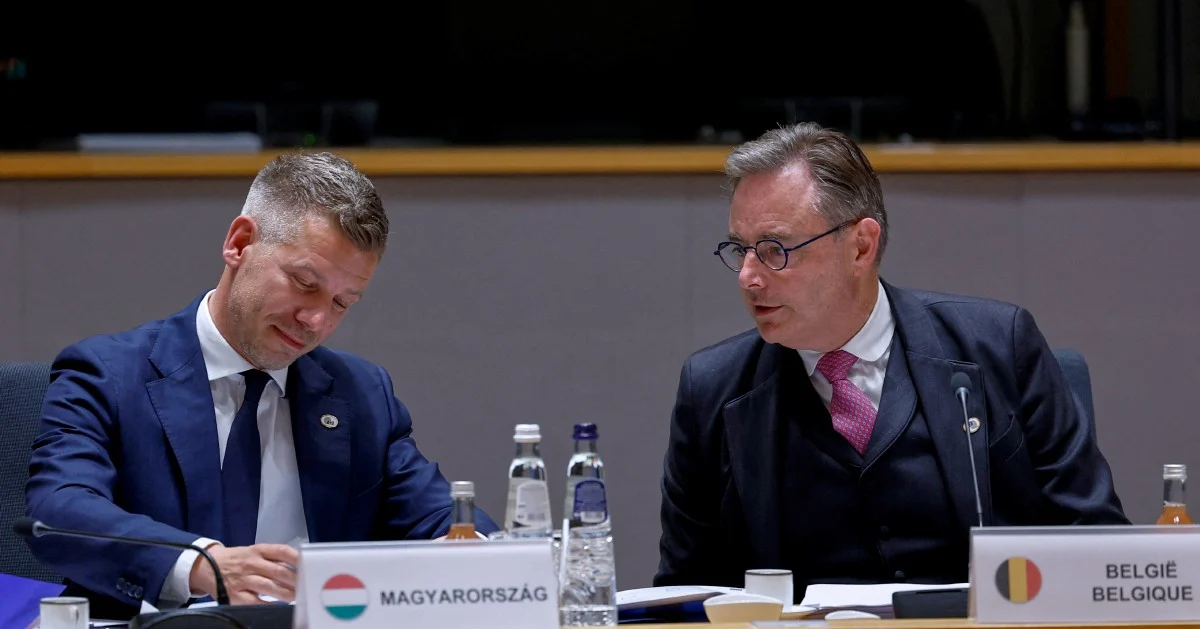
Hungary is moving to reshape its governance framework through a series of anti-corruption measures expected to win parliamentary approval this week, a pivotal step in Prime Minister Peter Magyar's stated ambition to fundamentally reform the country's public administration. The legislative push marks a dramatic departure from the tenure of his predecessor and reflects Budapest's recognition that compliance with European Union standards has become a prerequisite for accessing crucial financial resources currently held in abeyance by Brussels.
The timing of this legislative package carries significant weight for Hungary's economic prospects. The country has faced restrictions on EU disbursements due to longstanding concerns about judicial independence and transparency in governance, creating a funding shortfall that has constrained investment in infrastructure, education, and social programmes. By introducing comprehensive anti-graft measures, the Hungarian government is attempting to demonstrate a credible commitment to addressing the institutional weaknesses that prompted the EU's withholding decisions in the first place, signalling to Brussels that substantive reform is underway rather than mere cosmetic adjustment.
Peter Magyar's administration has framed these reforms as foundational to its broader agenda of modernising state institutions and restoring public confidence in governance. The measures reportedly encompass enhanced transparency requirements for government procurement, strengthened oversight mechanisms for public spending, and tighter regulations on potential conflicts of interest among public officials. Such provisions, when implemented rigorously, create structural barriers against the type of patronage networks and rent-seeking behaviour that observers have identified as systemic challenges within Hungary's administrative apparatus.
The European Union has employed financial leverage strategically to incentivise institutional reform across member states, with Hungary emerging as a particular focal point of Brussels' governance concerns. By suspending access to funding from the European Union budget and recovery programmes, the bloc has effectively created a powerful motivation for policy change. The billions of euros in question represent not merely accounting abstractions but tangible resources that would support Hungary's development priorities and economic competitiveness within the European economic space.
For Malaysia and other regional economies observing international governance standards, Hungary's experience offers an instructive lesson about the evolving intersection between domestic institutional quality and access to international capital flows. Supranational organisations increasingly condition resource transfers on governance performance metrics, establishing precedents that shape how states approach internal reform. This trend has ramifications beyond Europe, influencing how developing and middle-income countries structure their institutional arrangements to maintain credibility with international partners and capital markets.
The political dimensions of Magyar's reform programme warrant attention, as anti-corruption initiatives often encounter resistance from entrenched interests benefiting from existing arrangements. The fact that such measures are reaching parliamentary consideration suggests either a genuine shift in political composition or a recalibration of cost-benefit calculations among governing elites. Success in implementation will depend critically on whether these legal frameworks are enforced consistently and whether political commitment to institutional change persists beyond the immediate cycle of EU negotiations.
Hungary's situation illustrates broader challenges facing EU member states in reconciling national sovereignty with supranational governance standards. The union's leverage derives from its control over financial resources, but this mechanism works only insofar as member states find the resources sufficiently valuable to justify internal political adjustments. The substantial sums at stake in Hungary's case evidently reach that threshold, creating space for institutional realignment. However, this dynamic also highlights potential tensions within the EU framework, where financial discipline can become a tool for enforcing policy preferences that some view as encroachments on national autonomy.
The implementation phase will prove decisive in determining whether these anti-corruption measures produce meaningful change in Hungarian governance practices. Legislative passage represents merely the formal stage; translating written rules into actual administrative behaviour requires sustained political will, competent institutions, and resistance to circumvention. Budapest's historical experience suggests that establishing new formal rules proves considerably easier than ensuring their consistent application, particularly when informal power structures and patronage networks remain culturally entrenched.
For Southeast Asian observers, the Hungarian experience underscores the increasing interconnectedness between internal governance quality and external economic relationships. As regional economies deepen integration through multilateral arrangements and seek foreign investment, pressure to align institutional standards with international expectations will likely intensify. Countries pursuing development pathways that require substantial external financing must anticipate that governance transparency will constitute an increasingly non-negotiable precondition for capital access.
The outcome of Hungary's reform initiative will carry significance extending beyond Budapest's immediate circumstances. Success in unlocking EU funding would demonstrate that governance change, even when politically difficult, can deliver tangible economic benefits, potentially encouraging similar initiatives elsewhere. Conversely, if implementation falters or reforms prove superficial, the episode would reinforce scepticism about whether institutional change can genuinely occur in systems with deeply embedded governance challenges. European policymakers, along with international observers, will be watching closely as Hungary attempts to transform its institutional framework.