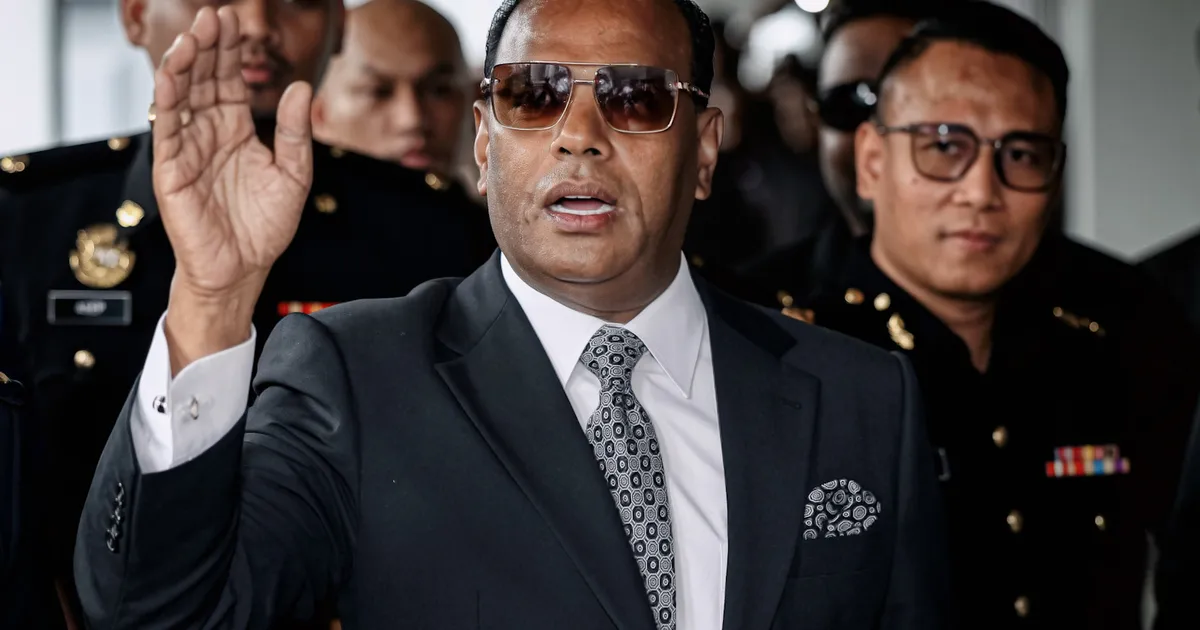
Former Human Resources Minister Saravanan has moved to distance himself from suggestions that he sought to suppress investigations into corruption allegations levelled against him, maintaining instead that his written communication to Prime Minister Anwar Ibrahim pursued nothing more than a full and impartial review of the circumstances surrounding his case. The assertion comes as scrutiny intensifies around the nature and content of exchanges between the embattled former minister and the country's political leadership, raising fresh questions about accountability and the handling of high-level graft inquiries within Malaysia's governance structures.
Saravanan's clarification addresses mounting public interest in what prompted him to reach out to Anwar Ibrahim at this juncture. Rather than seeking to deflect or obstruct the legal proceedings, he has portrayed the correspondence as an earnest request for rigorous examination of the facts underpinning the charges he faces. This framing attempts to reposition the narrative from one of potential improper influence on executive authority to a straightforward appeal for procedural thoroughness and evidential scrutiny. The distinction carries significant weight in political circles, where perceptions of transparency versus opacity shape assessments of credibility.
The core contention at the heart of Saravanan's defence is his assertion that the corruption allegations lack substantive foundation. By emphasizing this position, he seeks to establish that any request for review stems from confidence in his ultimate exoneration rather than desperation to evade accountability. This argument hinges on the strength of whatever evidence or reasoning he believes demonstrates the charges' fundamental weakness. For Malaysian observers, the claim invites examination of what specific aspects of the allegations Saravanan considers indefensible, though such detail has not yet entered public discourse.
The timing of Saravanan's letter to Anwar Ibrahim carries particular significance within the context of Malaysia's political landscape. The former minister's willingness to appeal directly to the Prime Minister suggests either considerable confidence in receiving sympathetic consideration or a calculation that such high-level intervention represents his most viable path forward. This dynamic reflects longstanding tensions in Malaysian politics regarding the separation between executive influence and judicial independence, questions that have periodically surfaced throughout the country's democratic experience.
For observers tracking governance and anti-corruption efforts in Southeast Asia, this episode illuminates the persistent challenge of maintaining institutional integrity when political actors find themselves entangled in legal proceedings. The distinction between seeking legitimate procedural review and attempting to circumvent proper investigative channels remains notoriously difficult to establish definitively. Saravanan's insistence that he merely requested thorough examination puts the burden on external observers to assess whether such a request, when directed toward the nation's highest political authority, inherently crosses lines of propriety regardless of intent.
The political implications extend beyond Saravanan's immediate predicament to encompass broader questions about how Malaysia's leadership addresses allegations against its own members. Public confidence in anti-corruption mechanisms depends significantly on perceptions that no individual, regardless of rank or previous position, receives preferential treatment. Actions that appear to privilege political connections over procedural regularity risk undermining institutional legitimacy, even when technically no improper conduct has occurred.
Anwar Ibrahim's own position in this matter warrants consideration. As Prime Minister, his response to Saravanan's correspondence carries weight far beyond the individual case. Any appearance that he intervened to assist a political ally, or conversely, any suggestion that he rebuffed such an appeal, reflects on his administration's approach to governance standards and integrity. The very existence of direct communication between the Prime Minister and an individual facing graft charges creates a narrative complexity that demands careful navigation by all parties involved.
Malaysian legal and political observers have long grappled with questions about appropriate communication channels when serious allegations confront political figures. Saravanan's assertion that his letter pursued thoroughness rather than obstruction mirrors defences offered in comparable situations across Southeast Asia, where the line between legitimate advocacy and improper influence remains perpetually contested. The credibility of such claims ultimately depends on demonstrated consistency with subsequent actions and broader patterns of behaviour.
The unfolding situation also reflects Malaysia's evolving relationship with anti-corruption accountability. Under successive administrations, the country has endeavoured to signal commitment to rooting out graft at all levels. Cases involving senior political figures therefore carry outsized symbolic weight, signalling either serious institutional commitment to equal application of law or, conversely, selective enforcement shaped by political calculation. Saravanan's case, whatever its ultimate resolution, will inevitably influence public assessment of these commitments.
Moving forward, the substance of any review undertaken in response to Saravanan's appeal—and the transparency with which findings are communicated—will substantially determine whether this episode reinforces or corrodes public confidence in Malaysian institutions. Should a comprehensive examination demonstrate the charges' weakness, as Saravanan contends, then the episode might eventually be regarded as merely an awkward but ultimately vindicated procedural detour. Conversely, if the allegations prove substantial and the review process appears to have delayed or complicated accountability, the political and institutional damage could prove enduring.

