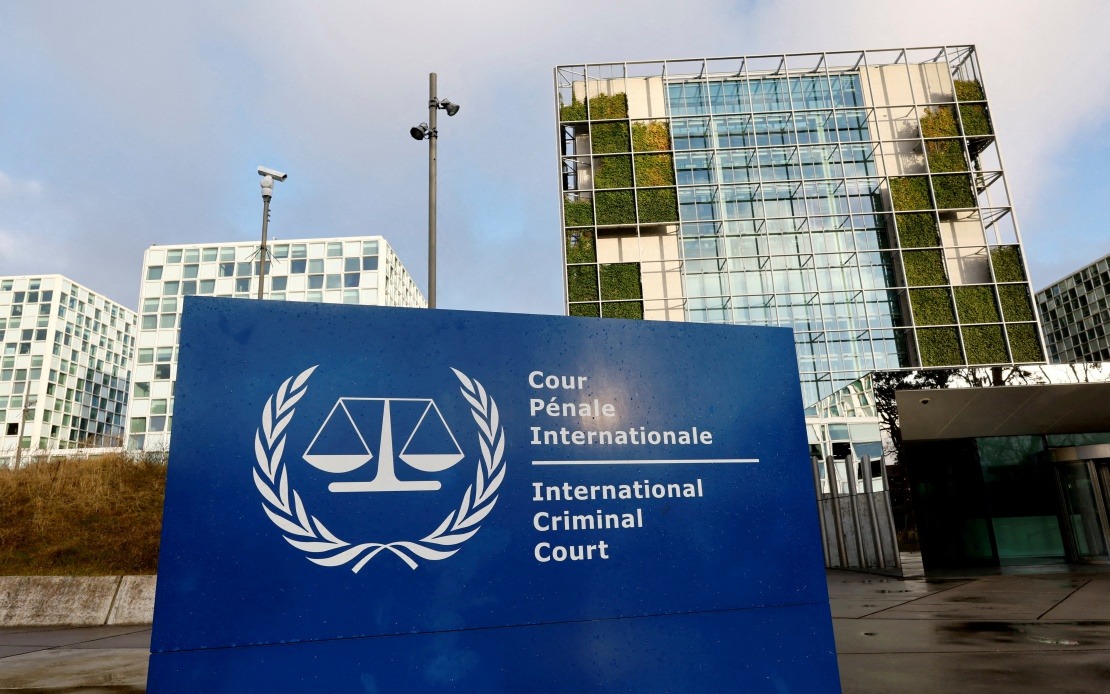
The International Criminal Court issued a forceful rebuke on Wednesday after the United States imposed new sanctions against senior court officials, marking an escalation in tensions between Washington and the Hague-based institution over its independence and mandate. The fresh designations targeted ICC President Tomoko Akane of Japan and Abdoulaye Seye of Senegal, who serves as a senior trial lawyer within the Office of the Prosecutor, according to a statement released by the court.
These latest measures represent a significant expansion of American pressure on the tribunal. The ICC disclosed that nine of its 18 judges now face US sanctions, along with both deputy prosecutors, a former prosecutor, and one additional staff member. The cumulative effect has transformed what began as selective targeting into what the court characterizes as a systematic campaign undermining its institutional credibility and operational capacity.
In its formal response, the ICC characterized the sanctions as a "flagrant attack" against the independence of an impartial judicial body operating under the mandate granted by its member states, which span multiple regions and continents. The court's statement emphasized that such measures strike at the heart of international justice mechanisms designed to hold accountable those responsible for the gravest crimes of concern to the global community. By sanctioning judicial officers for performing their official duties, the court argued, Washington threatens not merely one institution but the entire architecture of international law.
The broader implications extend beyond institutional politics. The ICC warned that sanctions directed at judges, prosecutors, and court staff for executing the court's mandate fundamentally undermine the rule of law and jeopardize the international legal order itself. This framing positions the dispute as transcending bilateral United States-ICC disagreements and instead as a question about whether powerful nations can selectively undermine international legal institutions when their actions displease them.
For victims of international crimes, the consequences carry particular weight. The court stressed that threats and coercive measures against its personnel directly impair the ability of survivors and victims' families to access justice through proper channels. Many victims turn to the ICC after exhausting domestic legal remedies, only to find the institution they rely upon facing pressure designed to constrain its operations. This creates a justice deficit particularly acute for those whose suffering occurred in contexts where national courts cannot or will not investigate.
Despite the hostile environment, the ICC reaffirmed its commitment to continuing its work with full independence and impartiality, operating consistently with the Rome Statute—the founding treaty that established the court and defines its jurisdiction and obligations. The statement conveyed both defiance and determination, signaling that the court intends to proceed with investigations and prosecutions irrespective of American opposition.
The court also took care to acknowledge the countervailing support it receives from other quarters. Member states, civil society organizations, and other advocates for international justice have publicly backed the institution and its mandate. This coalition of supporters provides political capital and legitimacy that the court hopes will offset the damage caused by American sanctions and public criticism.
For Malaysian observers and Southeast Asian policymakers, this controversy presents a complex challenge. The region includes both ICC member states and non-members, and attitudes toward international criminal justice mechanisms remain varied. Malaysia itself, though not an ICC member, has expressed support for international accountability mechanisms in principle, particularly regarding atrocity crimes. The unfolding dispute between the United States and the ICC raises fundamental questions about whether powerful nations can dictate the scope and application of international law or whether institutions born from international consensus enjoy protected status.
The timing and trajectory of American sanctions against the ICC reflect deeper disagreements about the court's investigations and prosecutions. While the source material does not detail the specific cases driving the conflict, the pattern suggests Washington views certain ICC activities as inconsistent with American interests or values. Yet the court's position remains that its mandate requires impartial investigation and prosecution regardless of geopolitical considerations.
The standoff also illuminates ongoing debates about the legitimacy and effectiveness of international criminal justice. Critics argue that the court has concentrated disproportionately on African nations and lacks enforcement mechanisms independent of powerful states. Supporters contend that the court represents a crucial evolution in global governance and accountability. American pressure illustrates the vulnerability of international institutions when major powers withdraw support or actively obstruct their operations.
For regional security and justice architecture in Southeast Asia, this episode offers cautionary lessons. International institutions require ongoing commitment and protection from member states to function effectively. The ICC's difficulties underscore how geopolitical contestation can weaken mechanisms designed for universal accountability and justice, creating vacuums that undermine the rule of law at both international and domestic levels.
Moving forward, the ICC faces the challenge of maintaining legitimacy and functionality while enduring sanctions from a major power. The court's assertion that it will continue its work signals institutional resilience, yet the practical constraints imposed by sanctions—particularly on financial flows and personnel movement—remain substantial. How the court navigates this period will influence not only the future of international criminal justice but also the broader capacity of international institutions to operate independently in an era of great power competition.

