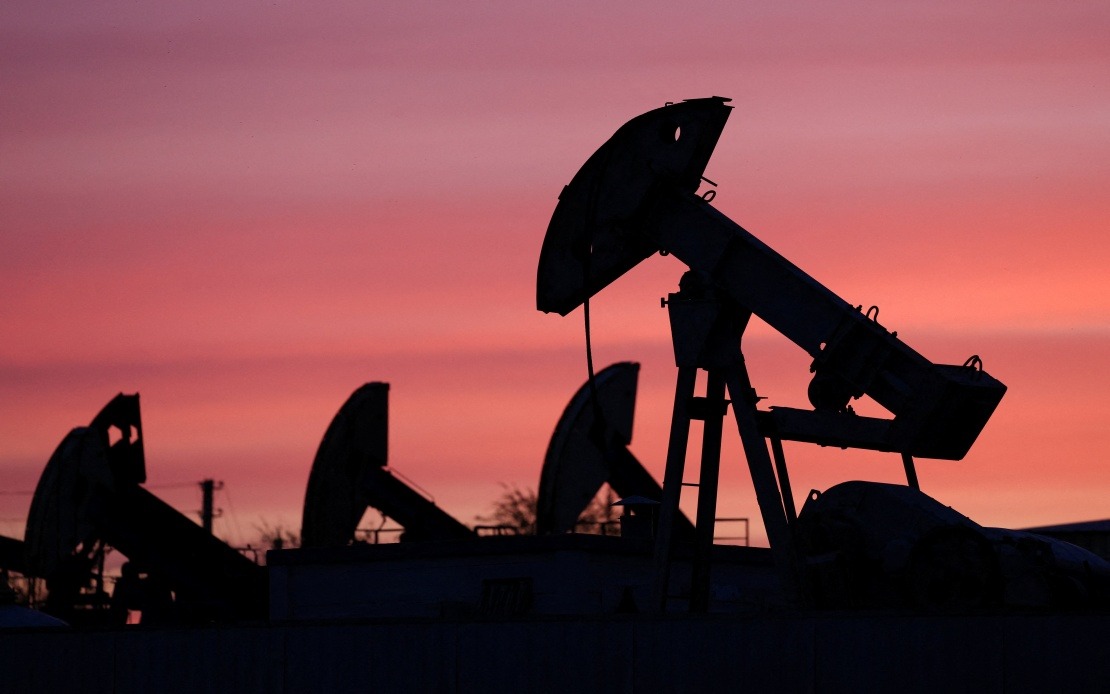
The International Energy Agency released revised projections on Friday that signal a more optimistic outlook for global oil markets through 2026, upgrading both demand and production estimates in what amounts to a recalibration of energy sector expectations. The refinement reflects evolving assessments of how rapidly the world is transitioning away from fossil fuels and the persistent strength of petroleum consumption in both developed and emerging economies. For energy traders, policymakers, and regional economies like Malaysia that depend on stable energy markets, these adjustments carry tangible implications for investment decisions, government revenues, and the pace of decarbonisation efforts.
Under the IEA's latest appraisal, global oil demand in 2026 is anticipated to reach 103.463 million barrels per day, a modest upward revision from the 103.292 million barrels per day projected in the agency's previous report issued a month earlier. This adjustment of 171,000 barrels per day may appear marginal in absolute terms, yet it reflects a meaningful shift in how the world's largest energy forecasting institution views medium-term petroleum consumption. The upgrade suggests that concerns about demand destruction from electric vehicle adoption, renewable energy expansion, and energy efficiency measures may have been overstated in earlier scenarios. Southeast Asian nations, which have been expanding petrochemical industries and increasing vehicle ownership, stand to benefit from sustained oil demand providing a larger customer base for both crude producers and refined product exporters.
The IEA also refined its assessment of this year's demand trajectory, now expecting a decline of 1.047 million barrels per day compared to the previous forecast of 1.118 million barrels per day—a reduction in the anticipated contraction of 71,000 barrels per day. This narrower decline suggests that current-year oil consumption is holding up better than anticipated, possibly reflecting resilience in transportation demand as economies continue their post-pandemic recovery. Industrial activity and manufacturing output, particularly in Asia's major economies, have apparently sustained petroleum demand despite warnings of slowing growth. For Malaysian policymakers monitoring the regional economy's health, this signals that energy-intensive sectors are likely to maintain robust activity levels through the remainder of the year.
On the supply side, the IEA elevated its 2026 global oil production forecast by 220,000 barrels per day, now expecting total output to reach 102.6 million barrels per day. This contrasts sharply with the previous projection of a 3.87 million barrel-per-day decline to 102.37 million barrels per day. The dramatic upward revision of approximately four million barrels per day reflects a fundamental reassessment of production capacity, technological improvements in extraction, and geopolitical developments affecting supply availability. This improvement in supply expectations could help moderate price volatility and provide relief to consuming nations, though it also implies that efforts to constrain supply through production cuts may face headwinds as additional capacity comes online.
The significance of these revisions extends beyond raw numbers to encompass broader implications for energy market dynamics in Southeast Asia and the wider Indo-Pacific region. Malaysia, as both a petroleum producer and consumer with substantial downstream refining and petrochemical interests, occupies a position where stronger demand supports export revenue while adequate supply protects against price shocks. The IEA's upgraded forecasts suggest that the medium-term energy environment is stabilising around higher demand levels than some earlier pessimistic scenarios envisioned, reducing the risk of stranded assets in energy infrastructure and supporting continued investment in petroleum-related industries. However, this same optimism about oil's staying power may complicate the transition to renewable energy systems, as abundant and relatively affordable petroleum reduces economic incentives for rapid decarbonisation.
The timing of these revisions carries particular weight given ongoing geopolitical tensions affecting energy markets and production capacity. The upgrades suggest that despite supply-side uncertainties, the IEA retains confidence in the ability of producers to meet anticipated demand without severe price pressures. This confidence likely reflects expectations that spare production capacity, technological advances enabling production from challenging environments, and potential resolution of supply disruptions will combine to keep markets adequately supplied. For regional economies dependent on energy imports, this is welcome news that moderates inflation risks and supports economic stability. Conversely, oil exporters like Malaysia face a market where equilibrium occurs at manageable price levels rather than at the elevated prices that might accompany tight supply conditions.
These forecasts also illuminate the continuing resilience of petroleum consumption despite the global push toward environmental sustainability. The IEA's decision to upgrade rather than downgrade demand expectations reflects recognition that the transition away from fossil fuels, while underway, proceeds more gradually than some advocates have anticipated. Transportation electrification, industrial decarbonisation, and renewable energy deployment all advance, yet petroleum still dominates the global energy mix and is likely to remain central to economic activity for decades. This reality complicates climate policy discussions and underscores why energy security considerations continue to influence geopolitical alignments, trade patterns, and investment flows. Regional actors must therefore balance climate commitments with pragmatic acknowledgment that oil will play a transitional role in meeting global energy needs.
The production outlook upgrade suggests that the industry's capacity to scale output responds to price signals and demand prospects. Investments in exploration, development of new fields, and enhancement of recovery from existing reserves appear to be yielding results that analysts did not fully credit in prior forecasts. This dynamic is important for understanding long-term energy security and price stability. If producers can reliably bring new supply to market in response to demand signals, then energy markets function more efficiently and price volatility diminishes. Conversely, if production capacity becomes constrained or geopolitical factors limit supply expansion, prices could spike, harming consuming economies and creating instability. The IEA's upgraded production outlook reflects optimism about the first scenario, though this assumption warrants monitoring as circumstances evolve.
Looking forward, the IEA's revised projections will likely influence corporate strategy, capital allocation, and policy formulation across the energy sector and related industries. Investors in oil and gas companies may interpret the upgraded outlook as validation of their positions, while renewable energy proponents might question whether the forecasts adequately account for accelerating technological change in competing energy sources. Within Malaysia and the broader region, these projections will inform government resource planning, investment promotion strategies, and efforts to balance economic development with environmental stewardship. The upgrades do not eliminate long-term trends toward energy transition, but they do suggest a more gradual evolution than the most ambitious green energy scenarios envision, warranting flexibility in planning horizons and investment timeframes.

