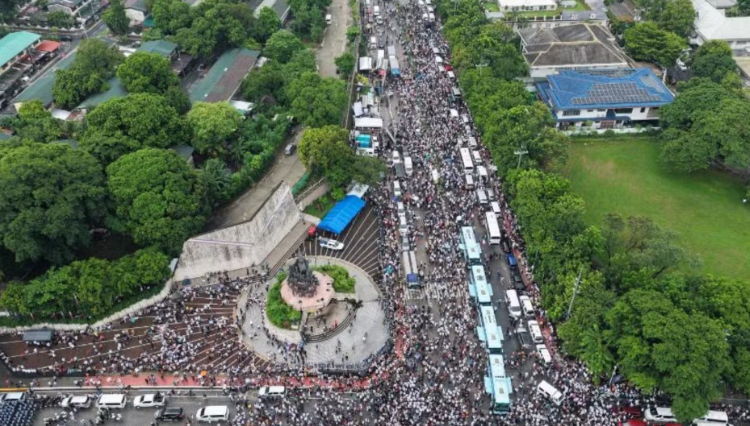
Thousands of devotees from the Iglesia Ni Cristo, one of the Philippines' most politically influential religious organisations, descended on Manila's main thoroughfare on Tuesday to demonstrate against the impending prosecution of Senator Rodante Marcoleta, a prominent church member and steadfast supporter of Vice President Sara Duterte. The demonstration disrupted the capital's morning commute, creating traffic congestion stretching for kilometres as worshippers occupied the busy EDSA highway to make their displeasure known about developments they view as politically motivated.
Marcoleta's legal troubles emerged just one day before the rally, when the government ombudsman announced charges against him alleging he failed to properly disclose 75 million pesos in unused campaign contributions during his electoral bid. The timing of the announcement, coupled with the senator's well-known alignment with Duterte and the impending Senate trial that will determine her political fate, has created a volatile political situation that the INC clearly felt compelled to address through public mobilisation of its membership.
The Iglesia Ni Cristo has long served as a crucial electoral force in Philippine politics, particularly within the Duterte political network, and Marcoleta is widely anticipated to vote against convicting the vice president when senators deliberate on charges against her beginning next week. This dynamic explains both the church's strategic decision to organise the rally and the government's evident concern about the demonstration's scale and momentum. Police initially estimated approximately 8,000 participants present by mid-morning, though officers expected the numbers to swell considerably as the day progressed and church members continued arriving from provincial areas.
The disruption to Manila's peak-hour traffic highlighted the logistical impact of the INC's organising capability. Officials reported that only dedicated bus lanes remained passable during the heaviest congestion, affecting countless workers and students attempting their normal commutes. This visible demonstration of the church's capacity to mobilise its followers en masse sent a clear political signal about the organisation's willingness to deploy its membership in defence of allies, regardless of public inconvenience.
INC spokesperson Edwil Zabala framed the protest in terms of demanding governmental transparency and warning against what the church characterises as selective justice. In a Facebook video statement, Zabala declared that the organisation would persist in demanding fairness regardless of whether Marcoleta faced incarceration, effectively threatening continued mobilisation campaigns. The language employed—distinguishing between justice and its selective application—reflected broader grievances within Duterte's political coalition regarding how different public officials face investigation and prosecution.
The Marcoleta case exists within a larger pattern of legal actions against Duterte loyalists that has intensified over recent months. Fellow Duterte-aligned senator Jose Estrada faces separate corruption charges connected to a massive flood control project scandal that involved bogus infrastructure proposals, generating public outrage when the details emerged. Meanwhile, another Duterte associate, Senator Ronald Dela Rosa, has gone into hiding after coming close to arrest on an International Criminal Court warrant concerning alleged atrocities during the controversial drug war orchestrated by Duterte's late father, former president Rodrigo Duterte.
This succession of prosecutions against the vice president's political allies has positioned her faction in a defensive posture, creating strong incentives for organisations like the INC to publicly defend their political partners. The church previously demonstrated this commitment in November by mobilising hundreds of thousands of participants in a rally ostensibly addressing the flood control scandal but implicitly assigning responsibility to President Ferdinand Marcos. Similarly, in January, the INC organised a massive demonstration opposing Duterte's initial impeachment proceedings, which the Supreme Court ultimately reversed before the House initiated new impeachment charges last month.
The Senate trial beginning July 6 requires a supermajority of at least 16 votes among the 24-seat chamber to convict and remove Duterte from office permanently while disqualifying her from future electoral participation. Marcoleta's expected opposition to conviction, combined with other suspected Duterte sympathisers within the Senate, creates genuine uncertainty regarding the trial's outcome. The INC's public demonstration thus carried real political weight in signalling that the church's substantial constituency stands firmly behind efforts to prevent conviction.
The deterioration of the relationship between Duterte and President Marcos, once close political allies, provides important context for comprehending the current tensions. Duterte has increasingly positioned herself against Marcos administratively and legislatively, and her impeachment by the House represents a dramatic escalation in their conflict. The INC's mobilisation reflects the church's decision to stand with Duterte's faction in this broader political struggle rather than attempting neutrality.
President Marcos responded to the unfolding situation by cancelling a scheduled luncheon with foreign media, choosing instead to closely monitor developments. This decision underscores the seriousness with which the administration views the INC's mobilisation capacity and the potential for escalating civil unrest. The episode demonstrates how religious organisations with substantial membership bases can translate theological and spiritual authority into formidable political pressure, shaping the dynamics of governance in ways that transcend conventional legislative and executive processes.
The coming weeks will prove crucial in determining whether the INC continues escalating its public demonstrations or whether negotiations between church leaders and government officials produce accommodation. The vote margins in the Senate trial will ultimately reveal whether Marcoleta's anticipated opposition, reinforced by the church's show of strength, proves decisive in preventing Duterte's removal. For Malaysian observers, the situation illustrates how religious organisations can become integrated into political machines in neighbouring democracies, wielding influence disproportionate to their formal constitutional role.

