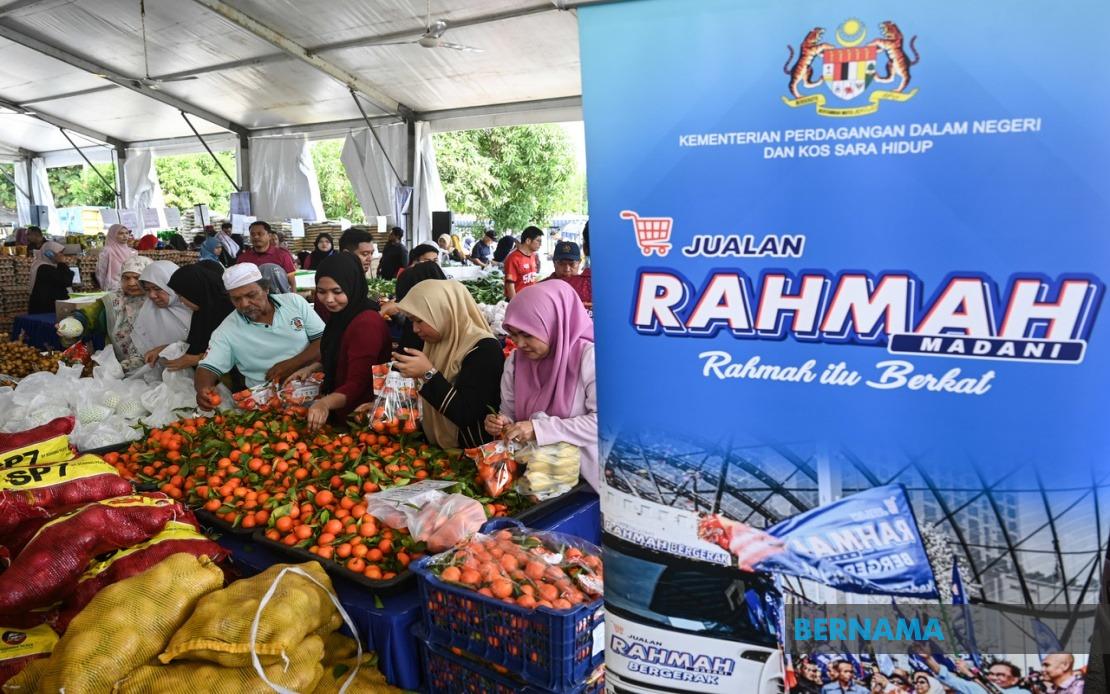
The government is set to debut the Ihsan Rahmah 9.9 online sale on September 9, coinciding with Malaysia Day 2026, marking the first time this consumer relief initiative will transition entirely to the digital marketplace. Prime Minister Datuk Seri Anwar Ibrahim made the announcement following his officiating of the TikTok Shop Summit Malaysia, signalling the administration's commitment to leveraging e-commerce platforms for broader economic benefit.
The initiative represents a strategic pivot in how the government delivers cost-of-living support to citizens. Rather than relying on physical retail locations, the move to online platforms aims to reach a significantly wider demographic, particularly younger consumers and those in areas where traditional Rahmah sales may be logistically challenging to organize. This modernization reflects the broader shift towards digital commerce adoption across Southeast Asia, positioning Malaysia as an early mover in government-supported e-commerce relief programmes.
Anwar framed the initiative as comprehensive support extending to all 34.5 million Malaysians, emphasizing that robust economic growth statistics must translate into tangible improvements in household purchasing power and quality of life. The Prime Minister articulated a holistic vision of development that encompasses not merely GDP expansion but also advancements in education, healthcare delivery, infrastructure development, and the critical challenge of cost-of-living pressures that weigh heavily on middle and lower-income households.
The Jualan Rahmah programme, administered by the Ministry of Domestic Trade and Cost of Living, provides essential commodities at discounts ranging from 10 to 30 percent below standard retail prices. These reductions target staple items that form the backbone of household budgets—groceries, toiletries, and basic household goods—sectors where even modest price reductions generate meaningful relief for price-sensitive consumers juggling multiple financial obligations.
Implementation will involve coordination across multiple government agencies and ministerial portfolios. Communications Minister Datuk Seri Fahmi Fadzil, Entrepreneur and Cooperative Development Minister Steven Sim Chee Keong, and Domestic Trade and Cost of Living Minister Datuk Armizan Mohd Ali were present at the announcement, reflecting the multi-stakeholder approach required to execute such initiatives. This cross-ministry collaboration ensures alignment between digital infrastructure capabilities, regulatory oversight, and targeted outreach strategies.
The move to online-only sales carries significant implications for small and medium enterprises participating in the programme. Digital platforms impose different operational requirements than physical markets—inventory management systems, digital payment integration, logistics coordination, and online customer service capabilities become paramount. Supporting micro-entrepreneurs and smaller businesses in meeting these technical requirements will be essential for ensuring inclusive participation and preventing consolidation among larger retailers.
Prime Minister Anwar specifically called for extensive promotion and public awareness campaigns to maximize uptake. This emphasis on communication reflects an understanding that programme success depends not merely on discounted prices being available but on reaching target audiences efficiently. Digital marketing, social media outreach, and integration with popular e-commerce platforms used by Malaysian consumers will be critical components of the rollout strategy.
The timing around Malaysia Day carries symbolic weight beyond mere convenience. Linking the sale to national commemoration positions cost-of-living assistance as an expression of national unity and solidarity, embedding economic support within a patriotic narrative. This framing responds to broader political discourse regarding equitable prosperity and whether economic gains translate into improved living standards for ordinary Malaysians.
Regionally, Malaysia's adoption of government-facilitated online discount programmes contributes to a growing trend across Southeast Asia. Thailand, Indonesia, and the Philippines have experimented with similar initiatives, yet Malaysia's emphasis on e-commerce infrastructure positions it within a specific approach to consumer relief. The model balances direct government intervention with private sector e-commerce capabilities, avoiding pure state-run retail while maintaining price-control mechanisms.
The initiative addresses persistent inflation concerns that have characterized post-pandemic economic adjustment. While headline inflation figures may appear moderate in macroeconomic terms, household-level experiences of rising costs—particularly in fresh produce, protein sources, and essential utilities—remain politically salient. Direct price interventions like Ihsan Rahmah serve a dual function: providing immediate relief and demonstrating government responsiveness to grassroots economic anxieties.
Success metrics will likely extend beyond transaction volumes to encompass reach across demographic segments and geographic distribution. Rural areas, where e-commerce penetration traditionally lags, present particular challenges. Ensuring that digitally marginal populations—elderly consumers, those with limited internet access, residents in underserved regions—can participate equitably will determine whether the programme achieves its stated ambition of comprehensive coverage.
The September 9 launch offers a test case for scaling government-retail partnerships in the digital age. Lessons learned regarding logistics coordination, platform capacity management, consumer demand patterns, and technical infrastructure requirements will inform future iterations and potentially inform similar initiatives across the region. For Malaysian policymakers increasingly focused on inclusive growth, this model represents an attempt to use technology as a democratizing force in economic support distribution.

