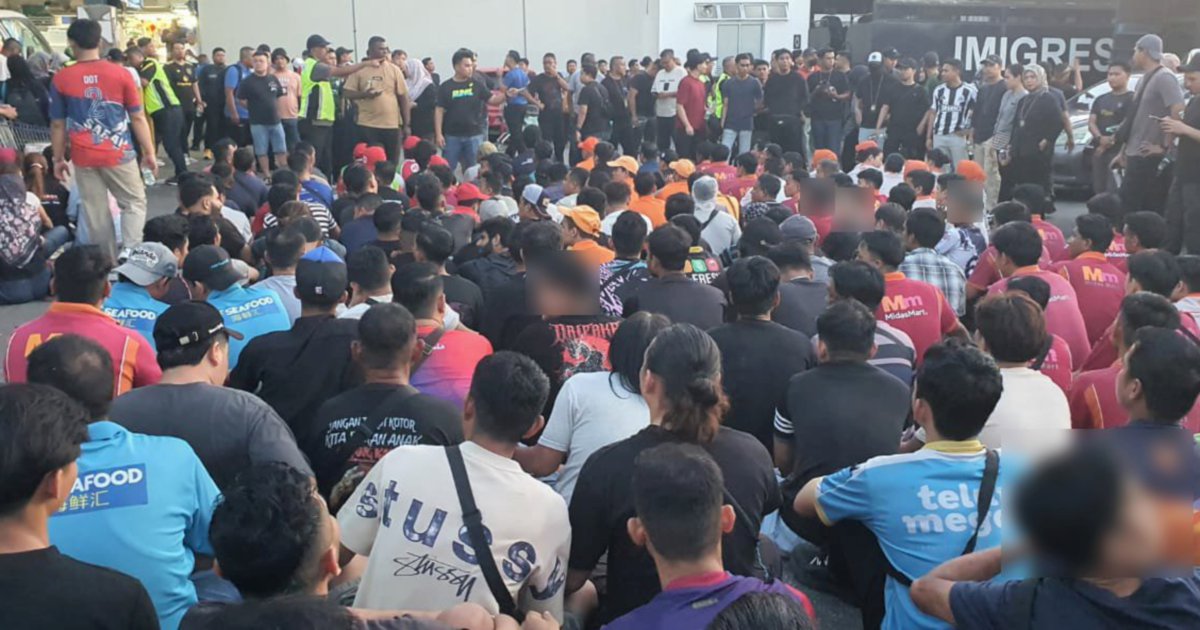
Immigration enforcement teams in Johor Baru have dismantled a complex smuggling operation and detained 226 migrants in coordinated raids, revealing how vulnerable foreign workers have been systematically exploited through a fraudulent passport system. The investigation exposed how undocumented migrants maintained their illegal status by undertaking regular trips across the border to obtain stamp validations, allowing them to evade detection while working in Malaysian establishments. An Indonesian fishmonger emerged as a key case study in authorities' examination of the scheme: over a four-year period, he had crossed the border monthly to have his passport marked before returning to illegal employment, a cycle that illustrates the mechanics of how the operation functioned at ground level.
The ring operated with striking sophistication, suggesting coordinated involvement from multiple parties across the immigration infrastructure. Rather than attempting to work entirely underground, the scheme leveraged the legitimate border-crossing system itself—turning periodic official stamp validations into a cover for ongoing undocumented employment. This approach allowed migrants to appear compliant with border protocols while maintaining illegal residency status, a distinction that made detection significantly more difficult for routine checks. The operation's longevity across four years demonstrates how such systems can persist without oversight, particularly where verification processes remain vulnerable to manipulation.
For Malaysia's regional position as a major destination for migrant labour, this case carries substantial implications. The country hosts over 2 million documented foreign workers alongside an estimated 2 million undocumented migrants, according to government estimates. Johor state, bordering Singapore and Indonesia, represents a particularly sensitive frontier where cross-border movement occurs at high volume. The raid and subsequent exposures underscore persistent challenges in border management and workplace verification, issues that affect both national security and the protection of vulnerable populations. Indonesian nationals constitute the largest migrant cohort in Malaysia, making bilateral enforcement cooperation essential for addressing trafficking and exploitation.
The passport-stamping scheme represents a particularly insidious form of abuse targeting migrant workers themselves. Rather than being organised primarily for profit by intermediaries, the system exploited workers' desperation to remain employed, effectively charging them for the service of maintaining their fraudulent status. Many migrants in such situations face coercive circumstances in their home countries—debt, family pressure, or limited economic opportunities—that push them toward accepting exploitative arrangements. The fishmonger's monthly border crossings would have involved substantial time and expense, suggesting vulnerable workers paid significantly for the privilege of continued illegal employment while remaining entirely unprotected under Malaysian labour law.
The operation's exposure follows intensified immigration enforcement that Malaysia has pursued, particularly since the COVID-19 pandemic highlighted vulnerabilities in migrant management. The country has conducted successive rounds of workplace raids, detention sweeps, and repatriation campaigns aimed at regularizing its migrant workforce. However, these enforcement activities often prioritize volume over investigation of the networks facilitating illegal employment. The Johor operation stands out for its apparent focus on dismantling the structural mechanisms enabling undocumented work rather than simply apprehending individuals. This suggests a strategic shift toward investigating facilitators and corrupt officials who enable such schemes.
The four-year operational span before detection raises questions about the level of official knowledge or complicity within the system. Immigration checkpoints routinely process thousands of crossings daily at major border posts, particularly at Johor's crossings into Singapore. For a systematic passport-stamping scheme to function across monthly cycles for multiple workers over extended periods suggests either remarkable coordination by smugglers or significant blind spots in border verification procedures. Authorities' success in eventually identifying and dismantling the network indicates capacity exists; the timeline primarily reflects investigative resources and prioritization rather than inherent incapability.
The detained migrants now face an uncertain trajectory through Malaysia's immigration detention system, which remains chronically overcrowded. Following recent years' raids, detention facilities have housed excess migrants beyond their designed capacity, raising humanitarian concerns among rights groups. Most detainees await repatriation processing, which can extend from weeks to months depending on their country of origin and cooperation from their home government. For workers who were generating income and supporting dependents in their home countries, detention interrupts their ability to remit wages, creating cascading hardship. Some migrants also face potential prosecution for illegal employment, though authorities typically prioritize deportation over criminal proceedings.
The exposure of this particular scheme carries implications for regional labour mobility discussions. Southeast Asian countries including Malaysia, Indonesia, Thailand, and the Philippines have engaged in negotiations around bilateral labour agreements and mutual recognition frameworks for worker verification. Currently, documentation verification remains fragmented across national systems with limited cross-border integration. The Johor case demonstrates how inadequate information-sharing between immigration agencies enables workers to slip between jurisdictional cracks. Policymakers across the region have increasingly recognized that managing migration effectively requires coordinated databases, shared intelligence protocols, and standardized documentation standards—investments that remain inadequate despite acknowledged need.
Looking forward, the Johor operation's success in identifying the smuggling network's operational mechanics should inform workplace enforcement strategy. Rather than concentrating solely on raids targeting migrant workers at their employment sites, sustained investigation of the networks connecting border control, document handling, and employer recruitment offers greater potential for preventing future schemes. Many migrants discovered through workplace raids indicate they obtained employment through intermediary agents, many of whom operate across multiple source countries and destination states. Disrupting these networks through intelligence sharing and coordinated investigation across borders would address root causes of undocumented employment more effectively than periodic enforcement sweeps targeting vulnerable workers themselves.

