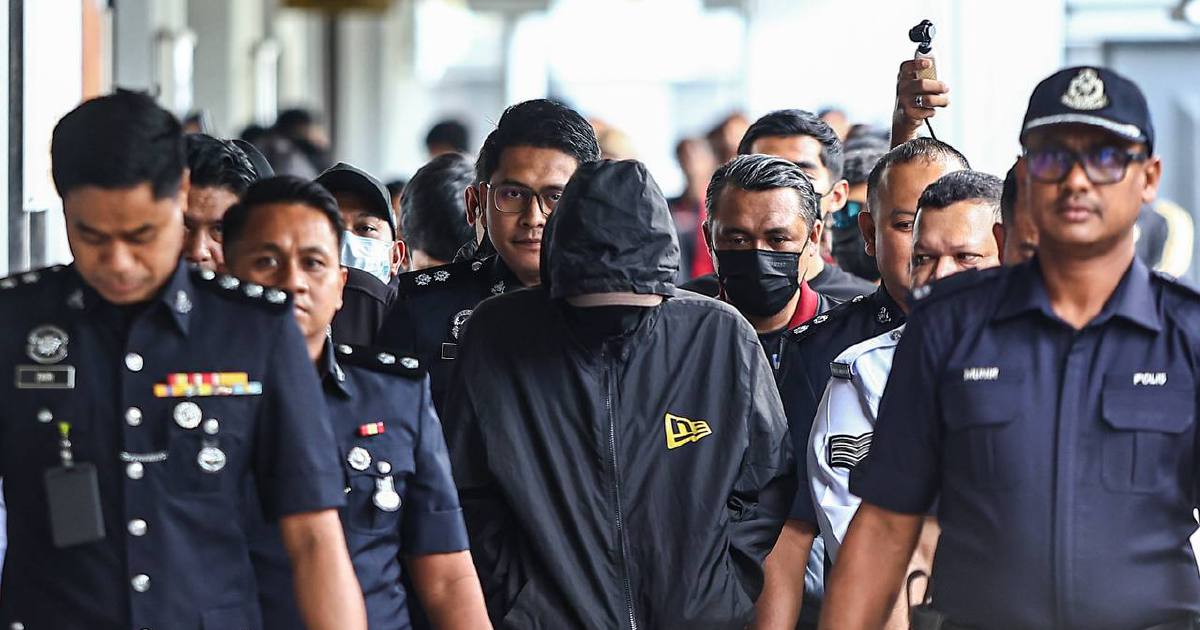
A lorry driver employed by Malaysia's Immigration Department appeared before the magistrates' court in Kuala Lumpur today to face charges stemming from a fatal traffic collision that claimed the lives of three members of the same family. The driver entered a not-guilty plea to five charges, including three separate counts of causing death by reckless or dangerous driving, relating to an incident at the Maju Junction intersection on Jalan Sultan Ismail that occurred the previous day.
The incident has renewed public concern over heavy vehicle safety in Malaysia's busy urban corridors, particularly within the capital city where commercial and government-operated lorries share congested roads with passenger vehicles during peak hours. The Maju Junction area, a major traffic intersection serving the Kuala Lumpur business district and surrounding residential zones, has previously experienced traffic incidents, making road safety at this location an ongoing issue for both authorities and commuters.
The case has drawn significant attention because the driver was operating a government vehicle under the Immigration Department's administration. This adds another dimension to the discussion around fleet safety standards, driver training protocols, and enforcement procedures within federal agencies responsible for operating commercial vehicles on Malaysian roads. The involvement of a government employee has prompted questions about workplace safety measures and accountability within public sector transport operations.
Magistrates' courts in Malaysia handle lesser offences and traffic-related criminal charges, making this the appropriate judicial venue for such proceedings. The charges of causing death by dangerous or reckless driving are serious offences that typically carry substantial penalties upon conviction, potentially including lengthy imprisonment depending on the severity of the circumstances and the court's assessment of culpability.
Families of victims in fatal traffic incidents often face prolonged legal processes that extend beyond the initial criminal charges. Insurance claims, civil liability suits, and compensation matters frequently follow criminal proceedings, creating extended periods of uncertainty and financial hardship for bereaved relatives. The three-family member death toll in this collision represents a particularly devastating outcome that has affected multiple households simultaneously.
The specific circumstances leading to the collision—whether mechanical failure, driver fatigue, excessive speed, or other factors—will likely form the crux of the court examination and prosecution case. Accident reconstruction experts and forensic investigators typically compile detailed reports for traffic fatalities, examining vehicle condition, road conditions, visibility, and driver behaviour at the moment of impact to establish whether the driving constituted dangerous or merely careless conduct.
Road safety remains a critical concern in Malaysia, where annual traffic fatalities consistently rank among the highest in the Southeast Asian region. Government statistics regularly highlight the disproportionate contribution of heavy vehicle incidents to overall road death tolls, prompting periodic reviews of licensing requirements, vehicle maintenance standards, and driver hour limitations for commercial operators.
The Immigration Department, while primarily tasked with border control and immigration administration, operates a fleet of vehicles for operational purposes throughout Malaysia. This incident may prompt internal reviews of the department's vehicle maintenance schedules, driver fitness assessment procedures, and compliance with road transport regulations applicable to all operators regardless of agency affiliation.
The magistrate will need to weigh prosecution evidence against the defence case to determine whether the driver's actions fell within the legal definition of reckless or dangerous driving. The distinction between careless and dangerous driving carries significant legal consequences, as does establishing the causal link between the driver's conduct and each victim's death, particularly when multiple fatalities result from a single collision.
Family members and community members observing this case will be watching closely for evidence of systemic failures, whether organizational or individual. Public confidence in the justice system often depends on whether investigations appear thorough and whether consequences appear proportionate to the harm caused.
The case is expected to proceed through the magistrates' court system, though serious charges of causing death through dangerous driving may eventually be committed to higher courts for trial depending on jurisdictional thresholds and the complexity of evidence. The legal process will likely extend over several months as witness statements, expert reports, and forensic evidence are presented and examined.
Beyond the immediate criminal proceedings, this collision will likely generate renewed calls from road safety advocates and families' rights groups for stricter enforcement of vehicle safety regulations, improved training standards for commercial drivers, and stronger penalties for dangerous driving. Such incidents often catalyze policy discussions about whether existing road safety frameworks adequately protect the public from preventable tragedies involving heavy vehicles in urban areas.

