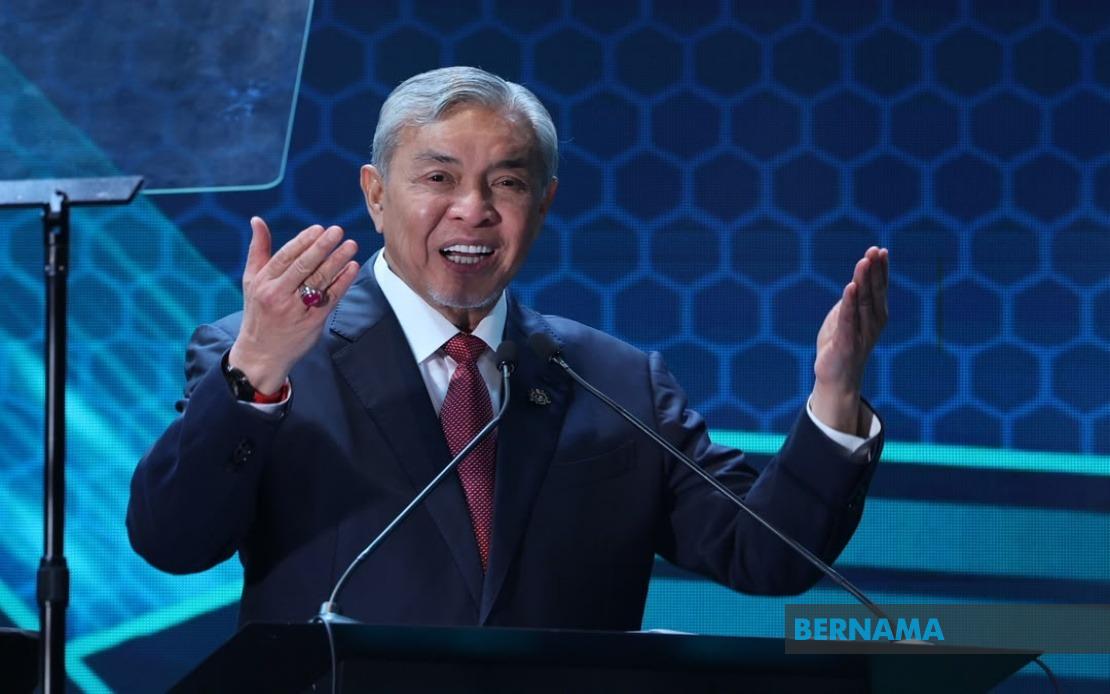
Malaysia's Immigration Department faces a fundamental transformation from a traditional border-control authority into a strategic institution that simultaneously drives economic growth and fortifies national security, according to Deputy Prime Minister Ahmad Zahid Hamidi. Speaking at the 2026 Immigration Day celebration in Cyberjaya on July 21, Ahmad Zahid articulated a comprehensive vision that redefines how the department should operate within a rapidly evolving global landscape, signalling a significant policy shift that reflects changing priorities within the Malaysian government.
The four-point mandate Ahmad Zahid outlined serves as a directional framework intended to align all departmental operations toward shared objectives. These priorities encompass facilitating national economic growth, strengthening security and sovereignty, accelerating digital transformation with service innovation, and enhancing integrity alongside professionalism and humanitarian values. This structured approach reflects recognition that modern immigration management cannot function as a collection of disparate initiatives but requires coherent philosophy anchored across every policy decision and operational action. The emphasis on unified direction suggests concerns that previous efforts may have lacked coordination or sustained commitment.
On the economic dimension, Ahmad Zahid articulated a candid assessment that bureaucratic friction undermines Malaysia's global competitiveness. He contended that unnecessary procedural delays, overly complex processes, and excessive administrative hurdles collectively damage the country's investment attractiveness and economic dynamism. His reference to the United Arab Emirates provides instructive international comparison, highlighting how the UAE integrated immigration policy with foreign investment attraction strategies through initiatives such as the Golden Visa programme offering extended residency periods. The UAE's achievement of RM196.6 billion in foreign direct investment during 2025, securing ninth position globally for four consecutive years, demonstrates tangible economic returns from liberalised immigration frameworks that balance opportunity with security considerations.
This economic perspective carries particular relevance for Malaysia's regional positioning. As Southeast Asian economies compete intensively for multinational corporate investment, skilled talent migration, and high-value business activities, immigration barriers represent genuine competitive disadvantages. Malaysia's historical strengths in attracting foreign investment could deteriorate if administrative processes deter business decision-makers and talent seeking entry. The Deputy Prime Minister's public acknowledgement of this relationship signals governmental willingness to recalibrate policies that may have previously prioritised border restrictiveness over economic facilitation, a potentially significant strategic reorientation.
Regarding national security, Ahmad Zahid emphasised that traditional reactive enforcement models prove inadequate for contemporary threat landscapes. He highlighted evolving transnational challenges including organised migrant smuggling syndicates, increasingly sophisticated human trafficking networks, and border-crossing criminality that operates without temporal constraints. These observations reflect genuine security realities affecting Southeast Asia broadly, where porous borders and migrant trafficking remain persistent challenges requiring intelligence-driven responses rather than conventional patrol-based approaches. His articulation of these threats suggests the department requires enhanced analytical capacity and inter-agency coordination mechanisms.
The technological transformation agenda constitutes the mandate's third pillar, positioning digital innovation as fundamental to achieving both economic and security objectives simultaneously. Ahmad Zahid advocated deployment of advanced technologies including artificial intelligence, predictive analytics, biometric systems, digital identity infrastructure, and smart border management systems. Rather than merely accelerating existing processes, this technological modernisation aims to enable fundamentally superior decision-making through data-driven intelligence. The framing deliberately distinguishes between simply working faster and thinking smarter, suggesting previous technological investments may have lacked strategic coherence or analytical depth.
For Malaysian readers, this technological agenda carries substantial implications. Modern immigration systems increasingly depend on integrated databases, real-time information sharing, and predictive capability. Without such infrastructure, Malaysia risks operational inefficiency and potential security gaps that increasingly sophisticated criminal networks could exploit. Conversely, effective technological implementation could position Malaysia as a regional leader in intelligent border management, enhancing both legitimate travel experience and security outcomes simultaneously. This dual benefit makes the technological transformation both economically and strategically justified.
The fourth priority emphasising integrity, professionalism, and humanitarian values acknowledges longstanding concerns regarding immigration department operations. Integrity failures, whether through corruption or inconsistent application of procedures, undermine public trust and create opportunities for criminal exploitation. Ahmad Zahid's explicit emphasis on humanitarian values suggests recognition that immigration operations inevitably involve vulnerable populations, including trafficking victims and displaced persons, requiring compassionate rather than purely punitive approaches. This represents acknowledgment that effective immigration management requires institutional culture change beyond merely structural or technological modification.
Ahmad Zahid framed the collective mandate as enabling transformation toward a strategic institution simultaneously functioning as national sovereignty protector, economic competitiveness catalyst, and public trust symbol. This framing attempts to reconcile tensions inherent in immigration policy, recognising that purely restrictive approaches damage competitiveness while purely permissive approaches risk security. The synthesis requires sophisticated institutional capability balancing multiple competing objectives through evidence-based decision-making rather than ideological positioning.
The Deputy Prime Minister's emphasis on comprehensive, sustained implementation rather than fragmented initiatives suggests frustration with previous departmental changes lacking integration or durability. This observation carries broader Malaysian governance implications, indicating concern that institutional transformation efforts frequently remain superficial without reshaping underlying cultures, incentive structures, and operational practices. Achieving genuine transformation requires addressing all these dimensions simultaneously, a substantially more demanding undertaking than issuing policy directives.
For Malaysian business communities, particularly those engaged in international trade, foreign direct investment, and multinational operations, Ahmad Zahid's mandate offers potential substantial relief from bureaucratic constraints limiting competitiveness. Simultaneously, the enhanced security emphasis through intelligence-driven enforcement should theoretically improve border integrity while reducing processing delays for legitimate travellers and goods. The success of this balance will determine whether transformation delivers on its theoretical promise or merely redistributes existing inefficiencies.
Regionally, Malaysia's immigration policy evolution could influence Southeast Asian approaches as neighbouring countries observe whether the mandate successfully combines economic facilitation with security strengthening. If implementation succeeds, other ASEAN economies might adopt similar frameworks. Conversely, failures could reinforce arguments for maintaining traditional restrictive approaches. The stakes for Malaysian government credibility therefore extend beyond domestic considerations to regional economic and security cooperation frameworks where immigration policy increasingly intersects with border management, talent mobility, and counterterrorism cooperation.
Implementation challenges will prove substantial. Transforming institutional culture, deploying advanced technology effectively, and training personnel in sophisticated intelligence-driven approaches requires sustained commitment extending beyond political cycles. The presence of senior government officials including the Chief Secretary and Public Service Department leadership at the commemoration event signals high-level endorsement, though political backing alone cannot substitute for effective execution. The Immigration Department must now demonstrate capacity translating mandate principles into operational reality, with measurable improvements in both economic facilitation and security outcomes validating the transformation approach.

