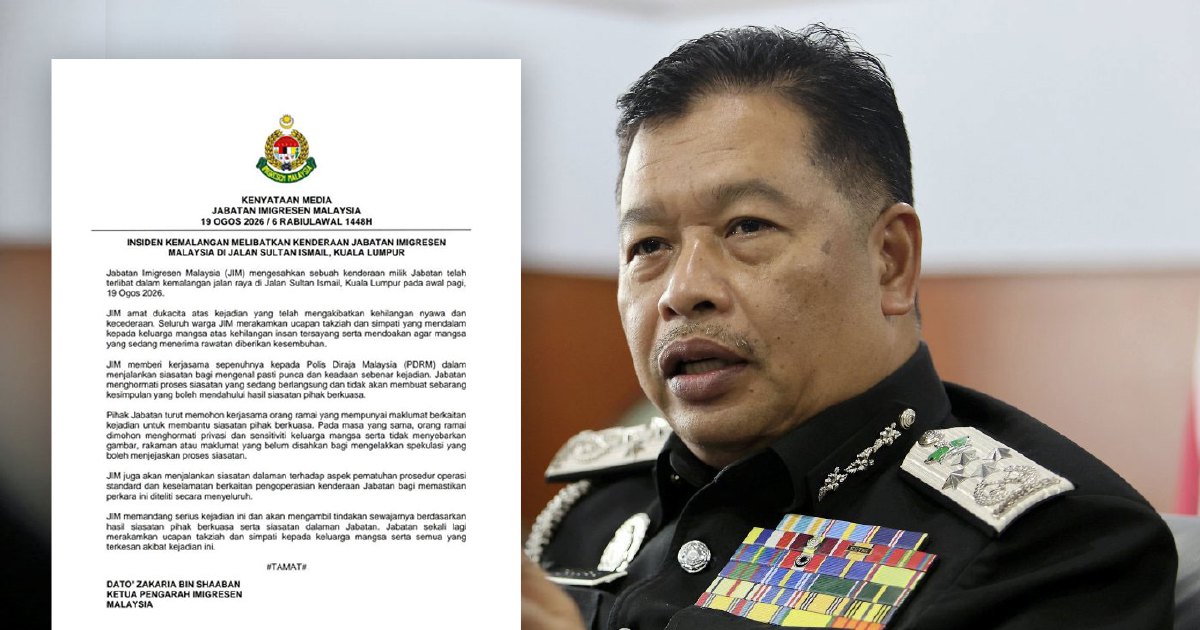
The Immigration Department has initiated a comprehensive internal investigation following a fatal traffic collision involving one of its official vehicles on Jalan Sultan Ismail in central Kuala Lumpur. The probe will scrutinise adherence to established standard operating procedures and the application of safety measures governing the operation of departmental vehicles, marking a significant institutional response to a tragedy that has raised questions about transport safety within government agencies.
The accident, which occurred during the early morning hours, resulted in loss of life and has prompted departmental leadership to examine all facets of how the Immigration Department manages vehicle operations and roadway safety. The decision to launch the inquiry reflects the gravity of the incident and the department's commitment to accountability in the aftermath of what appears to be a preventable tragedy.
This investigation arrives at a time when road safety in the Klang Valley remains a persistent public concern. Jalan Sultan Ismail, a major arterial route connecting central Kuala Lumpur to surrounding districts, experiences significant traffic volumes throughout the day and night. The location of this accident on such a prominent thoroughfare underscores broader questions about how government vehicles are operated and what safeguards exist to protect both passengers and other road users.
The scope of the internal probe will likely encompass vehicle maintenance standards, driver qualifications and training requirements, and the protocols governing vehicle deployment during different times of day. Whether the vehicle had undergone recent mechanical inspections, whether the driver had adequate rest periods, and whether the department has adequate supervision mechanisms for late-night operations are matters that may come under scrutiny.
The Immigration Department operates a substantial fleet of vehicles used for official purposes, ranging from transport for senior officials to vehicles used in operational activities. Establishing robust internal procedures for vehicle safety is essential not only for protecting departmental personnel but also for safeguarding the public who share Malaysia's roads. The internal investigation will need to determine whether current SOPs are comprehensive and whether they are being uniformly applied across all operational units.
For Malaysian government agencies more broadly, this incident serves as a reminder of the importance of institutional oversight in potentially high-risk operational environments. Traffic accidents involving official vehicles can expose government departments to significant liability while also undermining public confidence in institutional competence. The fact that the Immigration Department is conducting a transparent internal review may help restore confidence in the organisation's commitment to safety standards.
The investigation's findings will be particularly relevant to how other government departments approach vehicle safety. If the probe identifies gaps in existing procedures or enforcement mechanisms, those findings could inform improvements across the civil service. This represents an opportunity for institutional learning that extends beyond the Immigration Department itself.
The timing of this accident and investigation also raises questions about night-time traffic safety more generally in Kuala Lumpur's central business district. The early morning hours when the collision occurred typically involve lighter traffic volumes, yet accidents during these periods can be particularly severe if vehicles are travelling at higher speeds. Understanding the circumstances that led to this specific accident may provide insights into road safety challenges unique to off-peak periods.
For families affected by this tragedy, the internal investigation offers some assurance that the department is treating the incident with appropriate seriousness. However, the investigation is likely to be complemented by external inquiries, including police investigations and potential legal proceedings, which will provide independent assessment of what occurred and whether any violations of law took place.
The Insurance and road safety community will be monitoring how thoroughly this investigation is conducted and what recommendations emerge. Government vehicle accidents often receive less public scrutiny than accidents involving private vehicles, yet they raise important questions about how public institutions manage risks that could ultimately cost taxpayers both financially and in terms of human life.
Stakeholders including the Road Safety Institute Malaysia and relevant government oversight bodies may also take interest in this investigation's methodology and conclusions. The findings could inform future policy discussions about vehicle safety standards across the civil service and whether existing frameworks are sufficient to prevent similar tragedies.
As the Immigration Department proceeds with its internal review, the broader lesson appears clear: institutional safety measures are only effective when they are rigorously designed, consistently implemented, and regularly evaluated. The investigation's ultimate value will depend not only on identifying what went wrong but on translating those findings into concrete improvements that reduce the likelihood of similar incidents occurring.

