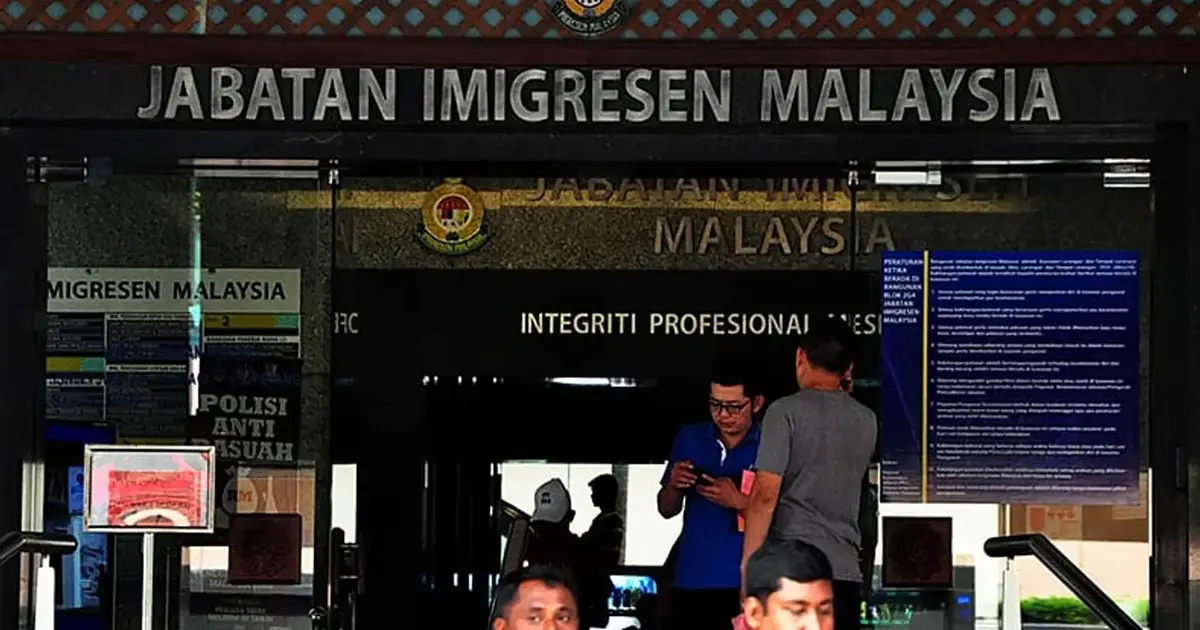
The director-general of Malaysia's Immigration Department has disclosed that investigators identified the officers responsible for the MyIMMs system breach from the very beginning of their inquiry, even as the dragnet has now expanded to eleven arrested staff members implicated in what appears to be a coordinated conspiracy to manipulate the national identity verification system.
The revelation underscores the sophisticated nature of the breach, which centred on the unauthorised processing and approval of PLKS (Pas Lintas Kebangsaan Malaysia or Malaysia Pass) applications through Malaysia's core immigration infrastructure. That authorities could pinpoint culprits so quickly suggests either the breach left clear digital or procedural traces, or that internal intelligence networks within the department functioned effectively despite the alleged malfeasance among staff members themselves.
The MyIMMs system represents one of Malaysia's most critical digital assets, serving as the centralised gateway for immigration data, visa processing, travel permits, and citizenship verification. Any successful breach of this system carries profound implications not only for border security but also for the integrity of Malaysia's immigration controls and international standing. The PLKS itself is a relatively recent initiative designed to facilitate long-term stays for high-value foreign workers, investors, and skilled professionals, making its misuse particularly damaging to the programme's credibility and to Malaysia's capacity to manage its migrant worker population effectively.
The arrest of eleven officers suggests this was not an isolated incident perpetrated by a lone actor but rather a structured scheme involving multiple conspirators, likely organised across different operational levels within the immigration bureaucracy. The apparent ease with which authorised credentials could be exploited to bypass normal procedural safeguards raises troubling questions about the robustness of internal audit mechanisms and whether the department's system architecture was adequately compartmentalised to prevent such coordinated abuse.
For Malaysian citizens and businesses, the implications are substantial. Any systemic weakness in immigration controls creates downstream risks—from security vulnerabilities where unauthorised individuals gain entry or residency status, to economic problems where legitimate skilled migrant pathways lose credibility. Malaysian companies relying on the PLKS to recruit foreign talent now face heightened scrutiny and potential delays as authorities likely intensified verification protocols. International investors may view the breach as evidence of weak institutional oversight, though the swiftness of the investigation and arrests could conversely demonstrate effective damage control.
The manner in which the DG characterised the investigation—suggesting early knowledge of the perpetrators—may reflect a deliberate strategy to prevent further breaches. If investigators knew the guilty parties early, their continued investigation likely aimed at documenting the full scope of compromise: how many unauthorised applications were processed, which individuals benefited, and whether the scheme extended beyond immigration staff to external facilitators or syndicates seeking to exploit the system for profit or other motives.
From a regional perspective, the MyIMMs breach carries relevance to Southeast Asian immigration cooperation and data-sharing frameworks. ASEAN member states increasingly exchange immigration intelligence through formal and informal channels. A breach of Malaysian immigration data could compromise not only Malaysians overseas but also the integrity of regional border-management systems if compromised Malaysian data was cross-referenced with other national databases. The credibility of Malaysia's immigration controls affects its standing in dialogues over ASEAN labour mobility and security cooperation.
The investigation will likely examine whether the arrested officers acted independently out of corruption, or whether they were exploited by external criminal networks already operating sophisticated immigration fraud schemes in Southeast Asia. Such syndicates typically target countries where digital systems can be penetrated but investigative capacity is less overwhelming. The fact that Malaysia detected and responded to this breach swiftly suggests a reasonable institutional resilience despite the apparent breach itself.
Going forward, the immigration department will face pressure to overhaul its internal security architecture, implement stronger multi-factor verification for critical transactions, and establish tighter segregation of duties that prevents single officers from approving sensitive applications. The department will also likely face parliamentary scrutiny regarding how many PLKS approvals require retrospective review, and whether individuals who gained unauthorised status through the breach must be deported or can be regularised through alternative channels.
The case also reflects broader vulnerabilities across Malaysia's digital government infrastructure. If the MyIMMs system—presumably among the better-resourced government IT systems given its criticality—was susceptible to insider manipulation, this raises questions about cybersecurity maturity across other government agencies managing sensitive databases. The government may be prompted to conduct a comprehensive audit of insider-threat vulnerabilities and to establish cross-agency best practices for preventing similar breaches elsewhere.
For ordinary Malaysians, the incident illustrates both risk and reassurance. The vulnerability itself is concerning; the rapid identification and arrest of perpetrators suggests the department maintains adequate oversight and investigative capacity. As authorities continue dismantling the breach scheme, further details will likely emerge about the motivation, scope, and remediation required to restore full confidence in Malaysia's immigration controls.

