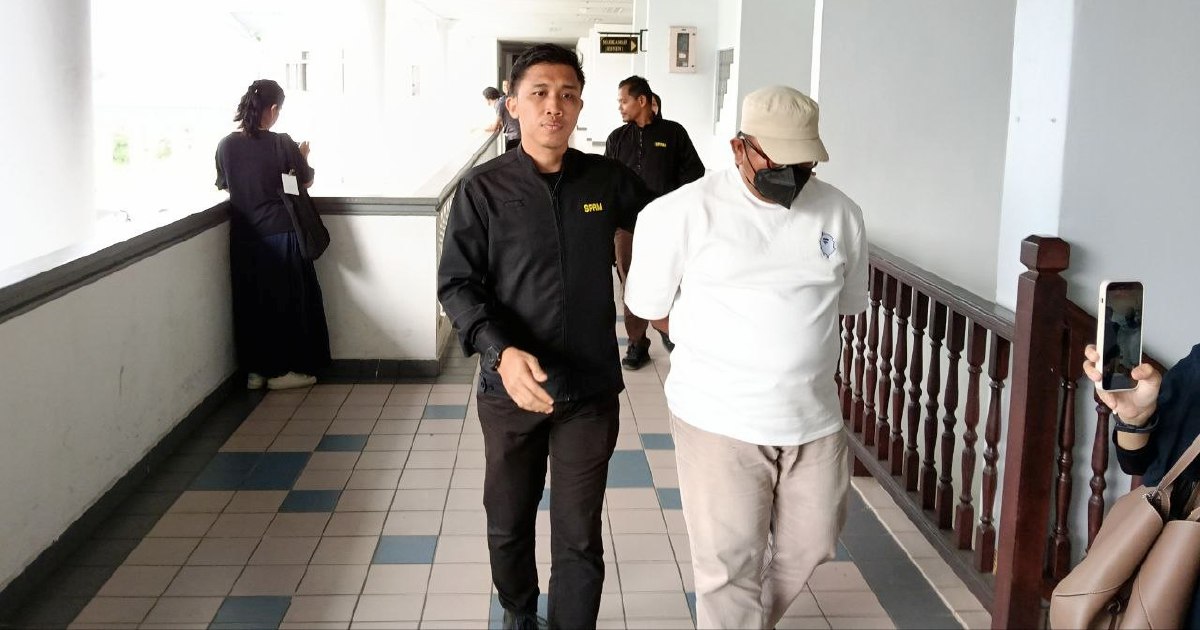
Corruption within Malaysia's immigration enforcement apparatus came under judicial scrutiny when an officer appeared before the Sessions Court in Ayer Keroh to face serious criminal charges. The defendant stands accused of soliciting and accepting payments from a restaurant business owner, with authorities alleging that the pattern of misconduct persisted across a seven-month period in the first half of the previous year.
The charges laid against the officer encompass seven separate counts, each relating to monthly payments received from the restaurant operator. Prosecutors contend that the total value of these improper transactions reached RM1,950, a sum that underscores both the systematic nature of the alleged arrangement and the operational scope of the suspected corruption scheme. The timeframe cited by the court—January through July of the preceding year—suggests that the illicit conduct may have extended beyond the charged period if investigation files contained additional evidence.
Corruption involving public servants, particularly those holding enforcement authority, strikes at the credibility of Malaysia's institutions and regulatory frameworks. Immigration officers occupy positions of considerable power, wielding discretionary authority over visa issuance, workplace inspections, and compliance enforcement. When allegations emerge that such officials have exploited their positions to extract payments from business operators, the implications extend well beyond an individual officer's misconduct; they raise questions about systemic vulnerabilities within the immigration service's oversight mechanisms.
The restaurant industry in Malaysia operates within a complex regulatory environment where immigration compliance forms a significant component. Establishments employing foreign workers must navigate documentation requirements, work permit procedures, and periodic inspections conducted by Immigration officers. Such regulatory touchpoints create potential friction points where unscrupulous officials might seek to leverage their authority, whether by threatening inspections, delaying permit renewals, or facilitating otherwise bureaucratic processes in exchange for personal gain.
Ayer Keroh, located in Melaka state, serves as a notable commercial hub with substantial restaurant and hospitality operations. The location of these proceedings suggests that corruption may have been embedded within a local enforcement context, where an officer would have accumulated regular contact with business operators who depend upon maintaining compliant immigration status. The restaurant sector's reliance on both local and foreign workforce components creates natural dependencies that might make proprietors vulnerable to extortionate demands.
The allegation of monthly payments indicates a structured rather than opportunistic approach to corruption. This pattern of regularity suggests either an arrangement that the restaurant owner felt obliged to maintain or a systematic practice whereby the officer approached multiple establishments seeking similar payments. Such methodical conduct typically requires opportunities for repeated interaction, pointing to the officer's regular route or assigned jurisdiction covering the restaurant's location.
Authorities pursuing these charges demonstrate commitment to tackling corruption within enforcement agencies, a critical priority given public sector integrity's foundational importance to Malaysia's economic competitiveness and institutional standing. The prosecution of immigration officials sends important signals about accountability, though enforcement experts note that prosecution rates for corruption involving public servants remain comparatively low relative to the estimated scale of such misconduct.
For restaurant operators and the broader business community, charges of this nature underscore vulnerabilities when dealing with public officials who hold regulatory authority. The case illustrates why transparent reporting mechanisms and corporate governance frameworks become essential safeguards. Many reputable restaurant chains and hospitality operators now maintain detailed records of all interactions with government officials and maintain clear policies against facilitating any irregular payments, partly to protect themselves from potential entanglement in corruption schemes.
The restaurant industry, already navigating challenging economics post-pandemic, faces particular vulnerability to such pressures. Rising operational costs combined with labour shortages have incentivized business operators to maintain compliant immigrant workforces despite regulatory burdens. Officials aware of such pressures might exploit them, knowing that proprietors face substantial penalties or operational disruption if immigration violations are discovered or permits delayed during peak trading periods.
The judiciary's handling of this case carries significance extending beyond the individual defendant. Malaysian courts have increasingly demonstrated willingness to impose substantive sentences for corruption involving public servants, particularly where systematic patterns emerge. The seven distinct charges allow prosecutors to build a cumulative case demonstrating premeditation and ongoing misconduct rather than isolated lapses in judgment.
Southeast Asia has observed rising corruption-related prosecutions across immigration and customs enforcement, reflecting heightened regional scrutiny of public sector integrity. Malaysia's approach to addressing such cases influences regional standards and demonstrates whether institutional frameworks can effectively police their own members. The outcome of this trial may influence both internal disciplinary procedures within the Immigration Department and broader public confidence in the service's integrity.
Beyond immediate criminal consequences, the case highlights institutional reform requirements. Immigration departments require robust audit mechanisms, ethical training, and reporting channels that encourage staff to identify suspicious behaviour among colleagues without fear of retaliation. Periodic rotation of officers between locations, transparent inspection protocols, and mandatory digital documentation of all enforcement interactions serve as preventive measures employed by forward-thinking administrations seeking to minimize corruption opportunities.

