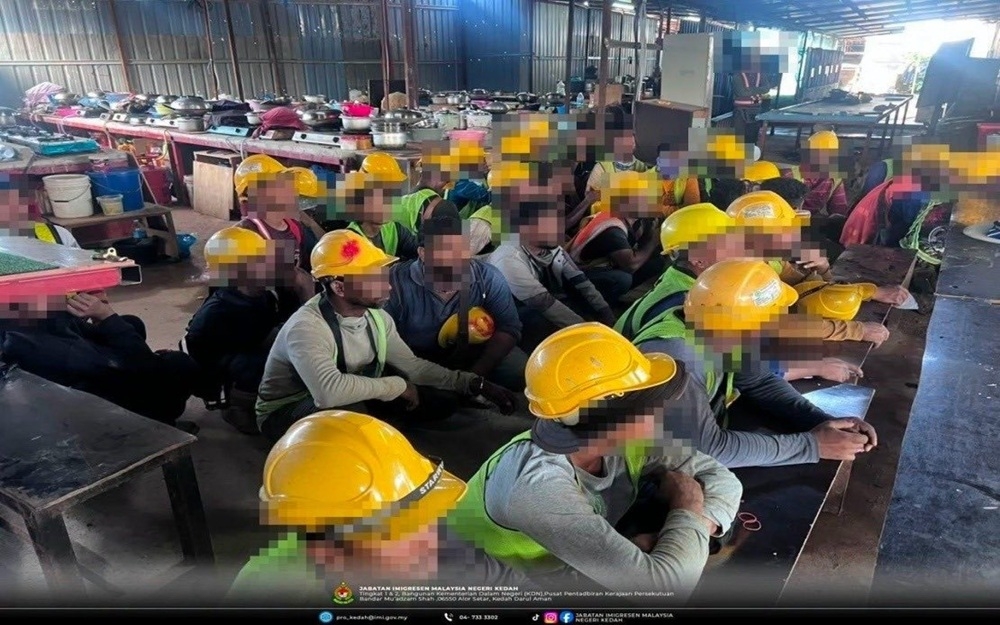
Malaysian immigration authorities carried out a significant enforcement operation in Kedah on August 5, apprehending 81 undocumented migrants who were working at a construction site in Alor Setar. The raid, conducted under the Ops Sapu initiative, underscores the ongoing challenge of illegal labour migration across Southeast Asia's most developed economies and highlights coordinated efforts by federal agencies to tighten border controls and labour compliance standards.
Ops Sapu represents one of Malaysia's systematic approaches to tackling undocumented workers and human trafficking networks that exploit vulnerable migrant populations. These operations typically target high-risk sectors such as construction, agriculture, manufacturing, and domestic work—industries where informal employment arrangements and cash-based payments make detection and enforcement difficult. The Kedah operation captured individuals without proper documentation or valid work permits, a violation that triggers mandatory detention and deportation procedures under Malaysian immigration law.
Construction sites have consistently emerged as flashpoints in immigration enforcement campaigns across Malaysia. The sector's reliance on transient labour, minimal regulatory oversight at site level, and the geographic proximity of many construction projects to border areas create conditions where undocumented workers find employment opportunities. Kedah's location in northern Peninsular Malaysia, neighbouring Thailand, makes it particularly vulnerable to irregular migration flows. The state has become a recurring focal point for immigration operations aimed at disrupting labour trafficking supply chains and protecting workers from exploitation.
The detention of 81 individuals in a single operation demonstrates the scale at which undocumented labour operates within Malaysia's economy. For context, such operations typically reveal only a fraction of the estimated undocumented migrant population engaged in formal and informal employment sectors nationwide. Experts and labour organisations suggest that documented apprehensions represent perhaps ten to fifteen percent of actual illegal labour activity, meaning enforcement agencies continue wrestling with substantial compliance challenges despite sustained operational intensity.
Beyond immediate enforcement outcomes, Ops Sapu serves multiple policy objectives. It generates deterrence signals to both employers and migrant workers about immigration compliance expectations. For employers, documented raids increase the perceived risk of hiring undocumented labour and incurring substantial financial penalties. For migrant workers, arrests and deportations constitute direct consequences that may discourage irregular migration attempts. However, the effectiveness of deterrence remains contested among migration scholars, particularly when source-country poverty and employment desperation create persistent incentives for risk-taking.
The operation also addresses humanitarian concerns embedded within Malaysia's labour migration framework. Undocumented workers typically operate outside protective labour regulations, facing wage theft, unsafe working conditions, contract violations, and physical abuse without recourse to formal complaint mechanisms. By removing workers from unregulated employment situations, enforcement operations theoretically create pathways toward formal labour arrangements, though detained migrants often face prolonged detention and deportation rather than regularisation or alternative employment placement.
For Malaysian employers and businesses, enforcement operations create compliance pressures that can drive labour-market adjustments. Construction companies and other labour-intensive sectors must implement hiring verification systems, maintain documented work permit records, and conduct due diligence on subcontractors and labour suppliers. These compliance costs contribute to overall project expenses and potentially affect competitive positioning, particularly for smaller operators unable to absorb regulatory compliance burdens as easily as larger corporations.
The Kedah operation occurs within a broader Southeast Asian context of migration management challenges. Thailand, Indonesia, and other regional economies grapple with similar undocumented labour pressures, creating opportunities for cross-border coordination on immigration enforcement and labour trafficking prevention. Malaysia's systematic approach through coordinated operations like Ops Sapu positions the country as a regional leader in immigration enforcement, though critics argue that enforcement-heavy approaches inadequately address underlying structural drivers of irregular migration.
Regional implications extend to bilateral relationships and labour cooperation agreements. As Malaysia continues robust immigration enforcement, source countries including Bangladesh, Indonesia, Myanmar, and Philippines navigate questions about worker protection, legal migration pathways, and complaint mechanisms for citizens working abroad. Recurring enforcement operations occasionally generate diplomatic discussions about legal migration quotas and bilateral labour agreements that might formalise employment relationships currently operating outside regulatory frameworks.
The detention and processing of 81 migrants requires substantial immigration authority resources encompassing transportation, detention facility capacity, documentation verification, and deportation coordination. These operational demands compete for budget allocations alongside other immigration functions including port-of-entry screening and border security. Efficiency improvements in enforcement operations—including technology adoption for permit verification and data management—have become increasingly important as enforcement volumes remain substantial.
Looking forward, the construction sector and related labour-intensive industries will likely face continued enforcement pressure. Operators must balance workforce availability requirements against regulatory compliance obligations, creating incentives for engagement with formal labour recruitment agencies and skills development programmes that might attract documented workers. Some businesses have responded by investing in automation, skill upgrading for Malaysian workers, and operational restructuring that reduces labour dependency.
The Ops Sapu operation in Kedah exemplifies Malaysia's commitment to immigration enforcement while simultaneously revealing the persistent structural tensions between labour-market demand for undocumented workers and policy objectives centring on documented migration. Resolving these tensions likely requires sustained enforcement combined with complementary initiatives addressing root causes of irregular migration in source countries and creating accessible legal migration pathways that align with employer labour requirements and worker protection standards.

