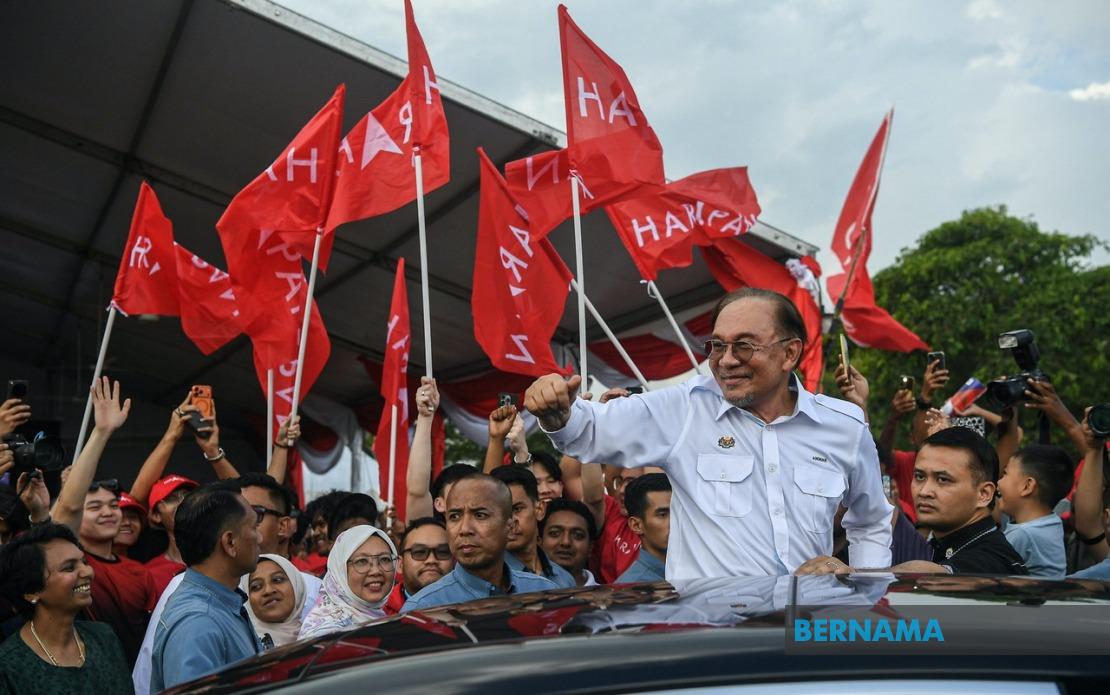
As the 16th Johor State Election unfolds with sophisticated digital campaigns and viral content strategies dominating the narrative, a careful examination of how voters actually make their choices reveals a more nuanced picture. A Bernama survey conducted among residents across the state's constituencies demonstrates that while parties invest heavily in TikTok and Facebook advertising, older voters continue to assign significant weight to the traditional experience of standing before a candidate, observing their body language, and gauging their authenticity in the moment. This preference persists despite—and perhaps because of—the overwhelming noise of online political messaging.
The enduring appeal of face-to-face campaigning among Johor's senior electorate stems from a deeply human need to evaluate character beyond scripted messaging. Retired teacher A. Chandra, 70, articulated what many in his age group feel: that attending campaign events in person offers an atmospheric richness that livestreamed versions cannot replicate. The electricity of a crowd, the spontaneity of crowd interactions, and the opportunity to observe a political leader's unscripted reactions all contribute to a voter's assessment of whether they can trust that individual with their vote. For Chandra and others like him, this experiential dimension represents something fundamental that digital media, however sophisticated, struggles to convey.
Housewife Maimunah Ismail, 73, highlighted another crucial benefit of physical campaigning: the immediate opportunity for clarification. When a candidate is standing before you, you can gauge whether they truly understand a question or are deflecting. You can observe whether they have genuine knowledge of local issues or are relying on talking points. Yet Maimunah's approach also illustrates how the campaign landscape has evolved. She balances physical attendance at events with mobile-based social media consumption, watching campaign content while managing household tasks. This hybrid consumption pattern reflects how even traditional voters have incorporated digital tools into their political information diet, not as replacements for in-person engagement but as supplements that provide convenience and accessibility.
Saadon Mohamad, 72, made an important observation: the abundance of political information now available online cannot recreate the atmospheric energy of ground-level campaigning. There is something about the collective presence of supporters, the speeches delivered live, and the visible energy of a candidate's campaign team that algorithms and screens simply cannot manufacture. This atmospheric quality matters particularly to voters who have experienced multiple election cycles and can compare the texture of different campaign approaches. For these individuals, the 2024 campaign environment—saturated with digital content—might actually increase the relative value of in-person events as rare moments of authentic human connection.
The digital divide among older voters proves less pronounced than many stereotypes suggest. Kempas voter Fairuz Saif, 59, pushed back against assumptions that senior citizens lack technological competency. However, he emphasized a critical distinction: digital competency does not automatically translate into digital preference for political messaging. The effectiveness of online campaigning depends heavily on how parties craft their content. Simplified language, concise messaging, and clear visual design can help voters of all ages navigate political information online. Yet even Saif acknowledged that face-to-face campaigning maintains superior effectiveness because it allows candidates to respond directly to concerns and build confidence through direct dialogue—something that cannot be achieved through even the most artfully designed social media post.
Mobility challenges and time constraints represent significant drivers of digital campaign adoption among older voters. M. Sivathramani, 73, illustrated how online platforms serve an essential function for those with physical limitations. Unable to navigate crowded campaign venues due to previous injuries, Sivathramani relies on TikTok and Facebook to remain informed about electoral developments. Yet his preference, expressed clearly, is still to meet candidates in person whenever physically possible. This reveals that digital campaigning often functions as accommodation for voters who face barriers to in-person participation rather than as a preferred alternative. Parties that ignore this distinction risk providing inferior service to voters who have no choice but to engage digitally while missing opportunities to connect with those who could attend events if transportation and accessibility were improved.
Working adults present a different calculus entirely. Lee Lian Chen, 58, a grocery shop owner, uses social media initially to research candidates' policy platforms and electoral promises, conducting this preliminary assessment during moments between business tasks. She then cross-references online information with observations from physical campaign appearances, making her final electoral judgment based on whether candidates' stated intentions align with demonstrated capability and track record. This sequential approach—online research followed by in-person verification—represents a sophisticated voter strategy that political parties must accommodate by ensuring both digital and physical campaign components project consistent messages and values.
Academic analysis from Dr Nazreena Mohammed Yasin, a senior lecturer in social sciences at Universiti Tun Hussein Onn Malaysia, provides crucial context for understanding these voter preferences. Rather than viewing physical and digital campaigning as competing methodologies, contemporary electoral dynamics in Malaysia increasingly demonstrate that these approaches occupy complementary positions. Social media has become the primary political information source for many voters, particularly those juggling work and family responsibilities. Simultaneously, physical campaign events retain significance as venues where voters can experience election atmosphere firsthand and assess candidates through direct observation. This complementarity differs markedly from earlier election cycles when digital and traditional media existed in more distinct spheres.
Generational and demographic variations significantly shape how voters access political information. Some older voters maintain reliance on newspapers and television broadcasts, information sources that often provide different analytical frameworks than social media. Other seniors have enthusiastically adopted Facebook, WhatsApp, and even TikTok, appreciating the convenience and accessibility these platforms offer. Working professionals cite time constraints and employment responsibilities as primary reasons for defaulting to social media for campaign updates. Individuals with limited mobility or health challenges recognize digital platforms as essential tools for remaining politically engaged. Rather than assuming uniformity within age groups, the Johor campaign environment demonstrates sophisticated voter segmentation based on practical circumstances and personal preferences.
The modal voter approach identified in the survey—the hybrid strategy combining physical event attendance with digital information gathering—represents the emerging norm across Johor constituencies. Voters typically conduct preliminary research through social media, attend selected in-person campaign events for direct assessment, and cross-reference these experiences before reaching final electoral conclusions. This approach demands that political parties maintain message consistency across all platforms and invest in both digital production quality and ground-level campaign logistics. A poorly executed TikTok campaign undermines the impression created by a impressive in-person rally, and vice versa. The integration imperative means that campaign managers must think systemically about voter journeys that span multiple platforms and modalities.
As the 16th Johor State Election approaches, with 2.7 million voters preparing to cast ballots across 56 constituencies, the campaign dynamics visible across the state offer lessons applicable to electoral politics throughout Malaysia and Southeast Asia more broadly. The assumption that digital dominance would render traditional campaigning obsolete has proven overly simplistic. Instead, the electoral landscape has become more complex, requiring parties to excel simultaneously in digital creativity and ground-level organization. Voters, particularly older demographics, have demonstrated that they integrate new tools without abandoning established methods of political evaluation. Understanding and respecting these nuanced preferences may ultimately prove more decisive than chasing viral moments or maximizing social media reach alone.

