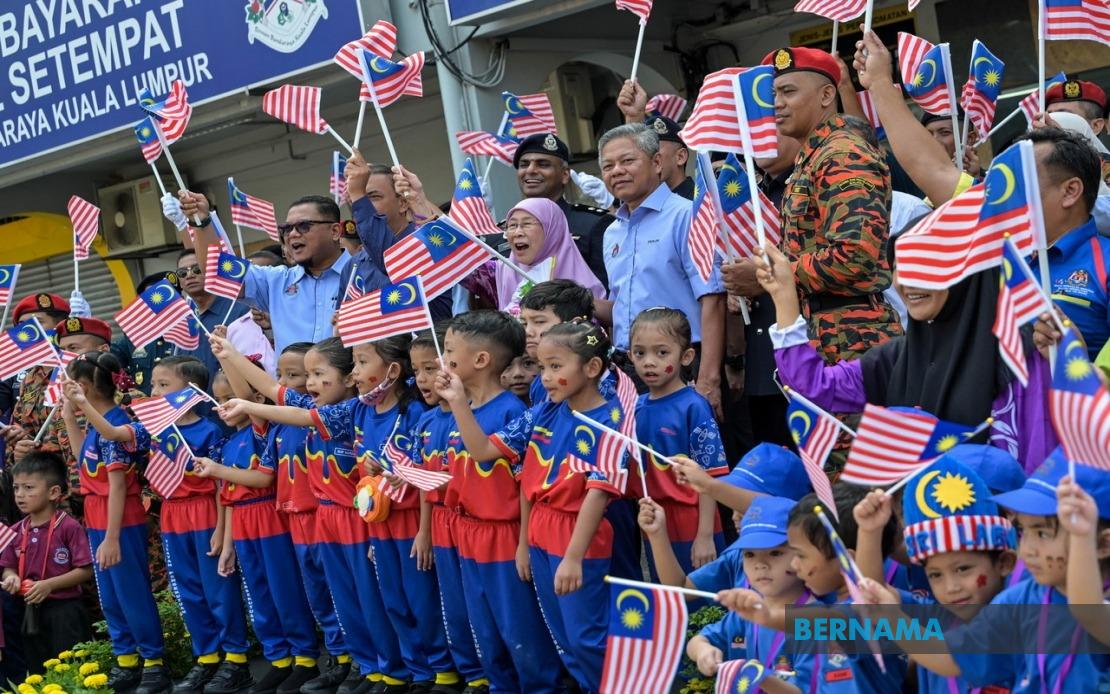
The deeper significance of independence extends far beyond ceremonial displays and patriotic slogans, according to Prime Minister's wife Datuk Seri Dr Wan Azizah Wan Ismail, who has called for a more meaningful national reckoning with what freedom truly means for Malaysians. Speaking at the Semarak Merdeka Programme in Kuala Lumpur on August 12, Dr Wan Azizah emphasised that genuine appreciation of independence requires understanding it as a collective responsibility that underpins the nation's continued peace, unity and social harmony. Her remarks came alongside attendance from the Prime Minister's political secretary Datuk Azman Abidin, signalling the significance of the occasion within government circles.
Much more than the unfurling of the Jalur Gemilang or the customary shout of "Merdeka", independence carries profound historical and philosophical weight, Dr Wan Azizah insisted. The sovereignty Malaysia enjoys today was built through the struggles, sacrifices and determined efforts of generations who came before, she noted, arguing that contemporary Malaysians risk diminishing that legacy if they reduce it to surface-level nationalism. This framing positions independence not as a static achievement to be commemorated passively, but as an ongoing commitment requiring active participation from every citizen in preserving what previous generations fought to secure.
The 2024 National Day theme of "Malaysia Madani: Jiwa Merdeka" aligns with this deeper philosophical approach, according to Dr Wan Azizah, who presented it as more than marketing slogan. The theme encapsulates broader government aspirations to enhance citizens' quality of life, distribute opportunities more equitably across the population, and consolidate the bonds holding Malaysia's diverse communities together. For a nation built on multiethnic and multireligious foundations, such unity-building efforts remain perpetually essential, particularly in addressing socioeconomic disparities that can strain social cohesion.
Dr Wan Azizah, who represents Bandar Tun Razak as Member of Parliament, highlighted her constituency as a microcosm of Malaysia's successful pluralism. The parliamentary district houses approximately 191,000 residents, with demographics reflecting the national composition: roughly 60 percent Malay, 24 percent Chinese, and 8 percent Indian populations according to Malaysian Population and Housing Census data. This ethnic and cultural diversity, Dr Wan Azizah suggested, demonstrates that harmonious coexistence remains achievable when citizens actively commit to mutual respect and shared national purpose.
Beyond the ceremonial aspects of National Day, Dr Wan Azizah's visit to beneficiaries of government assistance programmes illustrated the practical dimensions of national responsibility. At the Semarak Merdeka Programme, she subsequently visited three families residing in public housing projects including Seri Pulau Pinang and Desa Tun Razak People's Housing Projects (PPR), delivering financial contributions sourced through the Social Security Organisation (PERKESO) and the Federal Territories Islamic Religious Council (MAIWP).
One assistance recipient, K. Moganavalli, 39, represented the vulnerable segments of Malaysian society that government safety nets aim to protect. Her sudden loss of her husband, Edwin Anthony Dass, 38, a lorry and Grab driver who died on August 2, thrust her into financial precarity while caring for three young children as a full-time housewife. PERKESO provided Moganavalli with a one-off Funeral Management Benefit of RM3,000 and a monthly Survivor's Pension of RM1,118.33, alongside additional Kotak Prihatin assistance. Moganavalli's emotional gratitude underscored how such programmes provide essential lifelines during sudden tragedies that can otherwise devastate family stability.
Another beneficiary, Khalijah Binti Nazir, 64, exemplified the challenges facing caregivers in Malaysia's social structure. Forced to abandon employment to care for two children, one of whom has hearing impairment, Khalijah survives on a patchwork of assistance streams totalling approximately RM1,350 monthly: RM800 from Baitulmal support, RM300 through Boost eWallet transfers, and RM150 under the Sumbangan Asas Rahmah programme, with her son receiving an additional RM100 monthly under SARA. This fragmented support system, while providing crucial sustenance, highlights the ongoing vulnerability of caregivers within Malaysia's evolving welfare architecture.
The tangible distribution of financial assistance during National Day celebrations demonstrates how government rhetoric about unity and shared responsibility translates into material support for disadvantaged Malaysians. Such gestures carry symbolic weight beyond their immediate financial impact, signalling state recognition of citizens whose contributions and struggles remain largely invisible within mainstream economic narratives. For individuals like Moganavalli and Khalijah, independence gains concrete meaning through programmes that buffer them against destitution during personal crises.
Dr Wan Azizah's framing of independence as shared responsibility resonates particularly within Malaysia's contemporary political and social context. The nation continues navigating challenges including wealth inequality, community tensions occasionally flaring along ethnic and religious lines, and debates over national identity and values. Positioning independence not as historical fact but as ongoing collaborative endeavour potentially offers framework for addressing such tensions—one emphasising mutual obligation rather than zero-sum competition between communities.
The Prime Minister's wife's emphasis on honouring sacrifices of previous generations while "continuing to build a united, prosperous and progressive" Bandar Tun Razak community encapsulates dual temporal orientation. Past sacrifices merit recognition and gratitude; simultaneously, contemporary Malaysians bear responsibility for maintaining and enhancing what was bequeathed. This intergenerational framing suggests independence represents not destination reached but continuous journey requiring each generation's commitment and recommitment.
For Malaysian policymakers and citizens alike, Dr Wan Azizah's message implicitly challenges superficial patriotism divorced from substantive actions promoting genuine unity, equitable opportunity distribution, and social support systems protecting vulnerable populations. The contrast between ceremonial nationalism and meaningful independence—one requiring participation and sacrifice, the other mere flag-waving—remains pertinent as Malaysia navigates questions about national identity and cohesion in increasingly complex times.

