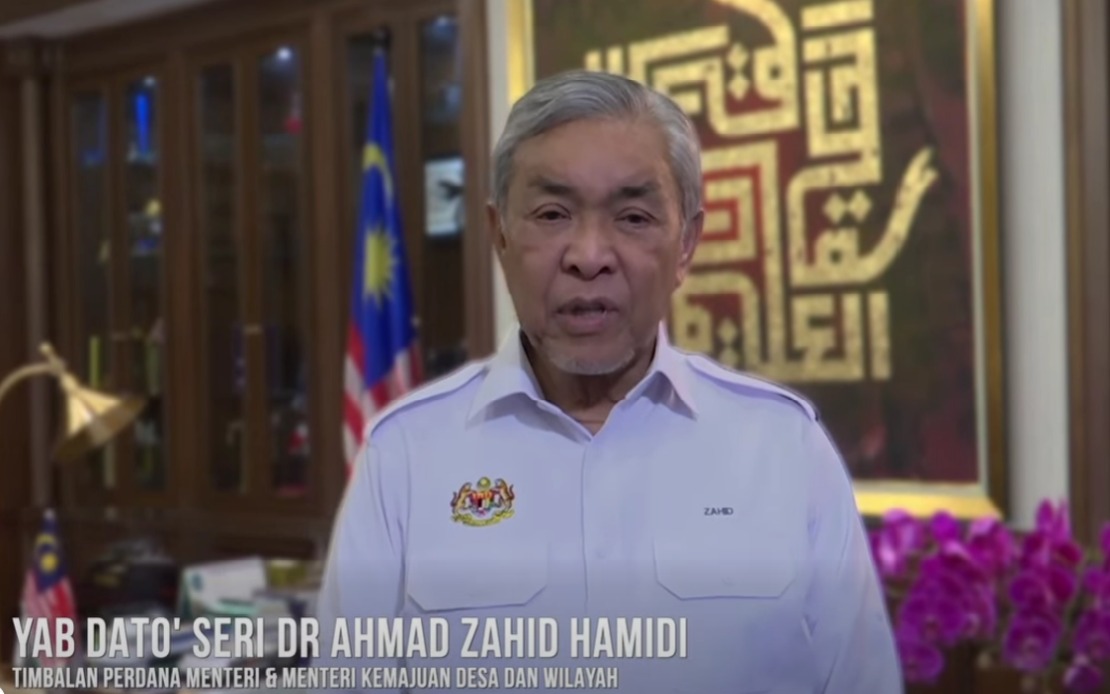
The true measure of a nation's independence lies not in the historical date it marks freedom, but in whether its citizens experience tangible improvements in their daily existence, according to Deputy Prime Minister Datuk Seri Dr Ahmad Zahid Hamidi. Speaking on Malaysia's 69th National Day, Ahmad Zahid articulated a vision of independence that extends beyond political sovereignty to encompass economic empowerment, social mobility and equitable development across the country. His message reflects a broader government narrative aimed at connecting constitutional achievements with practical outcomes that ordinary Malaysians can feel in their livelihoods and opportunities.
At the heart of Ahmad Zahid's National Day message is a focus on skills development as a cornerstone of modern independence. He emphasised that young Malaysians must be equipped with vocational and technical expertise, particularly through TVET (Technical and Vocational Education and Training) programmes, to access well-remunerated employment in a competitive global economy. This emphasis on skills training addresses a persistent challenge in Malaysia's labour market, where skill mismatches between educational output and employer demands have long constrained wage growth and career progression for younger workers. By framing TVET as integral to independence itself, Ahmad Zahid signals government intent to position skills development as a national priority rather than a secondary educational pathway.
Beyond individual employment prospects, Ahmad Zahid's conception of independence encompasses entrepreneurial opportunity and household economic advancement. He articulated that true independence requires creating pathways for small business owners to scale their enterprises, recognising the role of small and medium enterprises in generating employment and distributing wealth more broadly across society. This reflects acknowledging that meaningful independence must extend to the informal economy and microentrepreneurs who form a significant portion of Malaysia's workforce, particularly in rural and semi-urban areas where formal employment opportunities remain constrained.
A distinctive dimension of Ahmad Zahid's remarks concerns disaster resilience and state capacity. He stressed that independence implies government responsibility to protect citizens during emergencies and facilitate recovery and reconstruction. This framing proves particularly resonant for Malaysian audiences familiar with the impacts of seasonal flooding, landslides and other natural disasters that disproportionately affect rural communities. By linking independence to disaster management and resilience, Ahmad Zahid positions the state as a guarantor of security and dignity during crises, a responsibility that extends beyond traditional economic development metrics.
As Rural and Regional Development Minister, Ahmad Zahid placed particular emphasis on ensuring that national development does not remain confined to urban centres but reaches remote villages and peripheral areas. He articulated a principle that national greatness cannot be measured solely by infrastructure and investments in major cities, but must be evaluated by the breadth of population included in prosperity. This position carries significance for Malaysia's ongoing regional disparities, where rural areas and peripheral zones frequently lag in access to quality infrastructure, services and economic opportunity. His assertion that a nation becomes truly great by including all populations in its progress directly addresses longstanding grievances regarding unequal spatial development.
Ahmad Zahid illustrated this development philosophy through concrete examples, noting how a single road network can transform a village's connectivity, electricity access can bring hope and opportunity to modest households, and educational facilities can nurture aspirations across generations. These examples ground his rhetoric in tangible infrastructure and services that directly impact quality of life. They also implicitly acknowledge that independence, for many peripheral Malaysian communities, means access to basic infrastructure and services that urban Malaysians often take for granted. This reframing of independence as encompassing basic service delivery reflects recognition that political sovereignty rings hollow without corresponding improvements in rural living standards.
The halal industry featured prominently in Ahmad Zahid's vision of contemporary independence. He highlighted Malaysia's position as a global halal leader and the economic opportunities this positioning generates for Malaysian entrepreneurs and workers. This emphasis reflects Malaysia's strategic advantage in tapping Islamic economy growth across Southeast Asia and globally, where halal certification and products constitute a multi-billion dollar market. By connecting the halal sector to independence and national pride, Ahmad Zahid presents it as both an economic opportunity and a dimension of national identity that can generate international competitiveness.
Complementing Ahmad Zahid's economic and developmental focus, Deputy Prime Minister Datuk Seri Fadillah Yusof articulated a more social and spiritual dimension of independence during the National Day commemoration. Fadillah called on Malaysians to liberate themselves from internal divisions, hatred, prejudice and extremism that threaten national harmony. His intervention suggests concern that Malaysia's foundational social cohesion faces erosion from polarising forces, whether political, religious or ideological. By positioning freedom from internal division as integral to independence, Fadillah frames social unity as a prerequisite for collective progress, not merely an aspirational outcome.
Fadillah's emphasis on Malaysia's religious, cultural and linguistic diversity took on particular significance against the backdrop of evolving identity politics in the region. He stressed that despite differing religious convictions, cultural practices, languages and ancestral backgrounds, Malaysians share a single homeland, collective destiny and unified aspiration for a peaceful and prosperous nation. This articulation affirms Malaysia's multireligious and multicultural foundation while suggesting that shared citizenship transcends particularistic identities. For Malaysian readers navigating increasingly identity-conscious political discourse, Fadillah's message represents official reaffirmation of constitutional pluralism as fundamental to the nation's character.
The Malaysia MADANI concept featured centrally in Fadillah's National Day remarks, with emphasis that advanced development must be accompanied by equitable distribution of prosperity across all societal segments. MADANI, an acronym representing prosperity and well-being, signals government commitment to inclusive growth models that prioritise citizen welfare alongside economic expansion. Fadillah's framing suggests concern that rapid development and technological change risk creating winners and losers, necessitating deliberate policy architecture ensuring broad-based benefit distribution. This represents implicit acknowledgment that conventional development metrics may mask significant portions of the population experiencing stagnation or marginalisation.
Fadillah positioned independence as fundamentally a matter of intergenerational responsibility, emphasising that contemporary Malaysians must hand the nation to future generations in improved circumstances regarding justice, prosperity, peace, unity and harmony. This framing shifts focus from independence as a historical achievement to independence as an ongoing process requiring continuous effort and recommitment. It suggests that complacency regarding foundational achievements risks their erosion, requiring active maintenance of constitutional principles, the Rukun Negara and commitment to diversity and rule of law. For younger Malaysian audiences, this messaging connects historical independence to their role in sustaining and advancing the nation's founding principles.
The 69th National Day celebrations operated under the theme Malaysia MADANI: Well-being for All, reflecting government prioritisation of citizen welfare as the central measure of national progress. Both Ahmad Zahid and Fadillah's interventions aligned with this thematic framework, though emphasising different dimensions. Ahmad Zahid focused on economic mechanisms through which well-being might be achieved—skills, employment, entrepreneurship and rural development—while Fadillah emphasised the social and spiritual prerequisites for well-being, namely unity, harmony and respect for constitutional and cultural diversity. Together, their messages articulated a comprehensive vision of independence encompassing both material advancement and social cohesion, suggesting that meaningful independence requires simultaneous progress on economic and social fronts.
For Malaysian readers and Southeast Asian observers, the National Day messages from both deputy prime ministers carry implications extending beyond ceremonial rhetoric. They signal government awareness that persistent developmental disparities, skill mismatches, rural-urban divides and social polarisation threaten national stability and inclusive prosperity. The emphasis on TVET, rural development, disaster resilience and social cohesion suggests areas where government intervention and resource allocation may intensify. Simultaneously, the framing of independence as an ongoing process rather than achieved status implies acknowledgment that the nation-building project remains incomplete, requiring renewed commitment to founding principles and adaptive policies addressing contemporary economic and social challenges.

